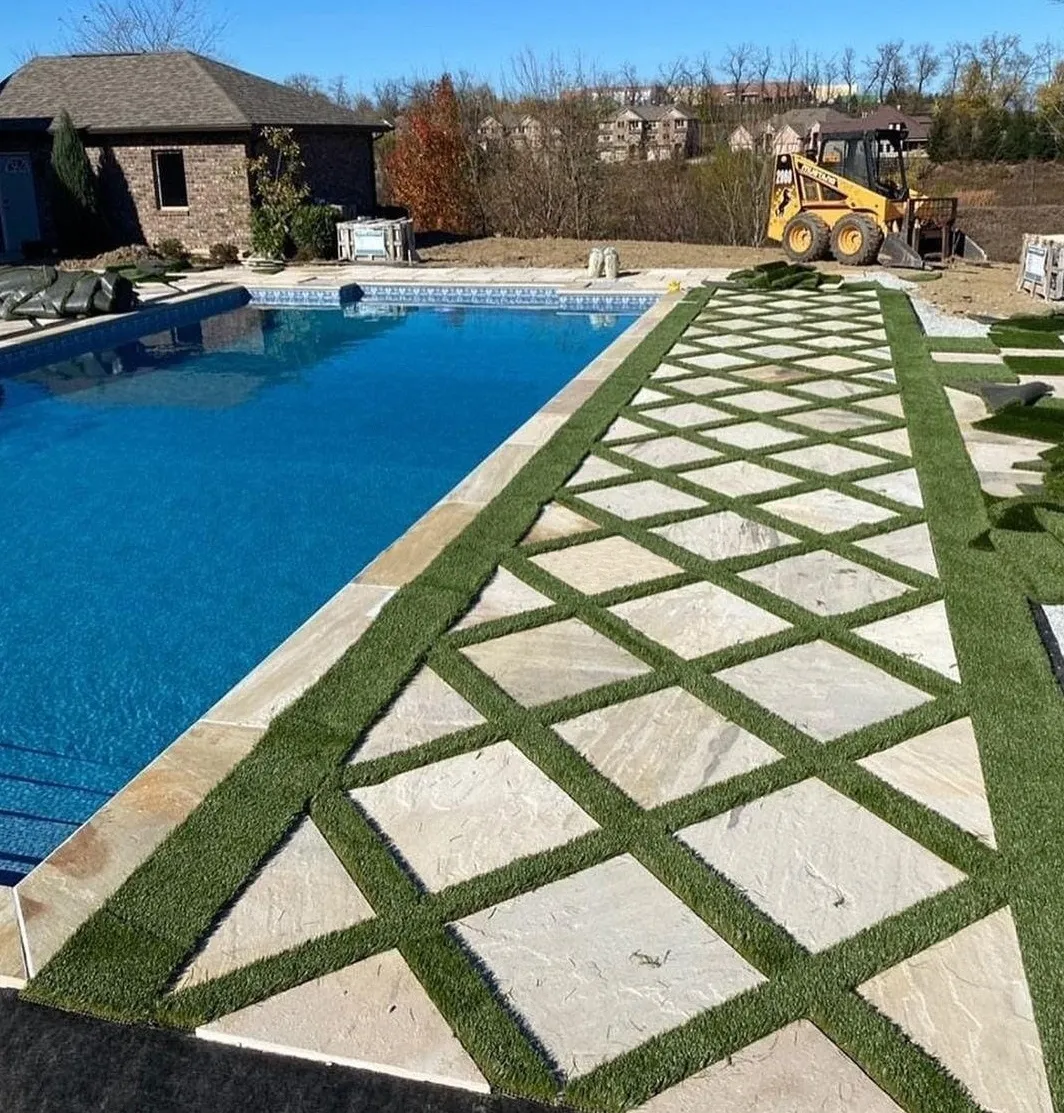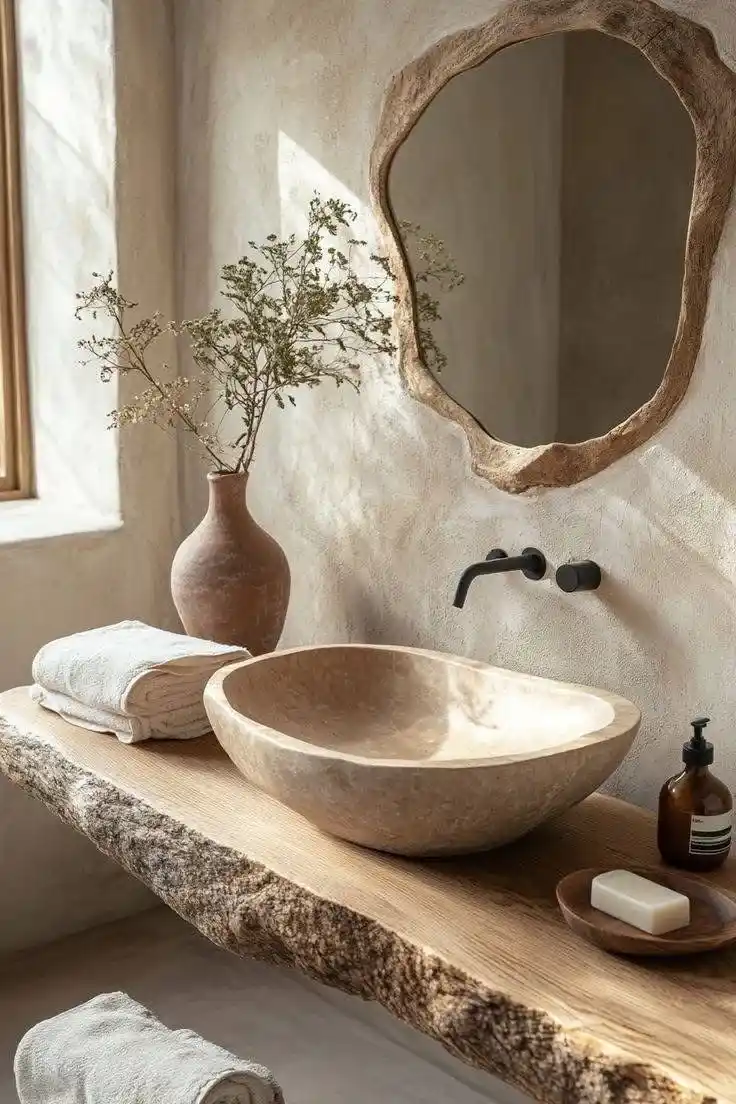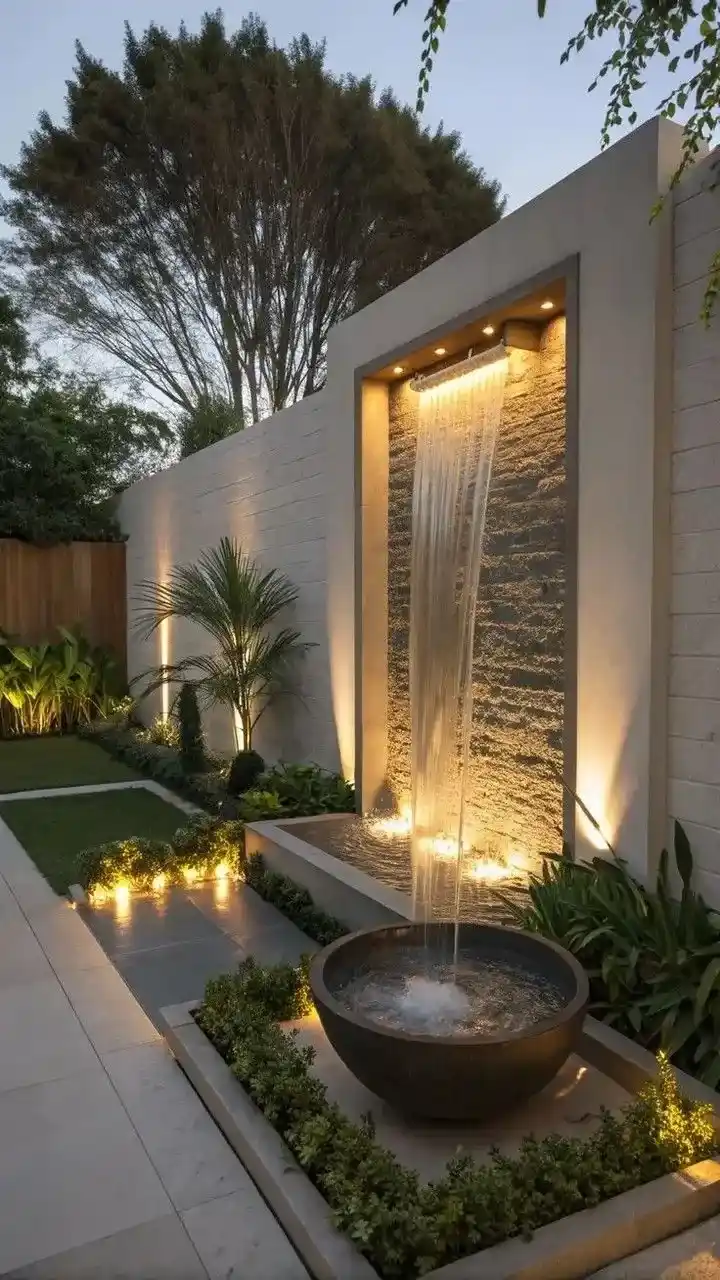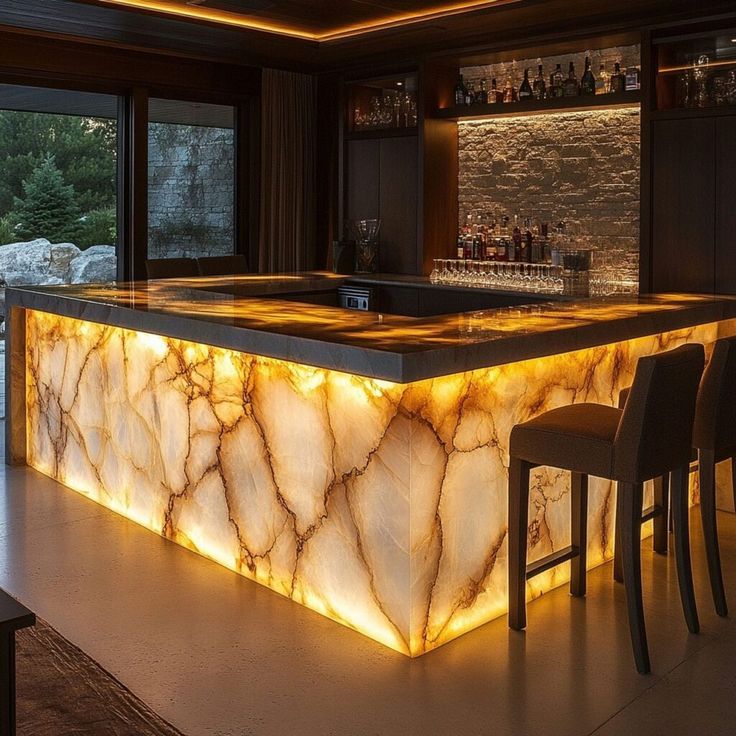
Heavy traditional tiles severely limit your interior design options. When you decide to renovate your home, committing to thick, heavy stone slabs usually means weeks of messy demolition, structural headaches and endless dust settling over your furniture. It costs time, patience and money that most homeowners and architects would rather save.
Stonelam 3mm porcelain slabs fix this renovation problem entirely. As the first porcelain slab brand to reinforce their tiles with a double-coated fibermesh, they offer incredible tensile strength in a lightweight, ultra-thin profile. You get the premium, luxurious look of natural stone without the heavy maintenance or the installation nightmares. If you are looking to upgrade your space quickly, exploring these 5 stonelam 3mm tiles design ideas is the smartest place to start.
Table of Contents
What Makes Stonelam 3mm Tiles So Different?
Stonelam 3mm tiles are ultra-lightweight, 3mm thick porcelain slabs reinforced with a double-coated fibermesh backing. They provide the aesthetic of premium natural stone but are completely non-porous, fireproof and scratch-resistant. Their thin profile allows them to be installed directly over existing surfaces, making them ideal for quick, demolition-free renovations in modular kitchens, bathrooms, feature walls and building facades.
Before diving into the design concepts, it helps to understand why 3mm porcelain is fundamentally changing how architects build and renovate in India.
Stonelam 3mm tiles are ultra-thin porcelain slabs backed with double-coated fibermesh. This specific structure gives them exceptionally high tensile strength, scratch resistance and fireproofing while remaining extremely lightweight. The most significant advantage is that you can install them directly over existing tile or concrete surfaces without any demolition.
Architects and interior designers specify these slabs because they behave differently from standard ceramics. A 3mm slab actually bends slightly. This minor flexibility prevents cracking during transport and installation, which is a common failure point for rigid traditional tiles. The surface is completely non-porous, meaning zero stains from cooking oils, turmeric or bathroom moisture.
Whether you need a reliable material for modular kitchens, furniture wrapping or interior walls, this thickness hits the absolute sweet spot.
The Core Benefits of Using 3mm Porcelain Slabs
The core benefits of 3mm porcelain slabs include zero water absorption, absolute stain resistance, fireproofing and a lightweight profile. Because they require no chemical sealing and resist UV fading, they offer superior structural safety and hygiene compared to traditional heavy natural stones.
When you choose to implement any of the 5 stonelam 3mm tiles design ideas we will discuss, you are not just getting a pretty surface. You are upgrading the functional performance of your home.
The core benefits of 3mm porcelain slabs include zero water absorption, absolute stain resistance, fireproofing and a lightweight profile that allows for overlay installation on existing floors and walls. They do not require any chemical sealing and are highly resistant to UV fading.
Let us break down why these benefits matter for daily living:
- Zero Sealing Required: Unlike Italian marble which requires periodic polishing and chemical sealing to prevent liquid absorption, porcelain is fired at extreme temperatures. The surface is completely closed.
- Hygiene and Cleanliness: Because moisture cannot penetrate the surface, mould and mildew cannot grow. This makes it the perfect material for wet areas like bathrooms and kitchen splashbacks.
- Structural Safety: Adding 18mm granite to a wall adds immense dead load to your building’s structure. At just 3mm thick, Stonelam weighs a fraction of natural stone, making it perfectly safe for high-rise apartment feature walls.
- Eco-Friendly Manufacturing: Producing thin porcelain requires less raw material and less energy for transport, lowering the overall carbon footprint of your renovation.
Top 5 Stonelam 3mm Tiles Design Ideas for Your Home
The top 5 stonelam 3mm tiles design ideas for 2026 include biophilic wood-effect patterns, calming spa-style tones for bathrooms, high-gloss finishes for dining areas, classic terrazzo styles for high-traffic zones and authentic natural stone effects for exterior building facades.
When planning your next renovation, choosing the right aesthetic can be overwhelming. These 5 stonelam 3mm tiles design ideas offer the perfect balance of luxury, practicality and modern style to suit any architectural vision.
1. Biophilic and Natural Wood-Effect Patterns
Biophilic designs connect indoor spaces directly with nature. Stonelam’s wood-effect tiles deliver the warmth and visual texture of natural timber without the inherent maintenance issues, making them perfect for living room accent walls and indoor spa areas.
We are seeing a massive shift toward bringing the outdoors inside, especially in urban Indian apartments where garden space is limited. Traditional wood cladding looks beautiful on day one, but it rots when exposed to moisture, fades under harsh sunlight and requires regular polishing. Plus, real wood is highly susceptible to termite damage which is a major concern in tropical climates.
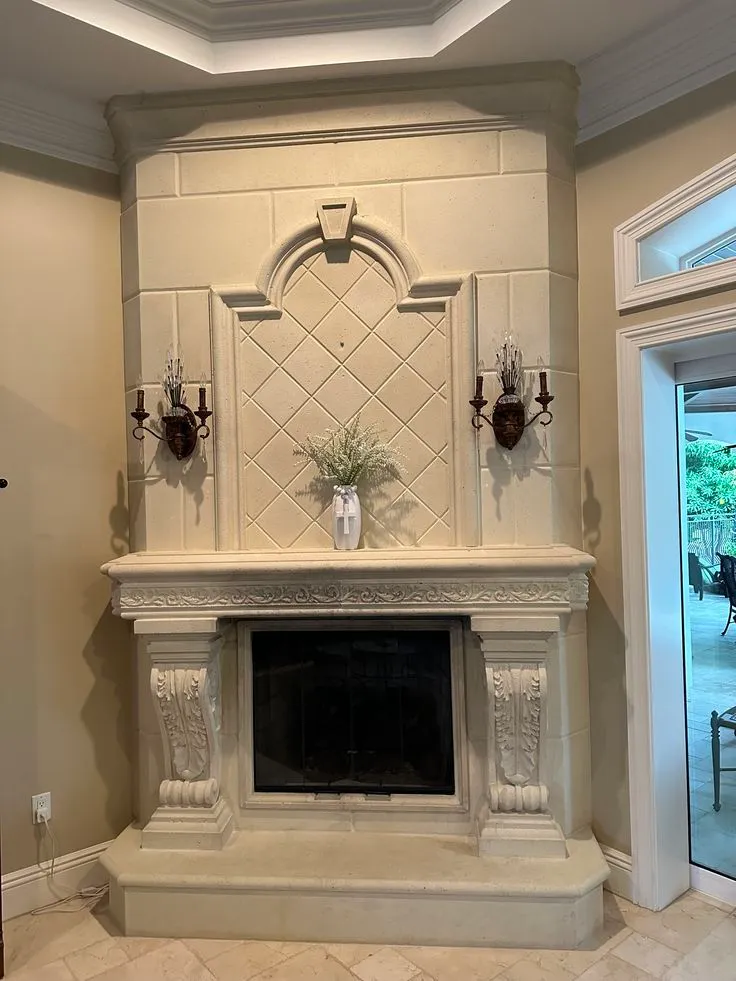
These porcelain slabs give you the exact grain, colour and texture of premium timber, but they never fade under UV light. They work beautifully for feature walls in living rooms, creating a warm, inviting backdrop for your entertainment unit. Because they are fireproof, you can even use these wood-effect slabs around fireplace features or in hot kitchen environments where real wood would be dangerous.
2. Calming Spa-Style Tones for Bathrooms
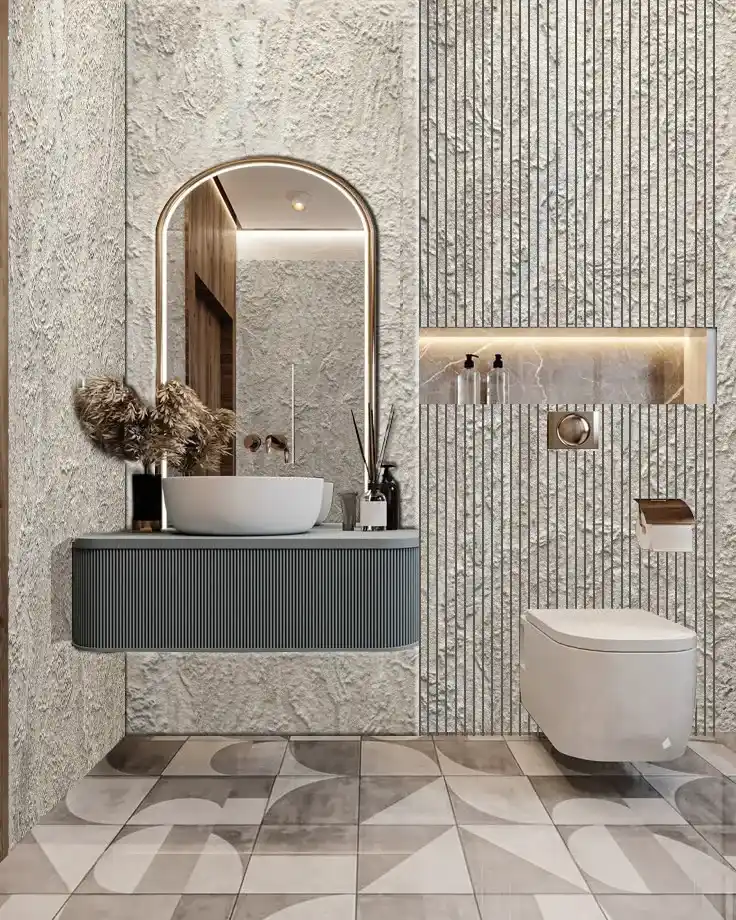
Spa-style tiles feature soft blues, muted greens and subtle neutral textures to create tranquil environments. These calming tones work exceptionally well in bathrooms and wellness centres to promote daily relaxation and visual peace.
Nobody wants a chaotic, visually noisy bathroom. You want a personal retreat. Pairing these soft-toned slabs with warm ambient lighting and minimalist brass fixtures creates a clean, soothing look. The psychological impact of soft, earthy colours can significantly lower stress levels after a long workday.
The biggest advantage here is the format size. Because Stonelam slabs are so large (often up to 3 metres long), you will deal with drastically fewer grout lines. Fewer grout lines mean less scrubbing, no blackened joints and a much cleaner visual flow. If you want to explore more ways to upgrade your bathroom and interior spaces, check out our guide on modern interior wall cladding designs.
3. High-Gloss Luxury Finishes for Dining Areas
Glossy Stonelam tiles add immense brightness and a premium, high-end feel to any room. They reflect natural and artificial light beautifully, making smaller or darker spaces appear significantly larger and much more open.
If you want a glamorous touch in your home, glossy finishes never fail. They work best as accent panels in dining areas, formal living rooms or grand foyers where you want to make a strong first impression on guests. The high-gloss finish mimics the polished look of the most expensive natural stones in the world.
However, a word of caution. While high-gloss looks incredible on walls and kitchen splashbacks, it can be slippery when wet. If you plan to use this specific design idea for wet flooring areas, always ensure you ask your installation team about applying an anti-skid coating or choose a matte-finish variant from the same colour family to keep the floor safe.
4. Classic Terrazzo Styles for Hallways and Kitchens
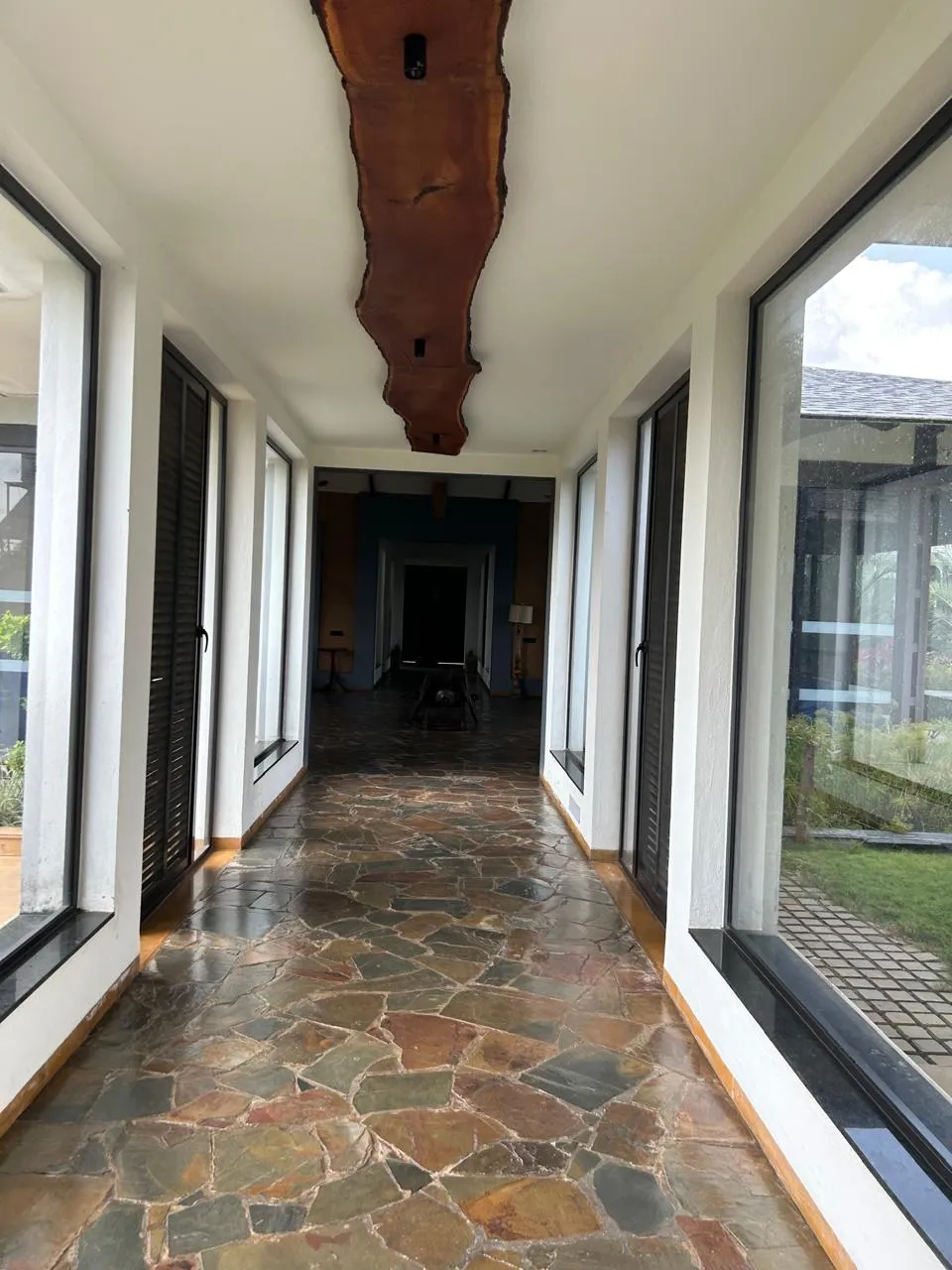
Terrazzo-style slabs feature a vibrant mix of marble, quartz and glass chip patterns embedded in a solid base colour. They provide a beautifully textured surface that hides daily dirt effortlessly, making them ideal for high-traffic areas.
Terrazzo has made a massive comeback in modern interior design, but the traditional pouring and curing process is incredibly tedious, messy and expensive. With this specific entry in our 5 stonelam 3mm tiles design ideas, you get the retro, playful charm of terrazzo instantly, without the wait.
The busy, speckled pattern is incredibly forgiving. If you skip a day of sweeping, the dust and minor debris are easily masked by the design, which makes this style a very smart choice for busy family kitchens, entryways and hallways. You can learn more about why these durable patterns are taking over in our article covering the 6 reasons why stonelam tiles are the perfect fit for your home.
5. Authentic Natural Stone Effect for Facades
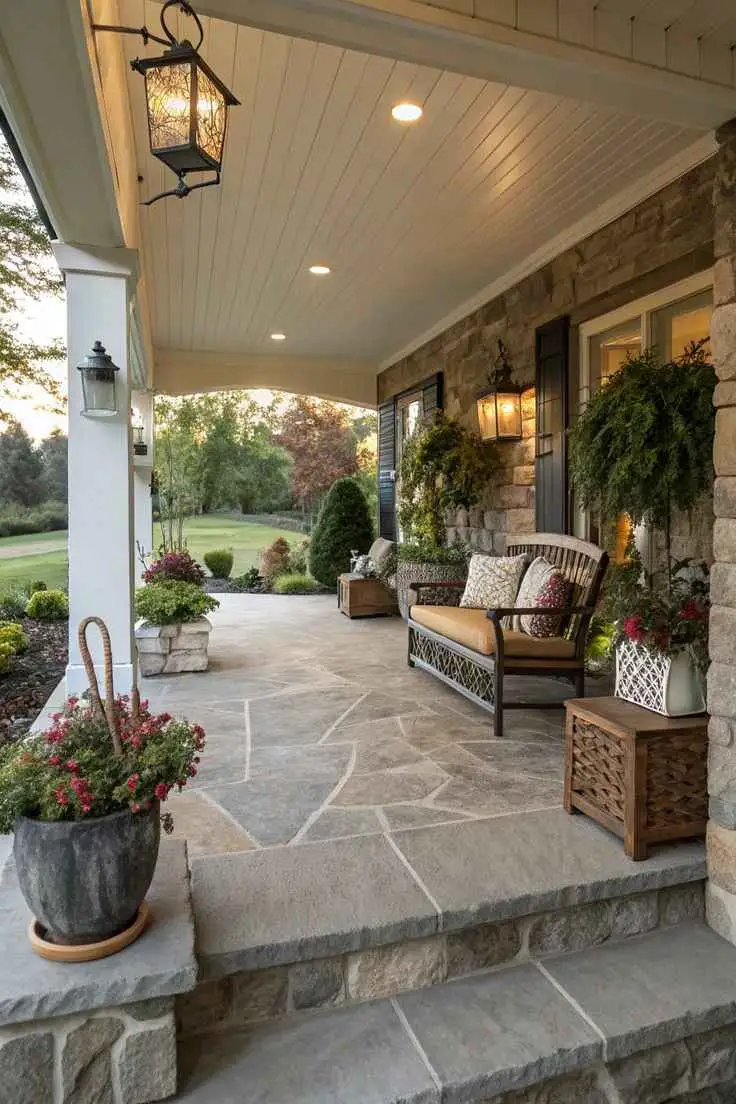
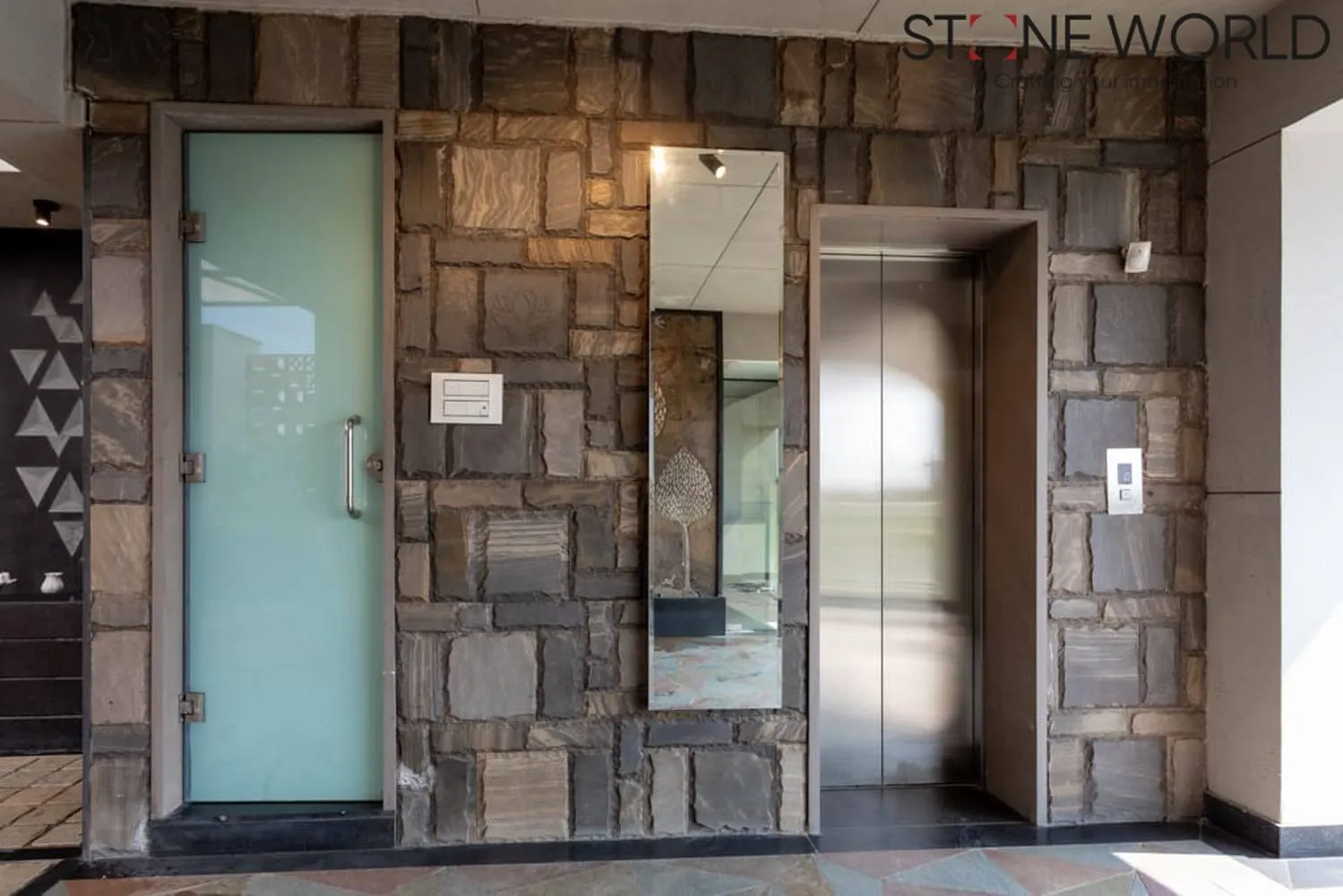
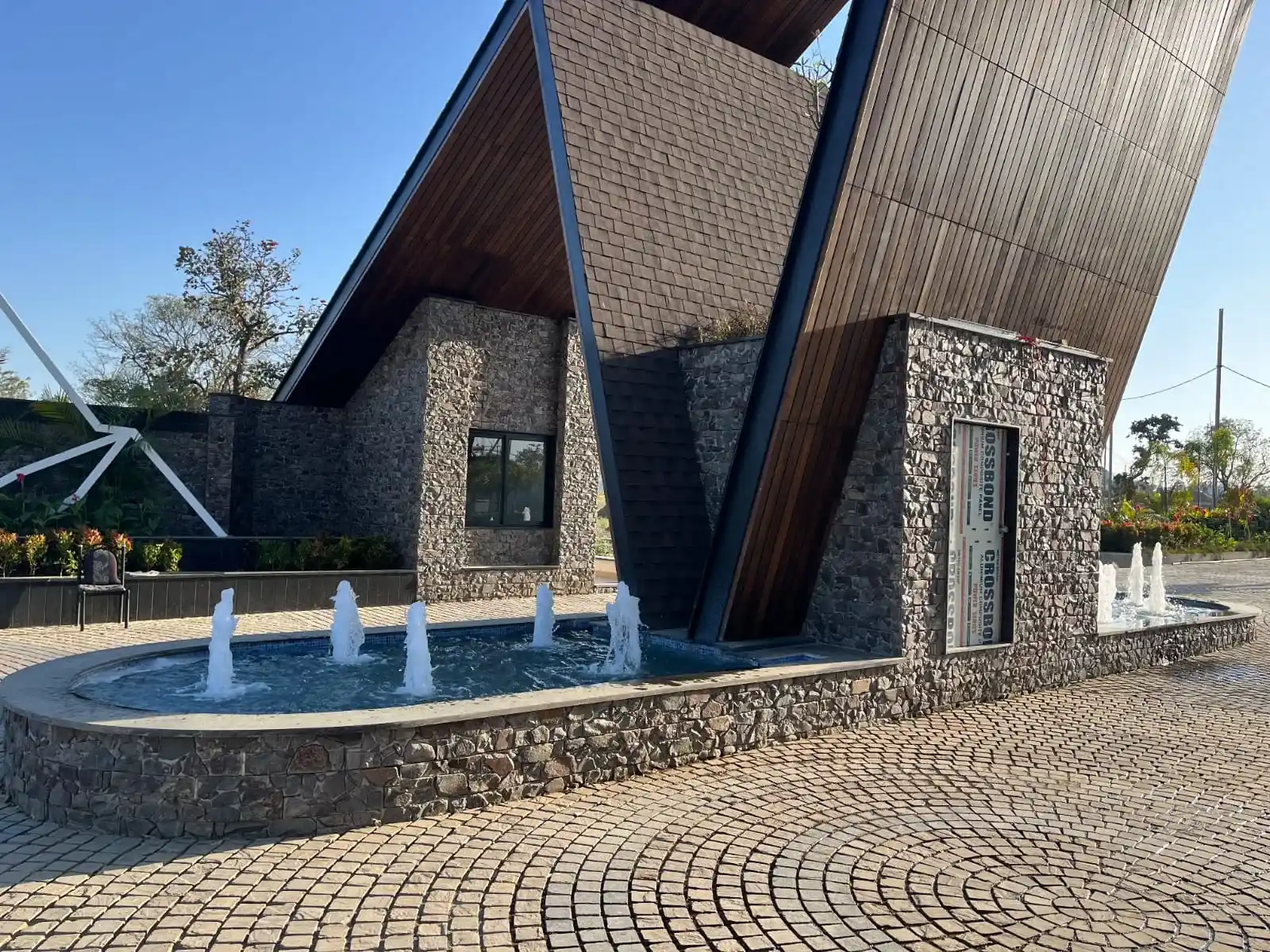
Stone-effect tiles replicate the exact visual depth and veining of premium marble and granite without the heavy maintenance burden. They offer a completely non-porous, hygienic surface that works just as well for modern kitchens as it does for exterior building facades.
Natural Italian marble looks undeniably stunning, but it is highly porous and stains easily. If you accidentally spill red wine, lemon juice or turmeric on a real marble countertop, you have to clean it immediately before it permanently etches the stone. With a stone-effect Stonelam slab, you can just wipe it away hours later with a damp cloth. No panic, no permanent damage.
Also, these slabs give you a wide range of consistent colour options to match any specific interior theme. This saves you the massive hassle of hunting through dusty stone yards for hours, trying to find the perfect slab with the exact veining pattern you want.
Key Applications: Where to Use These 5 Stonelam 3mm Tiles Design Ideas
Due to their 3mm thickness and lightweight nature, these porcelain slabs are perfect for interior wall cladding, modular kitchen shutters, bathroom walls, furniture wrapping and exterior facades. They provide a smooth luxury finish without overloading walls or requiring structural reinforcement.
Understanding the design aesthetics is only half the journey. Knowing exactly where to apply them is what turns a good house into a great one.

You can use 3mm porcelain slabs for interior wall cladding, modular kitchen shutters, bathroom walls, exterior building facades and even furniture wrapping. Their lightweight nature and structural flexibility make them versatile for nearly any flat surface in your home.
Because they weigh so little (averaging just 7-8 kg per square metre), these tiles open up design possibilities that regular, heavy stones simply cannot match:
- Interior Walls & Accent Panels: Create a smooth luxury backdrop behind your television or bed without overloading your drywall or brickwork.
- Modular Kitchen Shutters: Instead of standard laminates or acrylics, you can apply 3mm slabs directly to cabinet doors for a sleek, highly scratch-resistant finish that looks like solid stone.
- Bathrooms & Wet Areas: The non-porous surface stops mould growth completely, keeping your shower enclosures pristine.
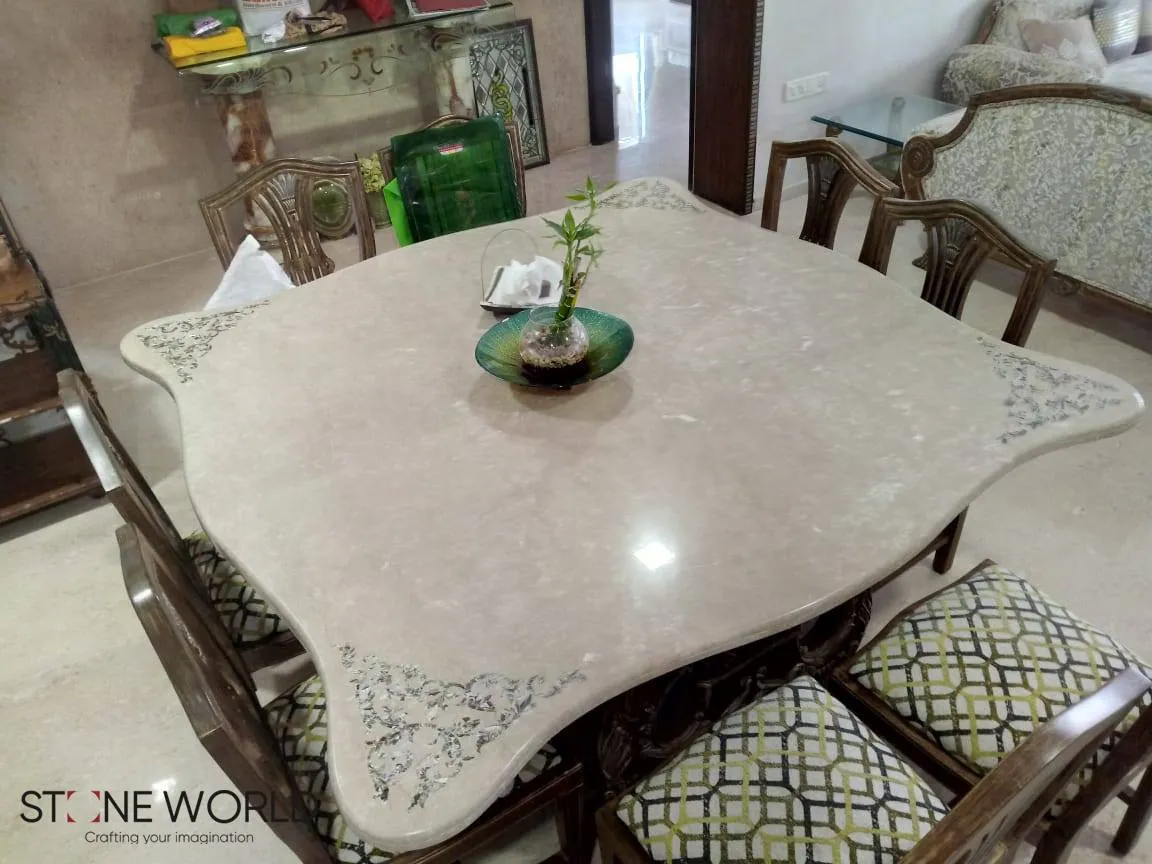
- Furniture Cladding: Give old wardrobes, dining tables and reception desks a premium designer finish by literally wrapping them in thin porcelain.
- Building Facades: They resist harsh UV rays, heavy monsoons and extreme Indian summer weather without ever fading or warping.
Stonelam vs Traditional Stone Materials: A Comparison
Compared to traditional 18mm marble or granite, Stonelam 3mm tiles are significantly lighter and require zero sealing or maintenance. While natural marble stains easily and takes weeks to install, Stonelam offers a non-porous surface that can be overlaid directly onto existing floors instantly.
When you are planning a renovation, knowing exactly how modern materials compare to traditional options helps you make the most informed, cost-effective choice for your property.
Compared to traditional 18mm marble or granite, Stonelam 3mm tiles are significantly lighter, bend slightly to prevent transit cracking and require zero chemical sealing. While they offer similar high-end aesthetics, they allow for much faster, cleaner installation directly over existing surfaces.
Here is a quick reference guide to help you decide:
| Feature | Stonelam 3mm Tile | Natural Marble | Granite | Standard Ceramic |
|---|---|---|---|---|
| Thickness | 3 mm | 18-20 mm | 18-20 mm | 6-10 mm |
| Weight | Very Lightweight | Extremely Heavy | Extremely Heavy | Medium |
| Maintenance | Low (No sealing) | High (Needs sealing) | Medium | Low |
| Stain Resistance | Excellent (Non-porous) | Poor (Stains easily) | Good | Good |
| Installation Speed | Fast (Can overlay) | Very Slow | Slow | Medium |
If you are renovating a space where daily downtime is a major issue (like a functioning family kitchen or a commercial retail store), the speed of overlaying Stonelam tiles over your existing floors or walls is a massive operational advantage. You entirely avoid the noise, dust and debris of breaking old tiles. For more inspiration on upgrading your walls, browse our gallery of natural stone wall panel design ideas.
The Installation Process: Why 3mm is a Game Changer
Stonelam 3mm tiles are installed using specialized high-polymer adhesives that bond directly to the substrate or existing tiles. The fibermesh backing acts as a shock absorber, distributing impact energy and preventing the porcelain from shattering, while allowing for virtually smooth grout lines.
You might be wondering how something only 3mm thick can survive in a busy home. The secret lies in the installation and the fibermesh backing.
When a Stonelam slab is installed correctly using the recommended high-polymer adhesives, it bonds so tightly to the substrate (the wall or floor behind it) that it effectively borrows the strength of the building itself. The fibermesh acts as a shock absorber. If a heavy object is dropped, the mesh distributes the kinetic energy, preventing the porcelain from shattering the way a standard ceramic tile would.
The installation requires specialized tools to handle the large formats. Installers use suction-cup frames to lift and position the massive slabs safely. Once laid, the minimal grout lines are filled with epoxy, creating a virtually smooth surface that looks like one continuous piece of carved stone.
The Cost vs Value Analysis of 3mm Porcelain Slabs
While the initial material cost of 3mm porcelain is comparable to imported marble, the true financial value lies in installation and maintenance savings. By eliminating demolition costs and requiring zero professional polishing over a 10-year span, Stonelam significantly lowers the total cost of ownership.
When discussing premium building materials, the initial cost is only a fraction of the conversation. True value is calculated by looking at the lifecycle of the product, the installation expenses and the daily maintenance costs over a ten to twenty-year period.
Initial Material Costs
At first glance, Stonelam 3mm porcelain slabs might appear as a premium investment compared to standard locally sourced ceramics or basic builder-grade granites. However, they are often on par with or significantly cheaper than imported high-end Italian marbles like Statuario or Calacatta. When you factor in that you are getting the exact aesthetic of these luxury stones with zero natural defects, the material cost becomes highly justifiable.
Installation Savings
This is where the financial benefits become obvious. If you are renovating, the cost of breaking old tiles, hiring labourers to carry heavy debris down from a high-rise apartment and paying disposal fees adds up incredibly fast. Because 3mm slabs are designed for overlay, you bypass the entire demolition phase. You save money on labour, and more importantly, you save weeks of project time. In commercial projects where every day of closure means lost revenue, this speed is a massive plus point.
Long-Term Financial Value
Over a ten-year span, natural marble requires regular professional repolishing and chemical sealing to maintain its lustre. Standard ceramics might crack or suffer from deeply stained grout lines that require regrouting. Stonelam 3mm tiles require exactly zero professional maintenance. The financial savings on maintenance alone over a decade often cover the initial purchase price of the slabs.
How to Pair Lighting with Your Porcelain Slabs
To maximize the visual impact of your porcelain slabs, pair high-gloss finishes with soft, diffused ambient lighting to avoid harsh glare. Warm white lighting (2700K-3000K) enhances wood-effect tiles, while wall-washers are ideal for highlighting the textures of natural stone-effect designs.
The final secret to making any of these design ideas work is your lighting strategy. Because these slabs come in massive formats, how you light them dictates the entire mood of the room.
- For High-Gloss Slabs: Avoid harsh, direct overhead spotlights that create glaring reflections. Instead, use soft, diffused ambient lighting or cove lighting that washes over the surface gently.
- For Wood-Effect Patterns: Warm white lighting (around 2700K to 3000K) enhances the natural, earthy tones of the wood grain. Cool white light can make wood-effect porcelain look sterile and artificial.
- For Natural Stone and Marble Effects: Wall-washers placed at the top or bottom of a feature wall can highlight the subtle textures and veining in the stone design, adding dramatic architectural depth to your living room.
Maintaining Your Porcelain Slabs
Maintaining Stonelam 3mm porcelain slabs is effortless. Unlike porous natural marble that requires pH-neutral cleaners, you can clean porcelain safely with standard household detergents. A simple damp mop is sufficient for daily cleaning, and the factory finish remains intact for decades.
One of the primary reasons homeowners are shifting toward these 5 stonelam 3mm tiles design ideas is the sheer lack of maintenance required.
Unlike marble which requires pH-neutral cleaners to avoid acid etching, you can clean Stonelam with standard household detergents. For daily cleaning, a simple sweep and a damp mop with warm water are more than enough. For tougher spills, such as dried paint or stubborn grease in the kitchen, you can safely use mild abrasive cleaners without scratching the glaze.
You do not need to hire professionals to polish the floor every year. The finish you buy on day one is exactly the finish you will have ten years later. This dramatically lowers the total cost of ownership over the lifetime of your home.
Frequently Asked Questions
Can 3mm porcelain slabs be installed over existing tiles?
Are 3mm Stonelam tiles fragile because they are so thin?
Where can I use Stonelam 3mm tiles?
Do porcelain slabs require sealing like natural marble?
Conclusion
Stonelam 3mm tiles provide a smart, durable and stylish alternative to heavy traditional stone. With high tensile strength, zero maintenance requirements and the ability to overlay on existing surfaces, these ultra-thin slabs are the perfect modern architectural investment.
Stonelam 3mm tiles provide a remarkably smart, stylish and durable alternative to heavy traditional stones. Their ultra-lightweight design, high tensile durability and vast range of aesthetic patterns make them the definitive top choice for modern Indian homes and commercial spaces.
Choosing the right surface material dictates how much you will spend on both installation and long-term maintenance over the next decade. By exploring these 5 stonelam 3mm tiles design ideas, you get the luxurious, high-end aesthetic of natural stone without the historical, frustrating drawbacks. Whether you are cladding a living room wall, renovating a master bathroom or designing a brand-new modular kitchen, 3mm porcelain is an architectural investment that pays off immediately in both style and peace of mind.