


Building or renovating a home is hectic. Between finalising floor plans, arguing over kitchen tiles and managing contractors, the pooja room often gets pushed to the bottom of the priority list. Many homeowners simply buy a standard wooden unit online at the last minute and place it in an empty corner.
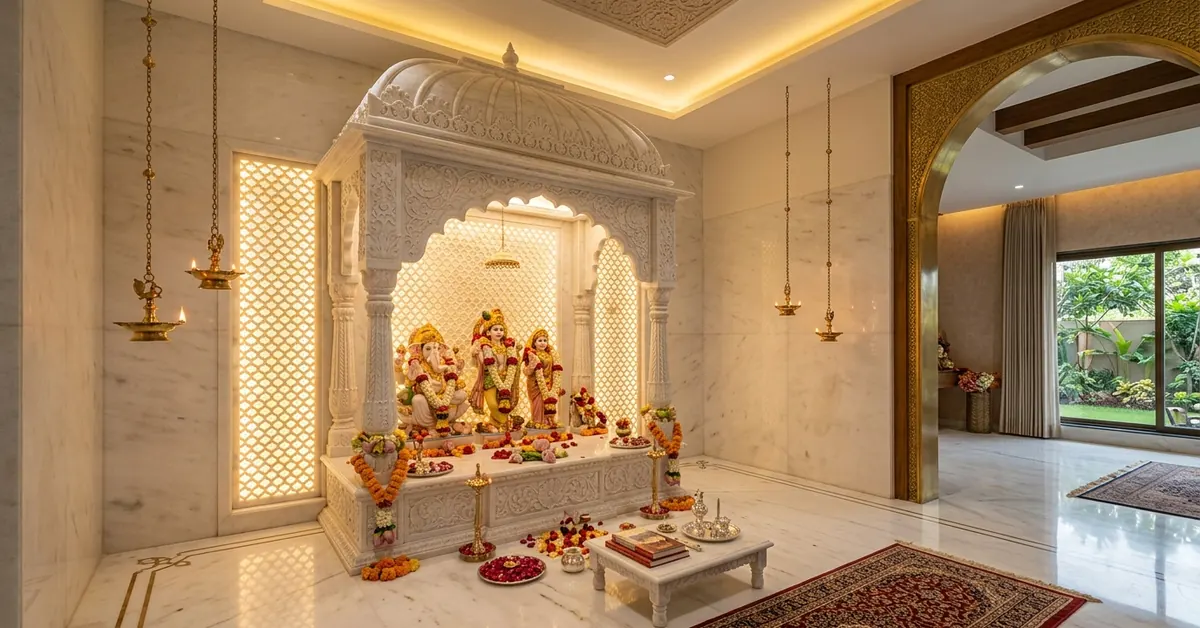
Here is the problem: a mismatched, off-the-shelf mandir disrupts the entire look of a thoughtfully designed home. Worse, cheap plywood units cannot withstand the daily exposure to oil diyas, agarbatti heat and haldi stains. They warp, stain and look tired within a few short years. You spend lakhs on your living room decor, only to have the prayer space look like a total afterthought.
Your pooja space is the spiritual anchor of your household. It deserves better. A custom stone temple design bridges the gap between ancient architectural tradition and modern interior looks. Whether you are working with a massive dedicated pooja room or a compact apartment corner, natural stone offers great beauty, zero fire risk and permanence. Let’s look at the top 6 trends currently shaping Indian homes and how to choose the right material for your sacred space.
Table of Contents
Why Choose Natural Stone for Your Home Mandir?
Natural stone offers durability, easy maintenance and a classic look for your home mandir. Unlike wood, stone resists moisture and heat from diyas, ensuring your sacred space remains pure for generations while adding architectural value to your property.
For centuries, Indian temples were built exclusively from natural stone. The grand architectures of Hampi and the intricate carvings of Konark survive today because stone endures. Bringing this material into your home mandir connects your daily prayers to this incredibly rich architectural heritage.
But beyond heritage, stone solves very real practical problems. Every Indian household knows the struggle of maintaining a pooja area. Kumkum spills. Mustard oil leaks from diyas. Agarbatti ash falls everywhere. Wood absorbs these oils and stains permanently, looking greasy over time. Natural stone, when properly sealed, allows you to wipe away spills with a simple damp cloth.
To be honest, the peace of mind knowing your mandir won’t catch fire is worth the investment alone. You can leave a diya burning overnight during Diwali without the creeping anxiety that comes with wooden mandirs. Architects and interior designers strongly recommend stone for its great flexibility. You can polish marble until it reflects light like a mirror, or leave sandstone with a rough, earthy texture. It adapts entirely to your home’s unique personality.
The 6 Most Popular Stone Temple Design Trends
Today's top stone temple design trends include corner mandirs with jaali panels, sleek open-plan units, traditional carved backdrops, wall-mounted compact temples, multi-material fusions and heritage-inspired domes. These styles blend spiritual significance with modern interior looks smoothly.
The way we design our homes has changed, and pooja spaces are evolving to keep up. We no longer hide the mandir in a dark, separate room at the back of the house. Instead, we integrate it into our living areas, requiring designs that are as beautiful as they are functional. Here are the six custom stone mandir trends dominating Indian interiors right now.
1. Corner Mandir with Intricate Jaali Panels
In cities like Mumbai, Delhi or Bengaluru, floor space is a big luxury. Dedicating an entire room to a mandir is often impossible. The corner mandir solves this brilliantly. By utilizing the intersection of two walls, you create a distinct zone without eating into the living room's footprint. The main feature here is the jaali (lattice) work. Artisans can CNC-cut intricate geometric or floral patterns directly into stone panels. When you light a diya behind these panels in the evening, the shadows dance across the walls, creating a beautiful look. The jaali provides a psychological boundary for the prayer space without entirely walling it off. It keeps the area open, breathable and connected to the rest of the home.
2. Sleek Pooja Room in an Open Living Area
If your home features clean lines, neutral colours and a minimalist look, a heavily carved traditional mandir might look entirely out of place. The sleek, integrated pooja unit is the answer. Instead of a freestanding cabinet that blocks walkways, this approach uses a recessed wall niche lined with pure white marble or soft grey limestone. The idols sit on a simple floating stone shelf. Hidden LED strip lights wash the back panel in a soft, warm glow. There are no heavy doors, no ornate pillars and no mess. The result is a space that feels very peaceful and well thought out. It proves that a modern stone temple can be spiritually significant without taking up too much attention.
3. Traditional Wooden and Stone Pooja Unit
Sometimes, you want the best of both worlds. The warmth of teak or rosewood is definitely beautiful, but wood is entirely impractical for the base where the actual prayer items sit. The fusion unit uses a thick slab of granite or marble as the main counter. This is where you place your diyas, incense and offerings. Above and below this stone base, you incorporate wooden elements. Think intricately carved doors with brass bells, or wooden drawers to store your pooja samagri (materials). This combination creates a beautiful contrast. The cold, solid feel of the stone grounds the unit safely, while the wood adds a welcoming, traditional warmth that feels very familiar.
4. Detailed Decor Style Mandir with Veneer
For those who view the mandir as the crown jewel of their home, the detailed decor style goes all out. This isn't just about a place to pray. It's a big statement. These designs often feature a large, single-slab stone backdrop. High-end interior designers frequently use backlit onyx, which glows beautifully from within when switched on. Others prefer heavily veined marble, book-matched perfectly to create a natural, symmetrical pattern. This stone core is then framed with high-gloss wood veneers and decorated with brass inlay work. During festivals like Diwali or Navratri, when adorned with fresh marigolds and dozens of diyas, these mandirs look very beautiful.
5. Multi-Material Pooja Room Fusion
If you are fortunate enough to have a dedicated room for your mandir, you have the luxury of layering different materials to build a complete experience. Start from the ground up. A cool marble floor is traditional and comfortable for sitting during long pujas. For the walls, consider a mix of plain stone cladding and specific accent panels featuring CNC-carved motifs like the lotus, Om, or the Gayatri Mantra. Add heavy brass lamps suspended from the ceiling and perhaps a silver-clad main door. The trick here is finding the right balance. You want to use premium materials without making the room feel hectic or overwhelming. The stone should act as a peaceful base that ties the other rich elements together in your pooja room design.
6. Compact Wall-Mounted Stone Temple
Not everyone wants a massive installation. For young professionals living in compact city apartments, a wall-mounted unit is very useful and neat. This design consists of a single, thick piece of stone—often a beautiful piece of granite or quartz—mounted securely to the wall using heavy-duty brackets. It takes up zero floor space. Because the design is so simple, the sheer quality of the stone becomes the main focus. You can finish the edges with a detailed bullnose or ogee profile to give it a neat, finished look. It is simple, highly modern and incredibly easy to sweep under.
Choosing the Right Material for Your Stone Temple Design
Selecting the right material for your stone temple design depends on your budget, maintenance preference and interior style. White marble offers purity and elegance, granite provides unmatched durability, while sandstone brings warm, earthy tones suitable for traditional carvings.
You know what style you want. Now, you need to pick the actual stone. This decision decides how your mandir will look, how much it will cost and exactly how much effort you will spend cleaning it over the next decade. Let’s break down the best options for a natural stone mandir.
White Marble: The Classic Choice
When most Indians close their eyes and picture a temple, they picture white marble. From the Taj Mahal to the Dilwara Temples, this stone is deeply ingrained in our culture. For home mandirs, Makrana white or imported Vietnam white marble are top choices. They offer a pure, milky white background that makes silver and brass idols pop beautifully. The soft nature of marble also makes it excellent for carving detailed figures or borders.However, you must be realistic about the maintenance required. Marble is porous. If you spill haldi (turmeric) and leave it overnight, it will stain. You absolutely need to apply a good quality penetrating sealer every year to protect the surface. If you are willing to put in that slight extra effort, nothing beats the serene beauty of a white marble mandir for home.
Granite: Durability and Strength
If you want a mandir that you never have to worry about cleaning aggressively, choose granite. It is one of the hardest natural stones available on the market today. You can accidentally drop a heavy brass bell on a granite counter and the stone won't even scratch. More importantly, dark granites are highly resistant to oil stains. Oil spills and kumkum paste wipe right off without a trace. While black granite is popular for a bold, modern look, you can also find beautiful reds, greens and golds. Granite is harder to carve with fine details than marble, so it works best for sleek, modern designs rather than highly ornate traditional styles. If you are debating between the two options, read our detailed comparison on [which stone is best for pooja room: granite or marble](file:///src/content/blog/which-stone-is-best-for-pooja-room-granite-or-marble.md).Sandstone: Earthy and Traditional
If you want your home mandir to look like an ancient temple in Rajasthan or Tamil Nadu, sandstone is your best option. Available in warm tones of red, pink, yellow and beige, sandstone brings a deeply traditional, earthy feel to an interior space. It is much softer than granite, allowing craftsmen to carve incredibly deep, detailed carvings of deities and floral patterns that simply aren't possible with harder stones.The catch is maintenance. Sandstone is very porous. It will absorb oils and liquids quickly if not properly treated. It requires a high-quality impregnating sealer applied regularly. It is perfect for wall claddings or carved backdrops, but you might want to use a harder stone like granite for the actual base counter where the diyas sit.
Comparison of Popular Stone Types for Mandirs
When comparing stone types for your mandir, consider porosity, carving potential and cost. Marble offers high elegance but needs care, granite is zero-maintenance but harder to carve, while sandstone excels in detailed traditional craftsmanship but requires regular sealing.
To make your decision easier, here is a quick breakdown of how the three main stone types compare across crucial factors.
| Stone Type | Visual Appeal | Stain Resistance (Unsealed) | Carving Suitability | Maintenance Level |
|---|---|---|---|---|
| White Marble | Pure, neat, bright | Low (highly prone to turmeric/oil) | Excellent (ideal for fine details) | Medium (requires annual sealing) |
| Granite | Modern, strong, reflective | High (resists most common household spills) | Poor (too hard for fine deep carving) | Low (wipe and go) |
| Sandstone | Old-style, traditional, textured | Very Low (absorbs liquids quickly) | Excellent (allows for deep, heritage reliefs) | High (requires strict sealing schedule) |
Vastu Tips for Placing Your Stone Mandir
According to Vastu Shastra, place your stone mandir in the northeast corner (Ishan Kona) of your home. Ensure the idols are positioned at chest height when seated and face east or west while praying for optimal positive energy flow.
A beautiful mandir loses its impact if placed incorrectly. In Indian homes, Vastu Shastra dictates the flow of energy, and the pooja room is its most main point. You want to get this right.
Always aim for the northeast corner of your home, known as the Ishan Kona. This direction is associated with water and is considered the most auspicious zone for spiritual activities and meditation. If northeast is impossible, east or north are acceptable alternatives. Never place a mandir in the south.
Pay close attention to height. When you sit down to pray, the idols should be at your chest or eye level. You should not have to bend your neck up or look down at the deities. Additionally, ensure the mandir does not share a wall with a bathroom and never place it under a staircase. For more layout ideas, explore these marble pooja room design ideas.
How to Maintain Your Stone Temple
Maintain your stone temple by wiping spills immediately and using a pH-neutral cleaner. Avoid acidic solutions like lemon or vinegar, as they can etch marble and limestone. Apply a quality stone sealer annually to protect against oil and haldi stains.
A stone mandir is an investment that should last generations. Taking care of it is actually quite simple, provided you avoid a few very common mistakes that ruin natural stone.
The golden rule is to wipe up spills immediately. Don’t let that drop of oil sit on the marble overnight. Keep a soft microfiber cloth near the mandir for quick wipe-downs.
Never use harsh bathroom cleaners, bleach or acidic natural cleaners like lemon or vinegar on natural stone. Acid literally eats away the surface of marble and limestone, leaving dull, etched spots that cannot be cleaned away (they have to be professionally repolished). Instead, use a few drops of mild dish soap mixed with warm water, or buy a dedicated pH-neutral stone cleaner.
Finally, seal your stone. A good impregnating sealer sinks into the pores of the stone and creates an invisible barrier against liquids. You can do this yourself once a year; it takes about ten minutes and saves you from permanent stains.
FAQs About Stone Temple Designs
Find answers on selecting the best materials for your home mandir, space-saving designs, expected costs and lighting tips for natural stone.
What is the best stone for a home temple?
Can a stone mandir fit in a small apartment?
How much does a custom stone temple cost in India?
Do stone temples require special lighting?
Ready to Transform Your Pooja Space?
Designing your home's spiritual centre with a custom stone temple design brings lasting peace and beautiful structure. Avoid flimsy wooden boxes and put money into a lasting, beautiful space.
Designing the spiritual centre of your home shouldn’t be an afterthought. A well-crafted stone temple design brings lasting peace, beautiful structure and a deep sense of tradition to your daily life. You don’t have to settle for a flimsy wooden box that warps and stains within a year.
At Stone World, we help homeowners and architects create custom natural stone mandirs that perfectly fit their space, style and Vastu requirements. Whether you want a minimalist marble niche or a heavily carved sandstone piece of art, we have the material and the craftsmanship to bring it to life.
Stop scrolling through generic online catalogues. Let’s build something permanent. Contact Stone World today to discuss your vision, and we’ll help you select the exact perfect stone for your home.