


Stone World in Indore brings you an exclusive look into the transformative power of natural stone treatments. In this guide, you will find different types of natural stone finishes explained clearly, helping you select the perfect texture for your home's interior and exterior spaces.
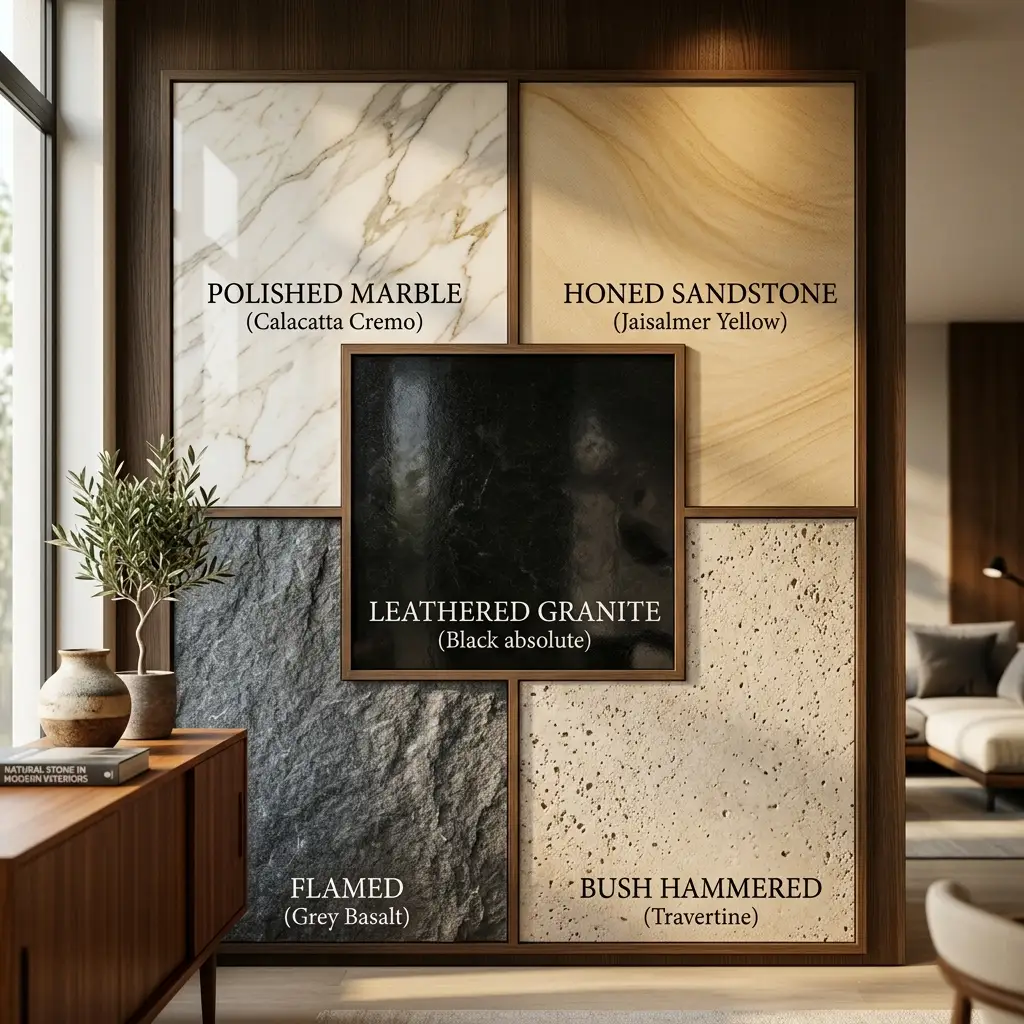
You have selected the perfect natural stone for your living room flooring or garden wall cladding. But the decision process does not end with choosing the material and colour. The actual character of the stone, how it feels under bare feet, how it catches sunlight and how safely you can walk on it when wet, depends entirely on the finish.
If you are a homeowner, architect, or interior designer working on a project in 2026, understanding how these treatments change the look and functionality of the material is critical. Having the different types of natural stone finishes explained is the first step toward making a lasting, practical design choice for your home.
Table of Contents
What is the difference between honed and polished stone finish?
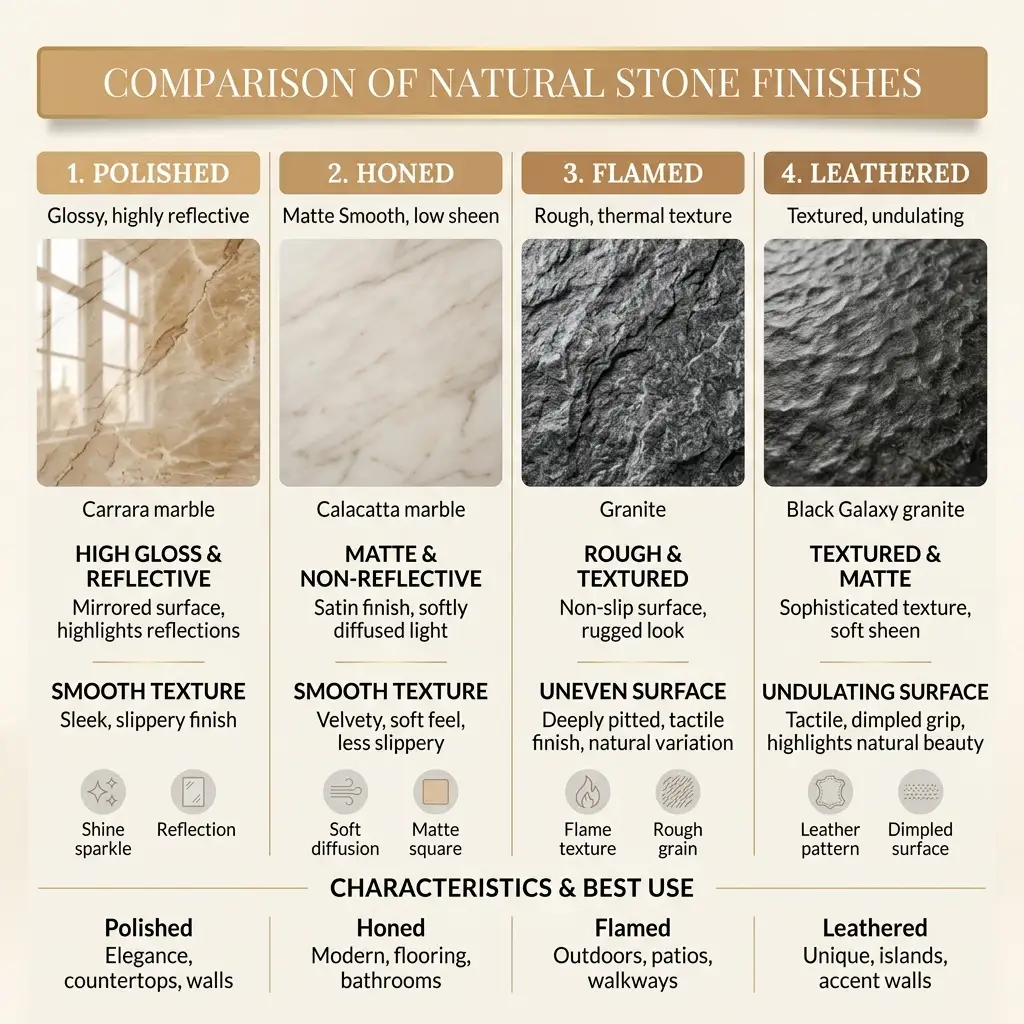
The difference between honed and polished stone finishes lies in gloss and texture. A polished finish creates a highly reflective, glossy surface that highlights colour, while a honed finish provides a smooth, matte, non-reflective surface that feels organic and hides scratches better.
When clients Visit our Stone Experience Center, the first question usually involves picking between high gloss and matte. What is the actual difference between a honed and polished stone finish in real-world application?
A polished finish is achieved through repeated grinding using progressively finer diamond abrasives until the surface becomes glossy and mirror-like. This process closes the natural pores of the stone, making it somewhat more resistant to stains. It brings out the deepest colours and boldest veining patterns. The pros and cons of using a polished marble finish are straightforward. The main advantage is unmatched luxury and striking visual depth, ideal for formal living rooms and lobby walls. The disadvantage is that it becomes incredibly slippery when wet and shows dust, smudges and fine scratches quite visibly over time.
A honed finish stops short of the final polishing stages. It leaves the stone perfectly smooth but completely matte. Honed stones lack the high reflection, which means they do not bounce light around the room aggressively. This finish is much more forgiving with foot traffic, concealing everyday wear and tear better than gloss. It also offers a slightly better grip, making it suitable for high-traffic corridors and kitchen floors.
How is a leathered stone finish created and used?
A leathered stone finish is created by brushing a honed surface with diamond-tipped brushes. This technique adds a subtle, undulating texture resembling leather. It is used on granite and marble countertops because it hides fingerprints, water spots and smudges perfectly.
Leathering is one of the most requested treatments at Stone World right now. If you are wondering how a leathered stone finish is created and used, it involves taking a stone that has already been honed and running diamond-tipped brushes over the surface. The brushes sweep away the softer particles of the stone while leaving the harder minerals intact.
The result is a surface with micro-texture. It retains the natural colour of the stone (often darkening it slightly) but creates a soft, tactile undulating feel that mimics well-worn leather.
We highly recommend leathered finishes for kitchen countertops, bar tops and outdoor dining tables. Because it lacks a mirror sheen, it hides fingerprints, crumbs and water rings brilliantly. It offers a sophisticated, lived-in aesthetic that feels warmer and more inviting than high-gloss alternatives.
Does a flamed finish make granite slip-resistant?
Yes, a flamed finish makes granite highly slip-resistant. The process involves exposing the stone to an intense oxy-acetylene flame, causing the surface crystals to burst and create a rough, deeply textured profile that provides excellent traction even when wet.
Safety is a primary concern for outdoor hardscaping and wet areas like pool decks. When clients ask, does a flamed finish make granite slip resistant, the answer is a definitive yes.
The flaming process is exactly what it sounds like. Slabs of granite are passed under an intense oxy-acetylene flame. The extreme heat shock causes the crystals on the surface of the stone to burst and pop off. The resulting texture is highly irregular, deeply pitted and very rough to the touch. This provides maximum grip underfoot, easily passing safety requirements for wet exterior areas.
Because flaming fundamentally changes the surface structure, it also mutes the natural colours of the granite, giving it an earthy, faded and highly organic appearance. It is an ideal treatment for driveways, natural stone outdoor flooring and exterior stair treads.
What do brushed and bush hammered stone finishes look like?
A brushed finish features a slightly textured, antique look with soft grooves. A bush hammered finish looks highly weathered and uniformly pitted, resembling a stone that has been manually chipped away, providing extreme grip and a rustic visual appeal.
While polished and honed dominate interiors, brushed and bush hammered finishes add immense character to specialized design elements.
So, what exactly is a brushed finish on natural stone surfaces? Similar to leathering, brushing uses wire or diamond brushes to wear down the surface, but it is typically done more aggressively on harder stones or applied over a flamed finish to soften the jagged edges. It yields an antique, slightly weathered look.
Conversely, what does a bush hammered stone finish look like? A bush hammer is a specialised masonry tool with a head covered in small steel pyramids. Pounding the stone with this tool creates a uniformly pitted, heavily textured surface that looks like it has been chipped away by hand. It creates a robust, rustic aesthetic with maximum non-slip properties, often used for heavy-duty exterior wall claddings or monumental architectural features.
What are the best stone finishes for outdoor applications?
The best stone finishes for outdoor applications are flamed, bush hammered and split-face. These heavily textured finishes provide crucial slip resistance for flooring and add dimensional depth to exterior wall claddings that withstand harsh weather conditions.
If you are planning an exterior project, your priorities shift from pure aesthetics to durability and safety. Determining what the best stone finishes for outdoor applications are depends on whether you are cladding a wall or paving a walkway.
For outdoor walls and facades, split-face and bush hammered finishes are exceptional choices. A split-face finish simply shows the natural cleft of the stone where it was fractured at the quarry, offering a rugged, architectural look. You can explore our guide on how to choose natural stone for landscape walls to see more examples.
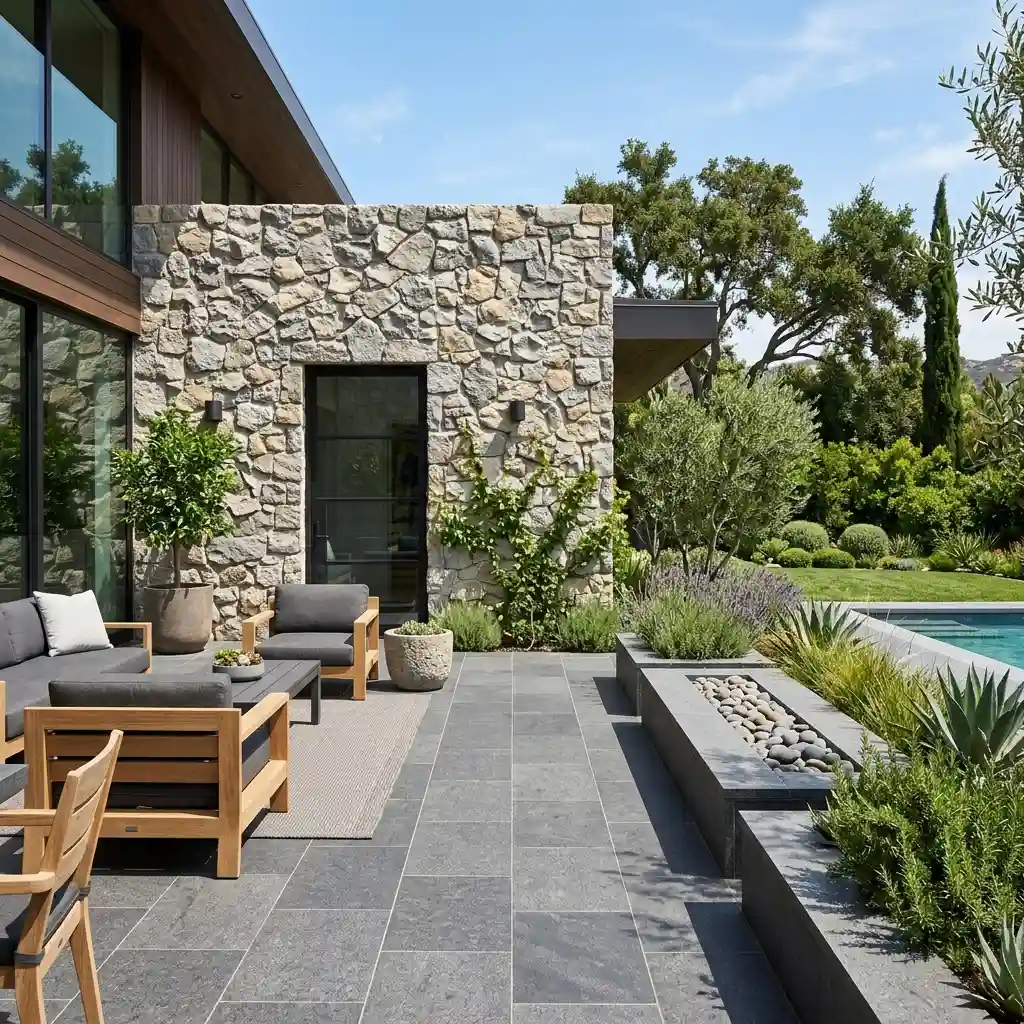
For outdoor flooring, patios and pool surrounds, flamed granite or brushed sandstone are the industry standards. They ensure no one slips during monsoon rains while maintaining their colour and structural integrity despite harsh sun exposure.
How to choose the right finish for your natural stone floor?
Choose the right finish for your natural stone floor by evaluating room traffic and moisture. Use polished finishes for formal, dry areas like living rooms, honed finishes for high-traffic corridors and leathered or flamed finishes for wet zones.
When clients ask us how to choose the right finish for your natural stone floor, we always start by analysing the room’s function.
Here is a simple checklist to guide your decision:
- Formal Living and Dining Rooms: Polished marble stone flooring or granite. The high gloss elevates the luxury quotient and bounces natural light beautifully.
- Kitchens and Corridors: Honed or leathered stone. These areas see heavy foot traffic and spills. Matte finishes hide scratches and dust better than gloss.
- Bathrooms and Wet Areas: Honed or brushed. A polished bathroom floor is a slipping hazard waiting to happen.
- Patios and Balconies: Flamed or bush hammered. Absolute traction is required here, along with weather resistance.
How do different finishes affect the durability of stone?
Different finishes affect durability by altering surface porosity. Polished finishes close natural pores, increasing stain resistance but showing scratches easily. Textured finishes like leathered and flamed are highly durable against traffic wear but require sealants to prevent moisture absorption.
A common misconception is that the stone itself dictates longevity. In reality, the surface treatment plays a massive role. How do different finishes affect the durability of stone?
A polished surface is technically the least porous because the grinding process seals the micro-fissures in the stone. It repels liquid spills well if wiped up quickly. However, it is the least durable against abrasive wear. Sand carried in on shoes will dull a polished floor over time.
Textured finishes (leathered, brushed, flamed) open up the pores of the stone, making them more susceptible to absorbing oils or staining liquids. However, they are incredibly durable against mechanical wear. Scratches, scuffs and chips simply blend into the existing texture.
Real-World Examples of Natural Stone Finishes
Seeing natural stone finishes applied in real-world settings helps visualize their true texture and light interaction. Designers combine different finishes within the same space to create dynamic visual contrast.
At Stone World, we believe in showing rather than just telling. The best way to understand how light interacts with different textures is to see them in a finished space.
Watch this short video showing an elegant implementation of natural stone at our studio:
If you are unsure which finish works best for your specific residential project, visiting an experience center is essential. We invite you to experience these textures firsthand at the Stone World experience centre.