


Stone World in Indore brings you the ultimate guide on lighting natural stones. You spend lakhs on premium Banswara marble or custom CNC carved sandstone, only for it to look flat and lifeless at night. The culprit? Bad lighting. We see this happen in premium Indian homes far too often. Here is everything you need to know about lighting effects on natural stone surfaces, straight from our design studio to your home project.
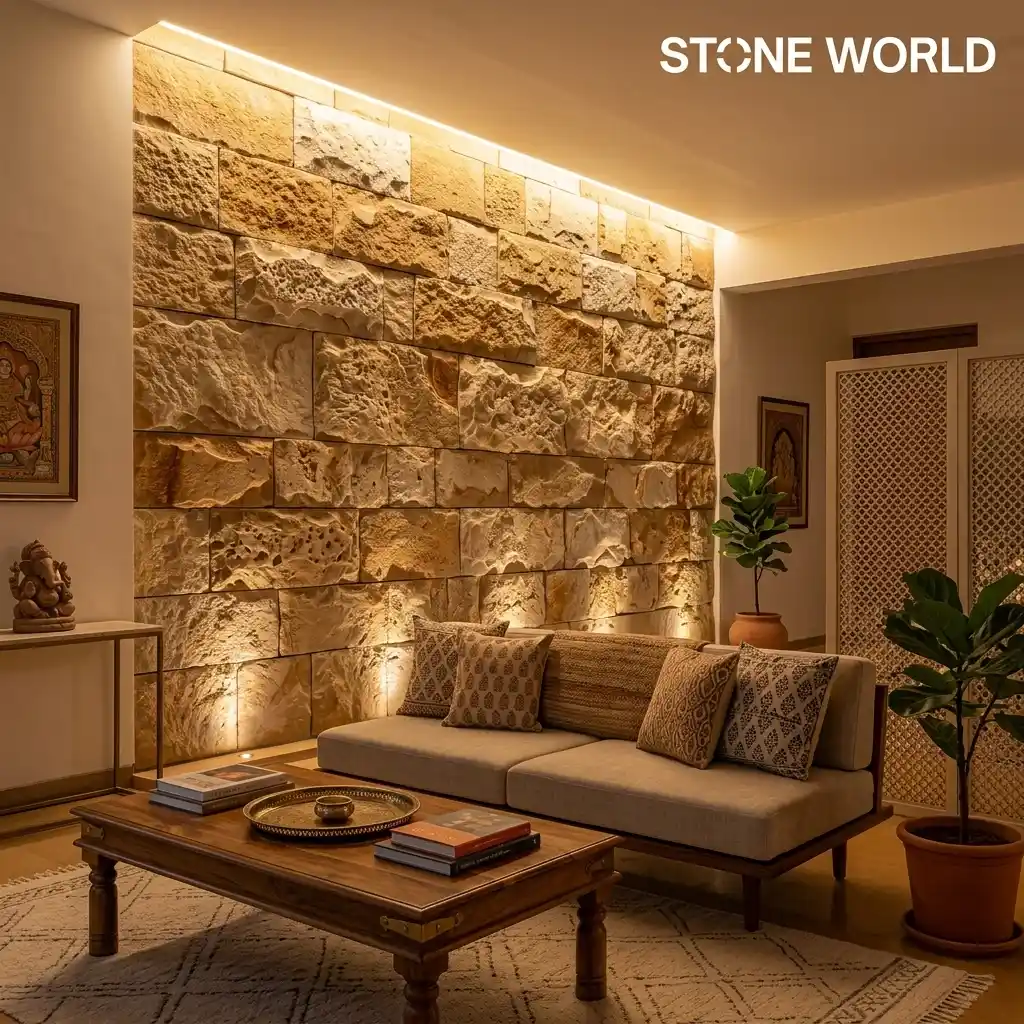
The way a stone looks at the yard under the bright mid-day sun is rarely how it will look in your living room at 8 PM. It’s a completely different environment. Lighting completely changes the personality of stone. A textured Gwalior mint sandstone can look aggressive with harsh lighting, or it can look like a soft, warm sanctuary with the right ambient glow.
If you are planning an interior or exterior project, you need to understand how lighting affects natural stone colors. We will walk through the exact lighting temperatures, angles and fixtures that architects use to bring natural stone to life.
Table of Contents
How warm vs cool light changes stone appearance
The color temperature of lighting (measured in Kelvin) dictates how a stone's color is perceived. Warm light (2700K - 3000K) enhances earthy tones like yellow, beige and red, while cool light (4000K - 5000K) sharpens whites, greys and blues, making stones like marble look cleaner and more modern.
People often ask us how does warm vs cool light change stone appearance? The answer lies in the base color of the stone itself.
Think of lighting like a filter on a camera. If you have a beautiful Jaisalmer yellow limestone and you blast it with a cool white 6500K LED bulb, the stone will look sickly and pale. You’ve essentially drowned out its natural warmth. On the flip side, does LED lighting make marble look different? Absolutely. If you use a very warm 2700K light on pure Banswara white marble, it might look yellowed and aged, which is rarely what people want for a modern, crisp bathroom.
- Warm Lighting (2700K - 3000K): Best for sandstones, travertines and beige granites. It makes spaces feel cozy.
- Neutral Lighting (3500K - 4000K): A safe middle ground. Works well in kitchens with mixed stone elements.
- Cool Lighting (5000K+): Reserve this for pure whites and deep blacks. It highlights the stark contrast in stones like black basalt or pure white marble.
I keep coming back to this rule: match the temperature of the light to the undertone of the stone. Before you finalize the electrical layout, test a sample piece of your stone under the actual bulbs you plan to use.
Expert Tip: Need help choosing the right stone for your living room? We recommend reading our guide on natural stone wall panel design ideas to get inspired before deciding on the lighting.
Effects of natural daylight on indoor stone features
Natural daylight brings out the truest colors and hidden veins in indoor stone features. The shifting angle of the sun throughout the day dynamically alters shadows on textured stones, creating a living, breathing design element that artificial light struggles to fully replicate.
You simply cannot beat the sun. The effects of natural daylight on indoor stone features are dramatic because daylight is dynamic.
At 9 AM, morning light coming through an east-facing window is cooler. It hits your CNC carved wall panel and casts long, soft shadows. By 4 PM, the light warms up significantly, changing the entire mood of the room. This is why we always tell clients to observe their stone samples at different times of the day before committing.
If you are planning a stone feature wall in a room that gets zero natural light, you have to work twice as hard with your artificial lighting to give the stone depth. In spaces with large windows, let the architecture do the heavy lifting during the day.
How to highlight stone textures with accent lighting
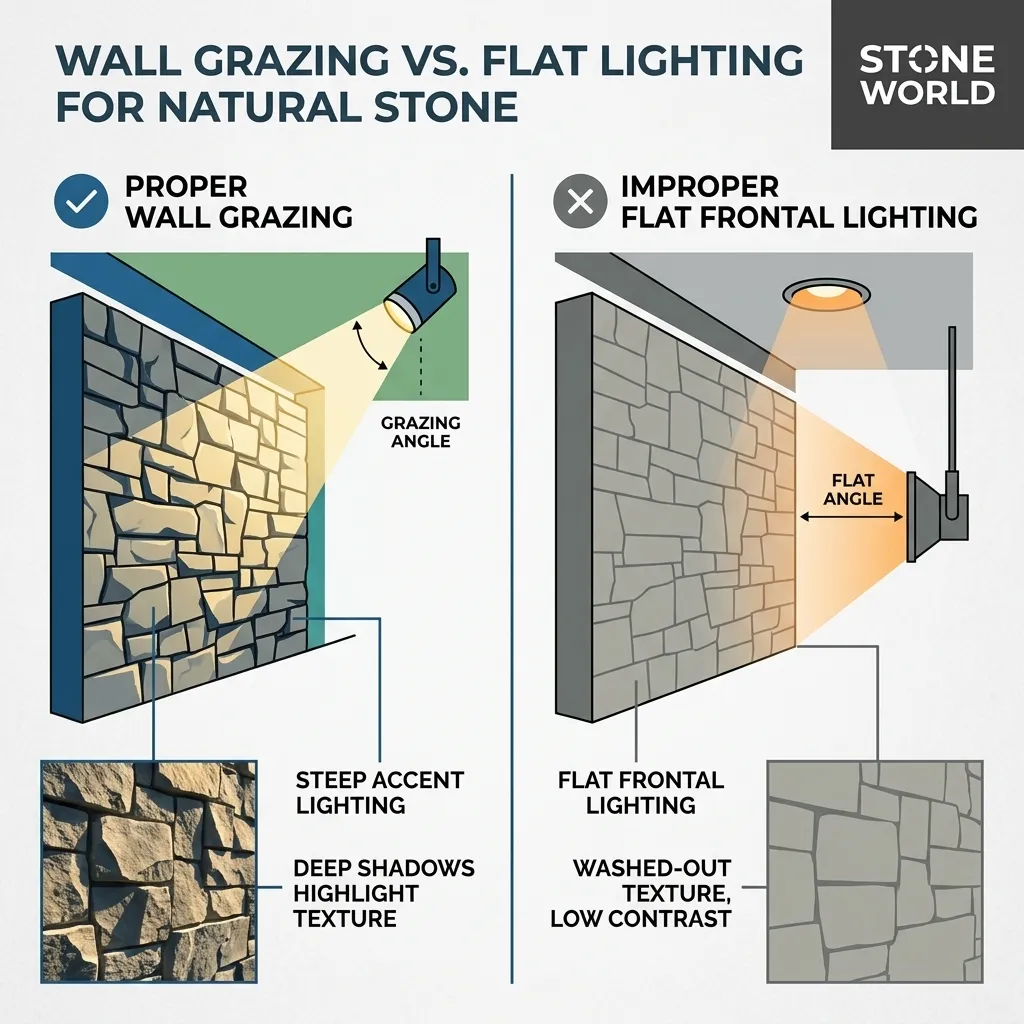
To emphasize the natural grain, split-face finish, or 3D carvings of stone, use directional accent lighting like wall grazers or spotlights. By placing the light source close to the surface at a steep angle, you cast deep shadows in the crevices, heavily exaggerating the tactile feel of the stone.
If you install a heavily textured stone wall, like a split-face slate or a fluted sandstone, and then you light it directly from the front, you kill the texture. Flat, frontal lighting washes out shadows, making a 3D surface look completely flat.
So, how to highlight stone textures with accent lighting properly? You need to use a technique called “wall grazing.”
Wall grazing involves placing a light fixture very close to the stone surface (usually just a few inches away, either on the ceiling or the floor) and aiming it straight down or up. This steep angle catches every bump, groove and ridge, casting deep shadows below them. The result is striking.
- What type of lighting is best for natural stone walls that are highly textured? Track lighting, recessed wall grazers and LED strip lights hidden in a cove are your best friends here.
- Which lighting temperature works best with sandstone when grazing? Usually 2700K to 3000K. Sandstone has a natural earthy warmth and warm accent lighting makes it look incredibly rich and inviting.
How to use backlighting for translucent natural stones
Backlighting translucent stones like onyx, agate and some thin marbles turns them into beautiful glowing walls. This requires an LED light panel placed directly behind the stone, diffusing the light evenly to reveal the natural, hidden veining patterns from within.
There is nothing quite as luxurious as a glowing stone bar front or vanity top. But how to use backlighting for translucent natural stones without it looking cheap or patchy?
The biggest mistake contractors make in India is using cheap LED strips placed too close to the back of the stone. This creates obvious hot spots, which are bright lines of light with dark patches in between. It completely ruins the premium feel.
To do this right, you need uniform light diffusion. You should use a high-quality LED light guide panel (LGP) designed specifically for backlighting. Leave enough of an air gap between the light source and the stone to allow the light to spread evenly.
When you backlight a stone, you are literally shining a light through millions of years of geological history. Every hidden fracture, crystal deposit and mineral vein is suddenly exposed. It’s beautiful, but it’s also unforgiving. Make sure you select your slab carefully, knowing that backlighting will show every detail.
Ready to upgrade your home interiors?
Browse our exclusive range of natural stone claddings and see the quality for yourself at Our Indore Stone Experience Center.
Book an Experience Center VisitHow to choose outdoor lighting for stone facade
Selecting outdoor lighting for a stone facade involves balancing security with aesthetics. Up-lighting highlights architectural height and stone texture, while choosing weather-rated, low-glare fixtures ensures the stone’s natural color remains visible without blinding passersby.
The exterior of your home is the first impression you make. Figuring out how to choose outdoor lighting for stone facade can be tricky because you are dealing with scale, weather and light pollution all at once.
Take a look at this stunning implementation on one of our recent projects:
Outdoor elevations usually use split-face or fluted panels. To make these pop at night, up-lighting from the ground is incredibly effective. It throws long, dramatic shadows upwards, emphasizing the height and grandeur of the building.
But you have to be careful with intensity. If you overpower an exterior stone wall with too many bright floodlights, it washes out the color. A more subtle approach, using targeted spotlights to highlight specific architectural features, yields much better results.
What causes natural stone colors to fade under lights?
Fading in natural stone is rarely caused by the light itself, but rather the UV radiation and heat emitted by older lighting technologies. Switching to high-quality, low-heat LED fixtures prevents thermal stress and UV damage, preserving the stone's vibrant color over decades.
A question we hear often from concerned clients: what causes natural stone colors to fade under lights?
The truth is, genuine natural stone is incredibly color-stable. It has sat in the earth for millions of years. However, certain colored stones, especially dark granites or intensely pigmented slates, can appear to fade if they are constantly bombarded by harsh UV light.
Historically, halogen bulbs were the main offenders here because they emitted both UV rays and intense heat. The heat could actually dry out the natural moisture and resins within the stone, making it look dull.
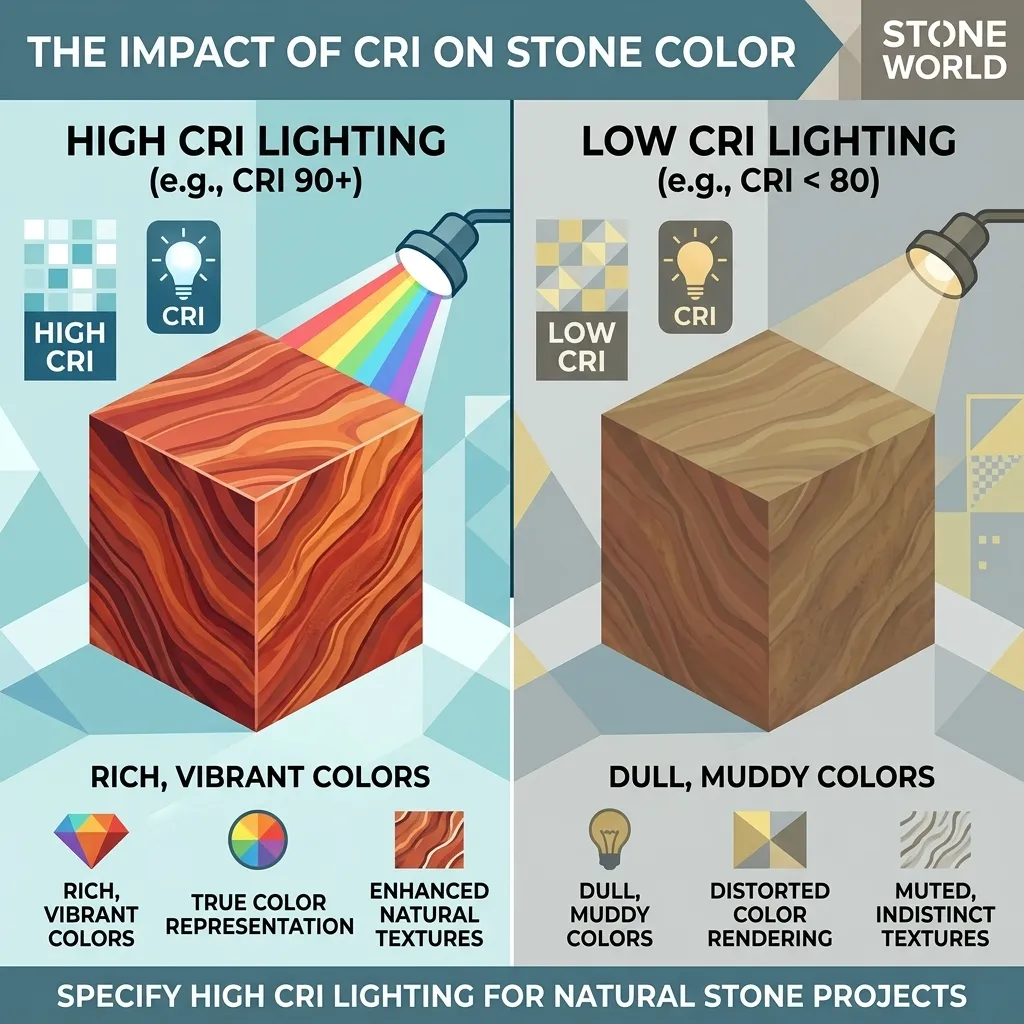
Today, the solution is simple: stick to LEDs. Quality LEDs emit almost zero heat and no UV radiation. Why does granite look different under artificial light sometimes? It is usually not fading, but rather poor Color Rendering Index (CRI). Always buy LEDs with a CRI of 90 or higher. A low CRI bulb makes the rich red grains in an Agra red sandstone look muddy and lifeless.
Frequently Asked Questions (FAQs)
What is the best color temperature for lighting sandstone?
Warm LED lighting between 2700K and 3000K works best. Sandstone naturally has earthy red, brown and beige tones, which are beautifully enhanced by the golden glow of warm light.
How do I highlight the rugged texture of a stone wall?
Use a technique called "wall grazing." By placing directional lights (like track lights or recessed floor fixtures) close to the wall surface at a steep angle, you create deep shadows that emphasize the stone's natural textures.
Will artificial lighting cause my natural stone to fade?
No, as long as you use high-quality LED lighting. LEDs do not emit UV rays or excessive heat, which are the primary causes of fading in some highly pigmented stones. Avoid using older halogen bulbs.
What is CRI and why does it matter for stone lighting?
Color Rendering Index (CRI) measures how accurately a light source reveals true colors compared to natural sunlight. Always use LEDs with a CRI of 90 or higher to ensure the rich, vibrant colors of your marble or granite aren't washed out.
How do you backlight a stone wall?
Backlighting works on translucent stones like Onyx, Alabaster, or certain thin Marbles. You install an even, diffused LED panel array behind the stone slab before installation to make the entire surface glow from within.
Should I use warm or cool lighting for white marble?
For pure white marbles like Banswara or Statuario, cool white lighting (around 4000K) is usually preferred. Warm lighting can sometimes cast a yellow tint, making crisp white marble look aged or dirty.
Get Expert Advice on Stone Selection
Not sure which stone works best for your lighting layout? Our team is here to help you make the right choice.
Talk to our Experts