


I visit a lot of newly constructed residences in Indore, Bhopal, and other parts of Central India. People spend lakhs on high-end wall claddings, designer gates, and decorative lighting. Yet, many homeowners treat their house board as a last-minute chore, slapping on a cheap plastic or acrylic sheet. I always tell them: the entrance of your home speaks before anyone steps inside. It is your identity, your name, and your first impression. A thoughtfully crafted stone name plate design does more than show your address. Choosing a premium stone name plate for home entrances adds stability, character, and timeless charm to your home facade while standing strong against Indian monsoons and summers.
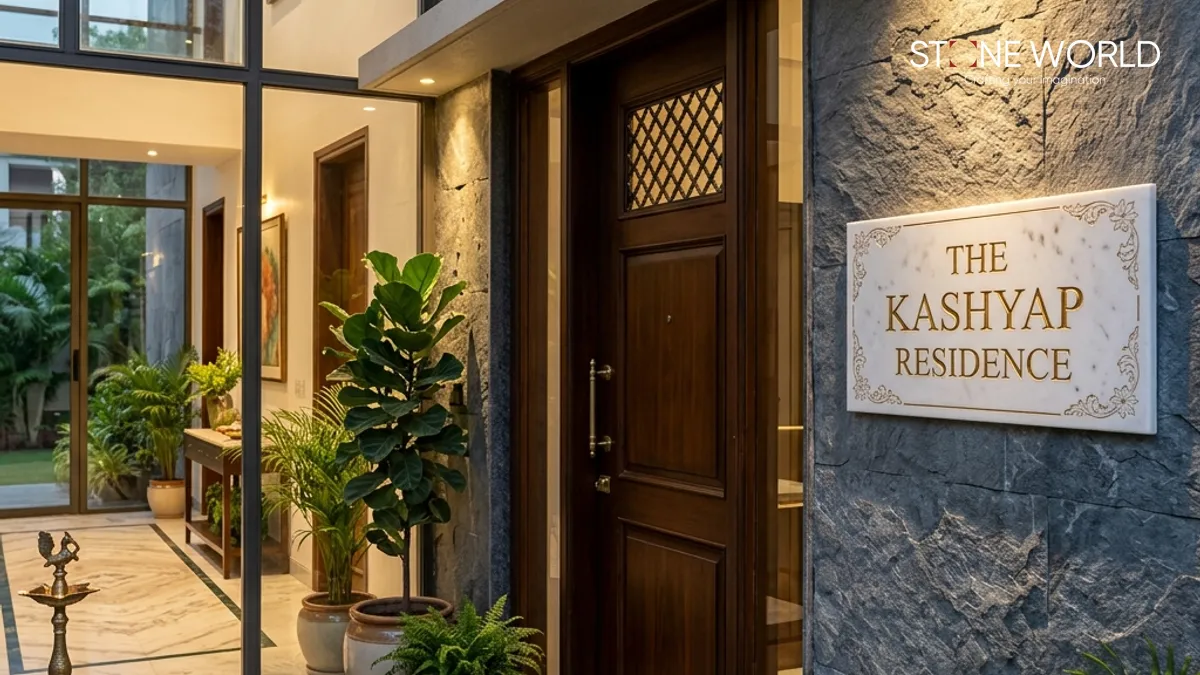
At Stone World, we believe a home entrance deserves the natural strength of genuine stone. Our artisans combine computerised carving with hand finishing to create a durable marble name plate for home use or a rugged sandstone option that lasts generations. If you want an entrance that stands out, here is a complete guide to choosing, designing, and maintaining your entrance signage.
Table of Contents
Why Choose a Natural Stone Name Plate Design for Your Entrance?
A natural stone name plate design offers unmatched outdoor durability, weather resistance, and premium appeal. Unlike plastic, acrylic, or wood, natural stone does not warp, fade under harsh sunlight, or corrode over time, making it a permanent statement of elegance for your home entrance.
When people plan their dream house, they focus on the big things. Granite floors, imported claddings, and designer paint are picked with care. But the name plate is often an afterthought. It shouldn’t be.
Your name plate is the very first detail guests notice. It is the signature on your home’s architecture. Choosing a natural stone name plate over cheap synthetic options ensures your entrance retains its appeal for decades. While acrylic fades in two years and wood rots in the monsoon, stone name plates for home use stand strong, matching the permanence of your house structure itself.
Natural stone offers several distinct advantages over plastic or wooden boards. First, consider weather immunity. Whether it is the intense 43°C summer heat in Indore or heavy monsoon downpours, a genuine stone carved name plate handles temperature changes easily. It will not warp, crack, or fade, standing as a permanent feature of your facade.
Another major benefit is low maintenance. Acrylic boards scratch easily and attract dust due to static charge, while wood requires regular polishing to prevent rot. In contrast, stone engraved name plates only need a quick wipe with a wet cloth to look as good as new.
From an aesthetic standpoint, the tactile depth of natural stone is unmatched. There is a distinct difference between printed text on a plastic board and deeply carved letters on a solid stone block. Creating a beautiful name plate on stone creates a premium, 3D effect that printed alternatives can never copy. Finally, if your front facade already uses natural stones for wall cladding, a custom name plate integrates into the design naturally instead of looking like an added accessory.
Key Elements of a Modern Stone Name Plate Design
A successful stone name plate design requires balancing size, typography, engraving depth, and installation location. Selecting clean, high-contrast fonts and proportionate dimensions ensures readability from a distance while matching your home's architectural style.
Designing a name board is not just about writing your name on a piece of rock. It is a balance of aesthetics and practical engineering. Implementing a modern house name plate design means matching the lettering style and material tone to your front elevation.
Here are the key design choices you need to make for a custom home name plate design stone project:
Sizing and Proportions
The right size depends on where you mount it. If you are placing a stone name plate on wall areas next to your main door, a standard 12x18 inch or 18x24 inch size works best. If you are mounting it on a large gate pillar or a boundary wall, you can scale it up. It is best to cut a cardboard template of the size you plan to use and tape it to the wall. Step back to the gate and check if you can read it clearly.
Typography and Font Selection
Avoid overly scripty or complex fonts. When stone is carved, thin serifs and loops can chip or become hard to read. Choose clean, blocky fonts. Serif fonts like Times New Roman look classic and formal, while sans-serif fonts like Montserrat or Helvetica feel modern and clean. If you are engraving in Hindi or other regional scripts, ensure the strokes are thick enough for clean carving.
Contrast and Lettering Finishes
You need a high contrast between the stone surface and the engraved text. On light marbles or beige sandstones, we fill the engraved letters with deep black, charcoal grey, or dark brown paint. On dark granites or black slates, gold-leafing or clean white paint creates a stunning contrast. For an ultra-premium look, solid brass letters can be inlaid into custom-carved channels in the stone.
LED Backlighting
Warm light makes a huge difference. Backlighting can turn a name plate into a beautiful evening feature. By mounting a translucent stone slab (like Onyx) slightly away from the wall and placing waterproof LED strips behind it, the name plate glows with a soft, warm amber light at night. This is highly functional for delivery personnel and guests searching for your house after dark.
Choosing the Right Material for Your Stone Name Plate Design
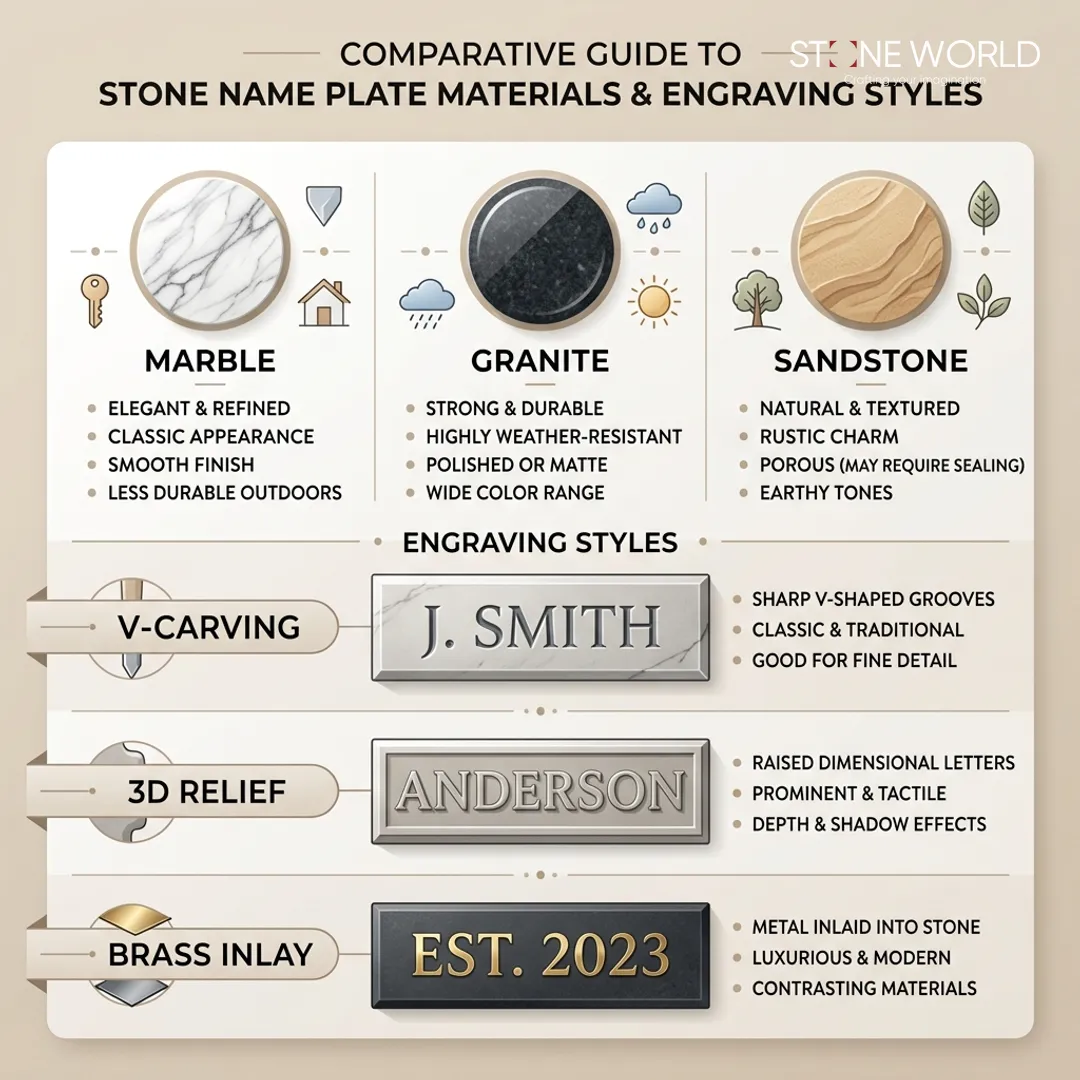
The best materials for a stone name plate design are marble, granite, and sandstone. Marble offers a smooth, luxurious finish; granite provides maximum scratch-resistance and bold contrast; while sandstone brings rich, natural textures suited for rustic and heritage homes.
Every natural stone has its own personality, structural density, and behavior under the sun. You need to match the stone with your architectural style and climate.
1. Marble Name Plates: The Luxury Statement
For a refined and premium look, a custom marble name plate remains the ultimate luxury choice. Marble has a fine grain structure that allows for crisp, detailed engraving. White marble, like the classic Makarana or Banswara white marble, provides a bright, clean background. When looking for a high-end marble house name plate, white marble filled with gold paint looks incredibly elegant.
You can also opt for textured marble. Slabs like Rainforest green or brown marble, with their natural branch-like veins, create an artistic, organic background. While Italian marble varieties like Carrara or Statuario are stunning, they are slightly softer, making them better suited for covered entrance foyers rather than open-to-sky boundary gates. For high-exposure settings, a heavy, polished marble name plate design for main gate placement offers a premium look that pairs beautifully with metal and wooden gates.
2. Granite Name Plates: Indestructible Elegance
If you want something that requires absolutely zero care and will look exactly the same fifty years from now, granite is your best option. It is one of the hardest natural stones on Earth, making it highly scratch-resistant and impervious to acid rain or pollution. Polished black granite with gold or white lettering is a classic choice, offering high visibility and a clean, modern look.
Grey or red granite varieties provide different aesthetic characters. Grey granite offers a softer, contemporary feel, while Jhansi red or ruby red granite brings a traditional, warm tone. However, polished granite has a mirror-like finish. If you install it directly under an unshaded spotlight, it can create a glare that makes the text hard to read. A honed or satin finish is often a smarter choice for outdoor name plates.
3. Sandstone Name Plates: Warm, Earthy, and Traditional
For homes that have a rustic, heritage, or colonial design, sandstone is the perfect match. Known for its earthy tones (from light beige to deep teakwood patterns), it has a rich, grainy texture that complements wooden doors and green garden backdrops. Mint sandstone is a light cream/yellow stone that looks bright and sunny, while teakwood sandstone features natural banding patterns that resemble wood grains.
Agra red sandstone brings a deep terracotta red that invokes a historical, grand look at your entrance. Since sandstone is porous, it can gather moss over time if left unsealed in humid climates. At Stone World, we apply professional-grade hydrophobic sealants to all our sandstone name plates to keep them clean and dry.
Customised Stone Name Plate Design Options
Customised stone name plate designs allow homeowners to add unique elements like family names, house numbers, spiritual symbols, and metal inlays. Utilizing advanced CNC technology ensures high precision while retaining hand-finished artisan quality.
At Stone World, we rarely make two identical name plates. Every family has a different story, and every house has a unique layout. Customisation is what turns a block of stone into a personal heritage piece.
Here are a few ways we customise house name plate designs:
Engraving Styles: V-Carve vs 3D Relief
The way the text is carved changes the look completely. V-carve engraving uses physical diamond-tipped bits to cut a V-shaped groove into the stone, which is excellent for crisp, readable text and works beautifully when filled with gold or black color. On the other hand, 3D raised lettering carves away the background, leaving the text and borders raised from the surface. For a clean finish, we cut channels into the stone and inlay brass letters, stainless steel, or dark stone strips.
Spiritual Motifs and Symbols
Adding a spiritual symbol is a common custom in Indian homes. A small, beautifully carved Ganesha, Om, Swastik, or Lotus motif at the top or side of the name plate welcomes positive energy. With stone carving name plates and advanced CNC routing, these motifs can be detailed with absolute precision, matching the style of your main door.
Surnames and Family Roots
Many families like to include their native place name, family crest, or a welcoming quote like “Swagatamy” or “Vasudhaiva Kutumbakam” in calligraphic Sanskrit fonts. We can assist in picking the right layouts to accommodate multi-lingual text (e.g. English at the top, Hindi below) without cluttering the board.
Vastu Guidelines for Stone Name Plate Design and Placement
Vastu Shastra guidelines suggest placing the name plate on the right side of the main door at eye level. The plate should be made of high-quality natural stone, remain clean, well-lit, and show clear, readable text to invite positive energy into the home.
In Indian architecture, the main entrance is called the Mukha (face) of the house. It is the portal through which energy, wealth, and opportunities enter. According to Vastu Shastra, a name plate is not just signage; it is a tool that channels positive energy into your home.
When installing a name plate stone for home use, you must pay attention to its placement. Vastu Shastra states that the name board should be mounted on the wall to the right side of the main door, when you are facing the door from the outside. If there is no space on the right, the left side is acceptable, but the right side remains the primary recommendation.
Height and readability are equally important. You should install the name plate at eye level, which is typically 5 to 5.5 feet from the floor level. It should never be installed lower than the door handle. Ensure the family name and house number are carved in clean, clear fonts. Vastu emphasizes that clear text ensures positive opportunities can easily find your home, making a name plate for home stone installation a valuable energetic investment.
You must also make sure that the stone is in perfect condition. Never use a cracked, chipped, or damaged board. If a name plate gets damaged, replace it immediately, as broken elements are believed to attract negative energy. Finally, ensure the board is well-lit after sunset. A dark entrance blocks the flow of energy, so use a soft warm white spotlight or an integrated backlit setup to keep the name plate visible and bright.
Material Comparison for Home Name Plates
Comparing white marble, black granite, sandstone, and white onyx shows that granite offers the highest outdoor durability, marble provides the most polished luxury feel, while sandstone is ideal for warm, rustic styles.
Choosing the right stone is a matter of comparing look, durability, and Vastu compatibility. Here is a comparison to help you choose:
| Material | Vastu Element | Durability | Maintenance Needed | Outdoor Suitability | Best Finishes |
|---|---|---|---|---|---|
| White Marble | Space & Water | High (can discolor if unsealed) | Low (wipe monthly) | Excellent (for covered entrances) | Polished, Deep V-carve with gold fill |
| Black Granite | Earth | Maximum (scratch proof) | Very Low (wipe yearly) | Perfect (completely open gates) | Honed, Satin, Brass metal inlay |
| Sandstone | Earth & Fire | High (needs sealing coat) | Medium (needs wash after rains) | Excellent (for rustic themes) | Rough edge, 3D raised letters |
| White Onyx | Space | Medium (semi-fragile) | Medium (LED maintenance) | Good (under sheltered porch) | Polished translucent, Backlit setup |
How to Maintain and Clean Your Stone Name Plate
Clean your natural stone name plate by dusting weekly and washing with a mild, pH-neutral soap solution. Avoid acid-based cleaners and harsh scrubbing to preserve the stone's polished surface and paint fill.
Many clients in Indore and Bhopal ask me how to prevent white stains on outdoor stones. Because of high TDS (calcium-rich) groundwater, salt deposits can build up on name plates over time, making the surface look cloudy.
Fortunately, maintaining a natural stone name board is simple. For weekly care, a simple dusting with a soft, dry microfibre cloth is enough. This is especially important for deeply carved designs where road dust can gather in the grooves of the lettering.
Once a month, you can wash the surface with a mild, pH-neutral soap solution. Mix a few drops of baby shampoo or mild dish wash with warm water, and gently wipe the stone using a soft sponge. Always dry the surface immediately with a clean towel to prevent water spots. You must avoid using bathroom cleaners, vinegar, or lemon juice, as these acids react chemically with marble and sandstone, creating dull white etch marks that cannot be removed.
If the lettering paint fades after five to seven years of monsoon exposure, you can touch it up yourself. Use a fine artist brush and outdoor-grade acrylic metallic paint (like gold or bronze) to carefully fill in the engraved areas. For sandstone boards, we also recommend applying a clear, water-repellent stone sealer every three to four years to prevent moisture absorption and keep the surface free of moss.
Explore Premium Collections at Stone World Indore
Visit Stone World Indore's 12,000 square foot showroom to view our custom stone name plate design collections. Our design consultants and stone artisans help you select the perfect materials, layouts, and Vastu-compliant options.
A name plate is a deeply personal purchase. You want to touch the stone, see its natural grain under the light, and check different fonts before making your choice. We invite you to visit the Stone World Showroom in Indore, Central India’s largest design studio for natural stone. Spanning 12,000 square feet, our live display area lets you explore different marbles, granites, sandstones, and onyx slabs.
Whether you are looking for a classic marble name plate design, a rustic sandstone piece, or a complex name plate stone for home entrances, you can view live examples of V-carving, brass inlay work, and backlit designs.
If you are located outside Indore, or working with an architect, we can coordinate online. We send high-resolution photos of available stone blocks, design a digital 3D mockup of your name plate with your chosen fonts, and ship the finished piece securely to your doorstep anywhere in India.
Whether you need a simple, elegant house number plate or a grand, backlit name structure for a gate pillar, our team is here to help. WhatsApp us today to share your ideas and get a customized design quote.