


Your building's facade is the first thing people notice, yet so many homeowners settle for flat, plain paint that chips away after a few rough monsoons. You spend lakhs designing the interiors, but the exterior often gets reduced to an afterthought, leaving your property looking exactly like the one next door.
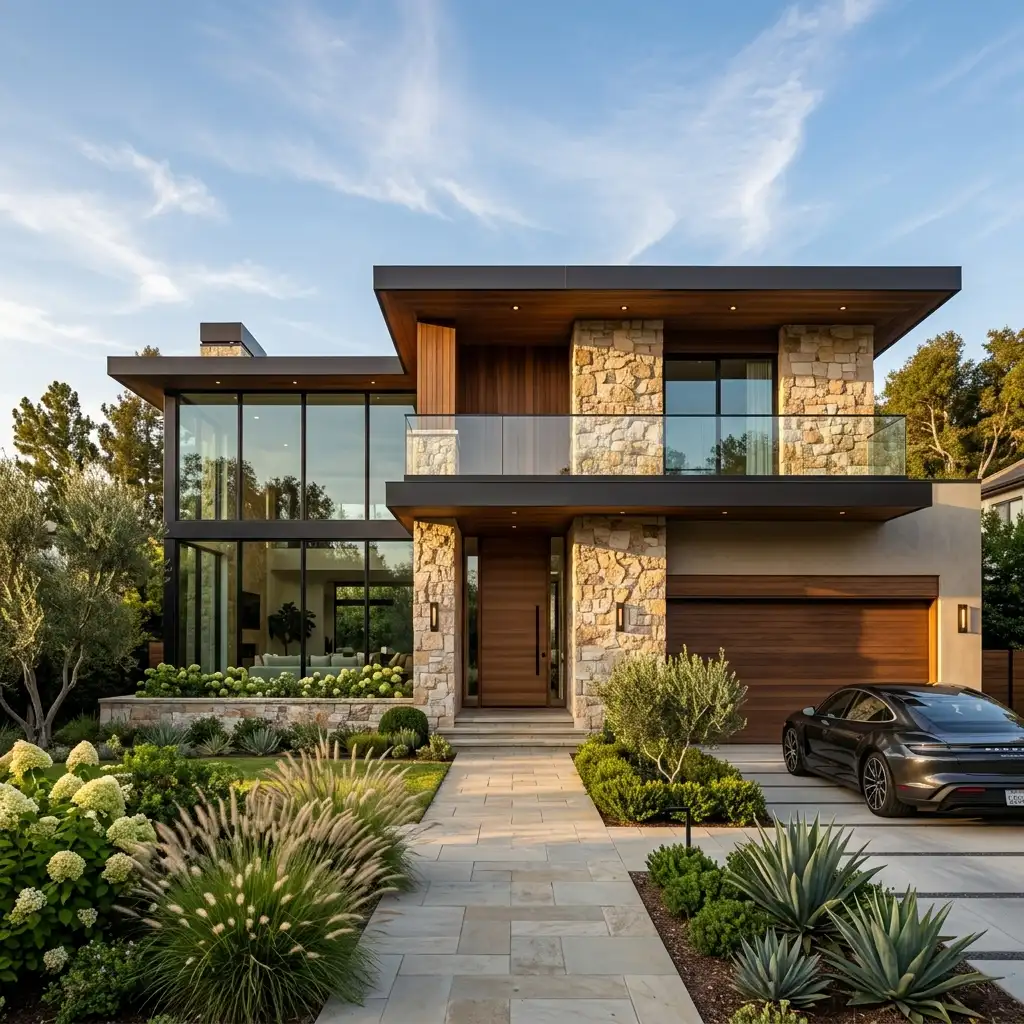
Every year you delay a permanent fix, you waste money on repainting and temporary patches. The harsh Indian weather eats away at standard finishes. That constant cycle of maintenance drains your budget and ruins the architectural appeal of your home. Before you know it, dampness creeps into the walls and the structural integrity is compromised.
The smartest way to break this cycle is by using natural stones for wall cladding. Architects and top designers rely on these materials because they solve both problems instantly. They provide an strong protective layer against the weather while adding a classic, rich look that actually increases your property value.
Table of Contents
Why Architects Choose Natural Stone Cladding
Architects prefer natural stone cladding because it offers high strength against harsh weather, provides natural thermal insulation to lower cooling costs and creates a unique, high-end visual appeal that artificial materials cannot replicate over time.
There is a reason you see stone on the most expensive properties in your city. It isn't just about looking wealthy. It's about engineering a building that lasts. When you look closely at high-end facade designs, a high-quality natural stone for wall cladding is almost always the main material.
India's climate is notoriously tough. Searing summer heat turns into torrential monsoon rain, followed by sudden drops in temperature. Standard cement plaster and exterior paints expand and contract under these extremes. Within three to four years, they crack, peel and let moisture seep into the brickwork. Natural stone handles these temperature fluctuations easily because it was forged in much harsher conditions deep within the earth.
Beyond weather resistance, stone acts as a natural thermal insulator. In places like Delhi or Jaipur where summer temperatures cross 45 degrees Celsius, a thick layer of natural rock cladding prevents the sun's heat from penetrating the walls. Your air conditioning works less, your electricity bills drop and the indoor environment stays noticeably cooler. In winter, it traps the warmth inside.
The design options is another huge factor. No two slabs of natural stone are exactly alike. When you use natural stones for cladding, you get subtle variations in colour, texture and veining that give the building character. Factory-made tiles have a repeating print that the eye catches immediately, breaking the expensive look. Real stone ages gracefully. Instead of looking worn out after ten years, it develops a natural texture that adds to its charm.
5 Best Natural Stones for Wall Cladding
The top five stones for wall cladding include granite for top strength, basalt for modern aesthetics, limestone for soft beauty, sandstone for rustic warmth and marble for rich interiors. Each offers unique textures and performance benefits.
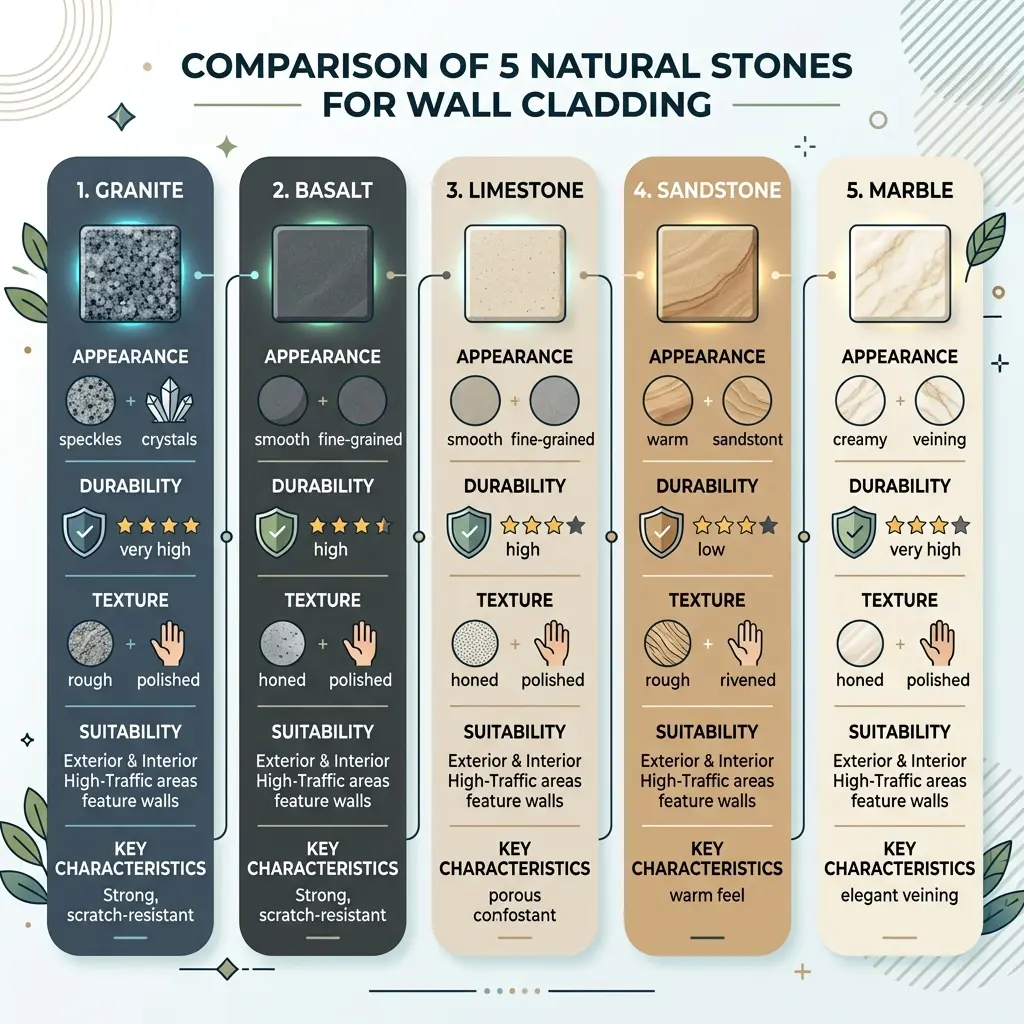
Not every stone works for every wall. You have to match the natural qualities of the rock with your specific needs. Here are the five materials that professionals consistently specify for their projects.
1. Granite - The Unbreakable Shield
If you want a wall that you never have to worry about again, you choose granite. It is an igneous rock, born from slow-cooling magma, which makes it one of the hardest natural substances on the planet. When architects design commercial towers or high-traffic public spaces, they almost always reach for granite.
When researching stone cladding for exterior walls india, granite is often the first choice because it is very hard to break. It completely resists scratches, shrugs off heavy impacts and is highly resistant to acid rain and urban pollution. You can blast it with a pressure washer without causing any damage. The colours simply do not fade, even under decades of direct UV exposure from the harsh Indian sun.
Aesthetically, granite has moved far beyond the highly polished, speckled look of the 1990s. Today, designers prefer flamed, brushed, or leathered finishes. A leathered black granite wall has a subtle, refined texture that absorbs light rather than reflecting it. This creates a bold, strong look that works perfectly for modern minimalist homes or heavy boundary walls.
The only downside is the weight. Granite is incredibly dense. Your structural engineer needs to ensure the load-bearing walls can handle the extra tonnage and the installation requires heavy-duty mechanical anchors rather than standard adhesives.
2. Basalt - Minimalist and Modern
Basalt is the quiet achiever of the stone world. Like granite, it's a volcanic rock, but it cools rapidly near the earth's surface. This rapid cooling gives it a very fine-grained, uniform texture without the large visible crystals found in granite. It typically comes in deep greys, charcoal and almost pure black.
For modern homes searching for the perfect natural cladding stone, basalt is a dream material. When you want a sleek, moody and highly modern look without the heavy patterns of heavy veining, basalt delivers. It provides a solid, monochromatic backdrop that allows architectural planting, timber accents, or striking water features to stand out.
It is incredibly dense and holds heat very well. Many designers use it for exterior boundary walls or as a main feature wall around a fireplace. Because the texture is so consistent, it works beautifully in large format panels with ultra-thin grout lines, creating the illusion of a single, massive slab of rock.
You do need to be careful with maintenance. While it is tough, its dark colour means that hard water stains or efflorescence (the white salty powder that sometimes leaches from mortar) will show up clearly if the installation isn't done correctly. A high-quality penetrating sealer is strictly necessary to keep it looking pristine.
3. Limestone - Soft and Versatile
Limestone brings a completely different energy to a building. It's a sedimentary rock, formed over millions of years from compressed marine shells and fossils. The colour palette is soft, light and incredibly calming - think creamy whites, warm beiges, soft greys and pale tans. If you want your home to look like a European villa or a luxury coastal retreat, limestone is the answer.
Architects love it because it is relatively soft and easy to carve. This means you can create custom edge profiles, fine details, or curved panels much more easily than you can with granite. Exploring different limestone options opens up a world of soft beauty for both interior and exterior use.
However, that softness means it is porous. Limestone will absorb water if left unprotected. It is better suited for semi-covered exterior walls, like a deep veranda, or for spectacular interior spaces. If you do use it fully exposed to the elements, it requires a rigorous sealing schedule.
Over time, unsealed limestone will weather and change colour. Some people actually prefer this, as it gives the building an aged, historical look. If you visit ancient monuments in India or Europe, many are built from limestone that has stood for centuries, proving that while it is soft, it is deeply enduring.
4. Sandstone - Earthy and Rustic
If there is one stone that defines traditional Indian architecture, it is sandstone. The Red Fort and the palaces of Rajasthan stand as permanent proof of its capabilities. It is formed from sand grains bound together by natural minerals, giving it a deeply earthy, warm appearance.
Sandstone is the ultimate choice for decorative wall stone cladding when you want a rustic, highly textured finish. It comes in a massive variety of colours, from the famous Dholpur Red to Teakwood (which actually looks like wooden planks), Mint Fossil and Autumn Brown. The surface is naturally slip-resistant and rough, which catches the light beautifully at sunrise and sunset.
It performs very well in hot, dry climates. For boundary walls, garden retaining walls, or a massive exterior facade, it provides an organic look that blends perfectly with landscaping. The rough texture hides dust and minor damage brilliantly, making it very low-stress to live with.
You do need to account for its porosity. Like limestone, it drinks water. In areas with heavy monsoon rains, a high-quality sealant is required to stop it from turning green with algae. But with basic care, utilizing this natural stone for wall designs will easily outlast you.
5. Marble - Classic Beauty
Marble is the undisputed king of luxury. It is a metamorphic rock, formed when limestone is subjected to intense heat and pressure deep within the earth. This process causes the minerals to crystallise, resulting in the dramatic veining and high-gloss capability that marble is famous for.
While you rarely see polished marble used for exterior facades due to acid rain dulling the finish, it is the premier choice for interior feature walls. A massive book-matched marble slab in a double-height living room or a luxury hotel lobby creates an grand feeling. The stone physically reflects light, brightening up interior spaces and making them feel vastly more expensive.
For exteriors, architects often use marble with a honed or sandblasted finish. This removes the gloss and provides a matte, highly sophisticated surface that handles the weather much better while still displaying the beautiful underlying veins.
Marble requires respect. It is softer than granite and reacts badly to acidic cleaners. You have to maintain it with pH-neutral soap and seal it regularly. But for those who want the absolute pinnacle of aesthetic beauty, the extra maintenance is a very small price to pay.
| Stone Type | Best Used For | Durability | Porosity | Maintenance Need |
|---|---|---|---|---|
| Granite | High-traffic facades, exterior walls | Extreme | Very Low | Minimal |
| Basalt | Modern boundary walls, fireplaces | High | Low | Moderate (sealing required) |
| Limestone | Verandas, elegant interior accents | Medium | High | High (regular sealing) |
| Sandstone | Rustic exteriors, garden walls | High | High | Moderate |
| Marble | Living room feature walls, lobbies | Medium | Medium | High (specialist care) |
Where to Apply Natural Stone Wall Tiles
You can install natural stone wall tiles on building facades for weather resistance, living room feature walls for visual impact, bathroom interiors for a spa-like feel and garden boundary walls to integrate with landscaping.
The beauty of stone is its versatility. You are not limited to just the front elevation of your house. When you bring natural stones for walls indoors, it bridges the gap between the natural world and your living space.
In the living room, a stone feature wall behind the television or framing a fireplace instantly anchors the room. It gives the eye a place to rest. You don't need heavy artwork when the wall itself is a piece of geological art. For these interior applications, thinner stone veneers are often used to reduce weight and installation costs.
Bathrooms are another excellent location. Using a heavily veined stone in a shower enclosure transforms a basic bathroom into a luxury spa retreat. Just remember that wet areas require strict sealing protocols. It's also worth researching whether you need dry or wet cladding techniques depending on the height and location of the installation.
For commercial buildings, stone cladding on the lower levels is almost mandatory. It protects the building from street-level damage, hides dirt and immediately shows status and strength to visiting clients.
Essential Maintenance Tips for Stone Cladding
To maintain stone cladding, apply a penetrating sealer annually to prevent water absorption, clean surfaces using only pH-neutral soaps and inspect the joints regularly to catch and repair minor cracks before moisture enters the structure.
Stone is tough, but it is not entirely maintenance-free. How you treat it dictates how long it stays looking factory-fresh. The biggest enemy of natural stone is not physical impact, but water and harsh chemicals.
You must seal porous stones like sandstone and limestone immediately after installation. A high-quality penetrating sealer dives deep into the pores of the rock and blocks water from entering. If water can't get in, algae can't grow and stains can't set. You should test the sealer once a year by splashing water on the wall. If it beads up, you are safe. If it absorbs, it is time to reapply.
When it comes to cleaning, put away the bleach and acidic bathroom cleaners. Acid eats away at the calcium in marble and limestone, leaving permanent dull spots called etching. Use a dedicated pH-neutral stone cleaner or just mild dish soap and water. For exterior walls, a gentle pressure wash once a year is usually enough to remove urban dust.
Finally, keep an eye on the grout or silicone joints between the stone panels. The stone itself will survive for centuries, but the pointing material will degrade over a decade or so. If you see a crack in the joint, get it repaired quickly. Water getting behind the stone is the primary cause of cladding failure.
Frequently Asked Questions
1. What is the most durable stone for exterior walls?
2. Is natural stone cladding suitable for the Indian climate?
3. Does a stone wall require a lot of maintenance?
4. Can I use stone cladding in a small living room?
5. Is dry cladding better than wet cladding?
The Final Verdict on Stone Cladding
Choosing the right material for your walls is one of the most important decisions in the construction process. Paint is temporary. Synthetic tiles look artificial. But when you invest in natural stones for wall surfaces, you are building something permanent. From the indestructible nature of granite to the warm, rustic charm of sandstone, each piece of rock brings a unique geological history to your property.
Whether you are designing a sleek modern office building or a cosy traditional home, natural stone delivers an great mix of structural durability and aesthetic luxury. It stands strong against the weather, lowers your energy costs and ensures your property looks spectacular for generations.
If you are ready to transform your walls, Stone World offers premium-quality Indian natural stones perfectly suited for every architectural need. Email us at [email protected] to explore our collections or request a customised quote.