


Most people think designing a home requires a massive budget and a celebrity architect. You spend hours scrolling Pinterest or Instagram, only to realise those minimal Scandinavian rooms don't quite fit the vibrant, bustling reality of living in India. Your space ends up looking like a Stone Experience Center rather than a sanctuary.
Every day you live in a mismatched environment, you miss out on the comfort and peace a well-designed home provides. That harsh overhead lighting and those plain walls don't reflect your personality. They drain your energy.
The solution lies in blending modern aesthetics with our traditional roots. When you explore these six interior design ideas for Indian homes, you can create spaces that are functional, culturally rooted and incredibly welcoming. Whether you're building a new house from scratch or just looking to refresh your current apartment, these ideas work across different budgets and layouts.
Table of Contents
6 Timeless Interior Design Ideas for Indian Homes
The top interior design ideas for Indian homes focus on blending functionality with cultural roots. Ideas include using earthy colour palettes, subtle zoning in open layouts, natural materials like stone and wood, and personalised art to create inviting, timeless spaces.
Here are the six best ways to elevate your home, complete with details on material choices, layout integration and visual inspiration:
1. Warm Accents and Earthy Colour Palettes
The colour of a room dictates how you feel when you walk into it. For decades, builders pushed stark white walls and grey floors because they look clean. But they also look clinical. We're naturally drawn to colours found in nature because they signal comfort and safety.
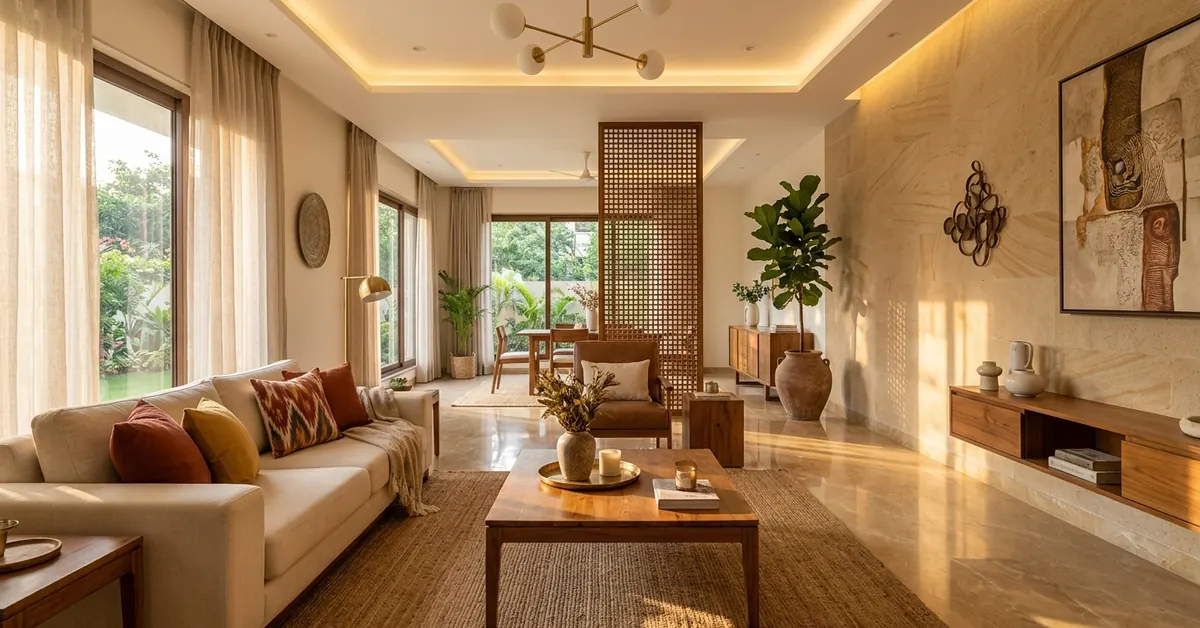
By introducing warm tones like terracotta, mustard and rust, you instantly shift the mood of a room from sterile to inviting. You don't need to paint every wall bright yellow. The trick is balance. When you use neutral shades like taupe or soft cream for the majority of the room, your warm colours have room to breathe.
Think about incorporating these tones through soft furnishings. Throw pillows, heavy curtains, or an upholstered armchair in burnt orange can completely change the dynamic of your living space. If you want to make a bigger commitment, painting a single accent wall in a muted gold or earthy rust provides a beautiful backdrop for wooden furniture.
This approach is highly effective for living room interior design ideas because it encourages conversation and connection. A warm room invites people to sit down and stay a while. Plus, if you stick to using these colours in movable decor, you can easily swap them out when the seasons change or your tastes evolve.
2. Open-Concept Layouts with Subtle Zoning
Urban apartments are shrinking, but our desire for spacious living remains the same. The traditional Indian home often featured small, compartmentalised rooms for different activities. While this offered privacy, it also blocked natural light and made homes feel cramped.
Tearing down non-structural walls completely transforms how a home feels. An open-plan layout merges your daily activities. You can cook dinner while chatting with your family in the living room or keeping an eye on the kids. It improves social engagement and makes entertaining guests much easier.
However, a completely open room can feel chaotic. This is where subtle zoning comes in. You need to define spaces without building walls. Area rugs are perfect for this. A large, textured rug under your sofa and coffee table immediately says, "This is the sitting area."
For a touch of privacy, especially near the kitchen or entrance, consider open shelving units or traditional wooden jali panels. They provide a physical separation but still allow light and air to flow through. This balance of openness and definition is one of the most requested modern interior design ideas for homes in India, particularly for families living in compact city apartments.
3. Minimalist Simplicity Rooted in Indian Culture
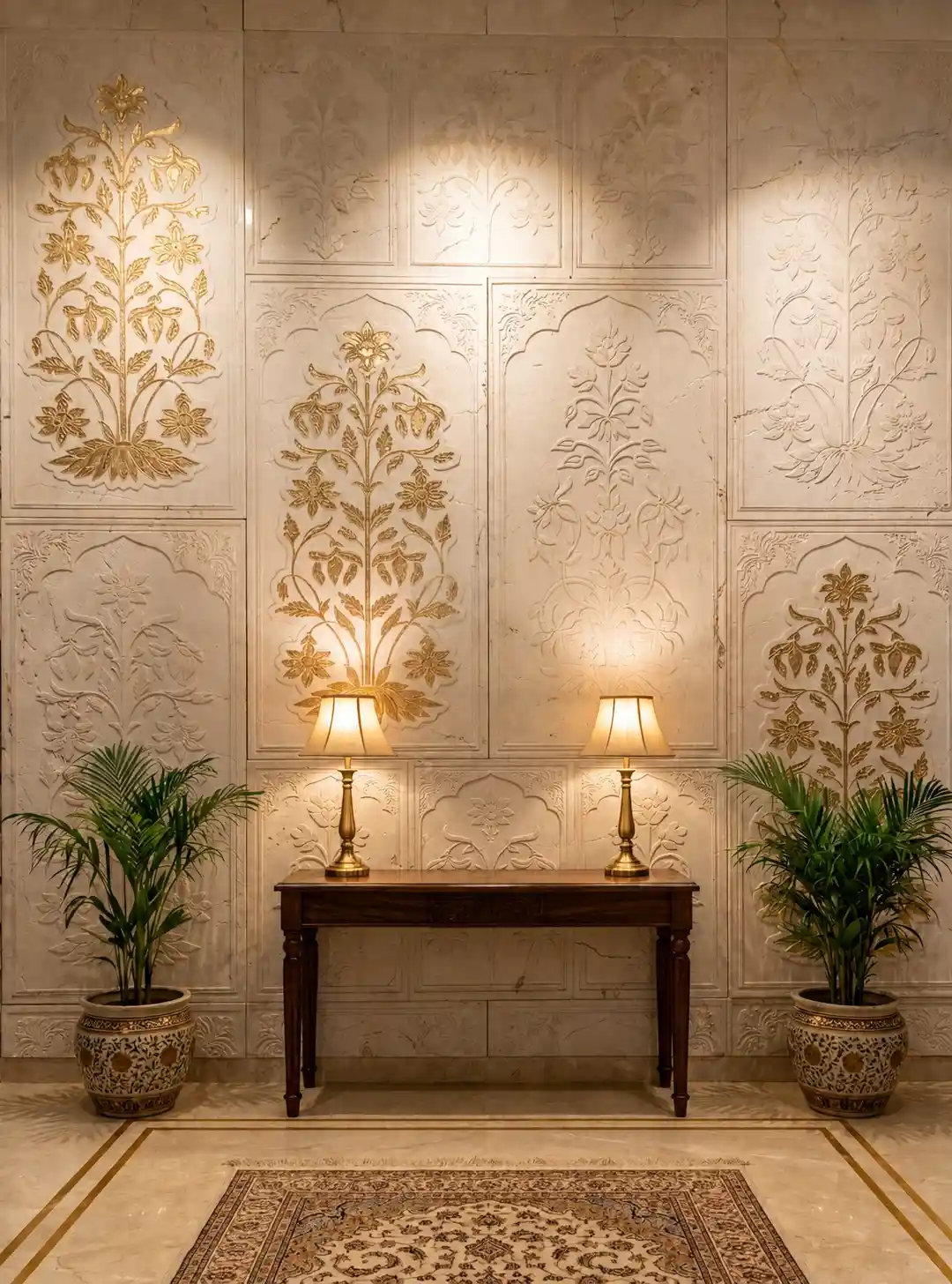
Minimalism gets a bad reputation. People assume it means living in an empty white box with one uncomfortable chair. But true minimalism is just about intentionality. It's about removing the visual noise—the piles of old magazines, the overflowing decorative shelves, the clashing patterns—so that the things you actually care about can take centre stage.
In the context of Indian design, we have a tendency to hold onto things. Our homes are often filled with gifts, souvenirs and family heirlooms. Embracing simplicity doesn't mean throwing these away. It means curating them carefully.
Keep your main surfaces clean and uncluttered. Choose furniture with simple, straight lines. Stick to a cohesive colour palette. When you reduce the amount of visual information in a room, you create a calming atmosphere. Your home becomes a retreat from the busy streets outside.
To stop the space from feeling clinical, you must introduce warmth through texture. Use solid wood furniture with visible grain. Incorporate hand-woven cotton fabrics for your upholstery. Install warm, layered lighting instead of a single bright tube light. This mindful approach is perfect for small house interior design ideas, where too much clutter quickly makes the home feel claustrophobic. It's easier to clean, easier to maintain and adapts effortlessly to changing trends over the years.
4. Natural Materials That Age Beautifully
There's a noticeable difference between a room furnished with synthetic materials and one grounded in nature. Plastics, laminates and synthetic fibres often look their best on the day you buy them, and then slowly degrade. Natural materials do the opposite. They develop a patina over time, gaining character and depth.
Using natural materials connects your interiors to the outdoors. It grounds the space. Consider traditional elements like exposed wood beams or heavy, carved wooden doors. They add instant history to a room.
When it comes to flooring, few things beat the elegance and longevity of natural stone. Whether you opt for marble, granite, or slate, stone flooring is a staple in luxury interior design for Indian homes. It keeps the house cool during brutal summers and handles heavy foot traffic effortlessly.
You can also incorporate natural elements in smaller ways. Jute rugs add wonderful texture to a living room. Leather seating grows more comfortable with every passing year. Terracotta pots or accent pieces introduce a rustic charm that feels incredibly authentic. These materials are eco-friendly, highly durable and require minimal maintenance if treated correctly.
| Material | Best Used For | Maintenance Level | Durability | Expected Lifespan |
|---|---|---|---|---|
| Natural Stone | Flooring, countertops, feature walls | Low | Very High | 50+ years |
| Solid Wood | Furniture, statement doors, cabinetry | Medium | High | 20-30 years |
| Terracotta | Accent walls, pottery, decorative tiles | Low | Medium | 15-20 years |
| Jute / Coir | Rugs, upholstery, window blinds | Medium | Medium | 5-10 years |
5. Statement Patterns and Vibrant Colours
Indian culture is inherently colourful. Our festivals, clothing and art are a riot of vibrant hues and complex patterns. While minimalism is great for creating calm, a home without any bold elements can feel a bit soulless. You need a focal point—something that immediately draws the eye when you enter the room.
A statement wall is the easiest way to achieve this. You can use deeply patterned wallpaper featuring botanical prints or geometric shapes. Alternatively, a large, colourful area rug can anchor a dining room perfectly. Even small touches, like bright, embroidered cushion covers or a hand-painted mural in the entryway, make a massive impact.
The secret to pulling this off is restraint. If everything in the room is screaming for attention, the result is chaotic. You must balance the bold with the subtle. If you choose a vibrant emerald green for your sofa, keep the walls and surrounding furniture neutral. This allows the bold piece to shine.
This technique is central to Indian style interior decoration, where we often merge highly traditional, intricate prints with sleek, contemporary layouts. It gives you the best of both worlds: a clean, modern home that still celebrates its cultural roots.
6. Personalisation Through Art and Heritage
The most memorable interiors always tell a story. You can buy the most expensive furniture and hire the best designers, but if the space lacks personal meaning, it'll feel like a hotel lobby. Your home should reflect who you are, where you've been and what you value.
Start by looking at what you already own. Do you have a collection of brass antiques passed down from your grandparents? Dedicate a well-lit shelf to them. Did you pick up a beautiful piece of handcrafted Indian art during a trip to Rajasthan? Frame it properly and give it pride of place in your living room.
Gallery walls are an excellent way to display family photographs. Mix black-and-white family portraits with small pieces of art or framed fabric. This creates a deeply personal focal point.
Don't forget the power of plants. Adding greenery breathes life into any room and requires you to actively care for your space. When you blend these highly personal elements with the interior design trends we've discussed, your home becomes entirely unique. It becomes a true reflection of your life.
Frequently Asked Questions
1. How do I choose warm accents without overdoing them?
2. Will an open-concept layout work in a small apartment?
3. How can I make a minimalist home feel inviting?
4. What if bold patterns feel overwhelming?
5. Are Vastu principles important for interior design in India?
The Foundation of a Welcoming Home
From warm earthy accents to open layouts, natural materials to bold statement pieces, these interior design ideas provide a solid foundation for your home. You don't have to choose between a space that looks beautiful and one that functions perfectly for your family.
Whether you're designing a high-end villa or seeking smart ideas for a compact city apartment, the secret is balance. Mix the old with the new. Pair clean lines with rich textures. Most importantly, fill your space with things that matter to you.
Your home is your ultimate sanctuary. If you're ready to elevate your space with timeless materials, explore our extensive range of natural stone options to start building your dream interiors today.