


You spend lakhs on a home renovation, only for it to look dated three years later. Following viral internet fads is the fastest way to ruin a premium home. That avocado green bathroom or the hyper-modern geometric wall you saw on Pinterest? They age terribly. When you are investing serious money into a property, you cannot afford to rip out and replace finishes every few years. The smartest architects in India avoid fads completely. Instead, they rely on timeless interior design trends that look just as good today as they will a decade from now. These are not passing phases. They are foundational design principles that bring warmth, character and permanence to your space.
If you are planning to build or renovate a home, you need to know what actually lasts. Instead of following the latest interior design trends blindly, this guide walks you through the interior design trends that interior experts continually return to. These are the choices that elevate a standard house into a permanent, highly valued asset.
Table of Contents
1. Defined Spaces Over Fully Open Concepts
For the last ten years, everyone wanted an open-concept home. The idea was to knock down every wall and have the kitchen, dining room and living room share one massive footprint. It sounded great in theory, but in practice, it is incredibly noisy and hard to keep tidy. If someone is blending a smoothie in the kitchen, you can’t hear the television.
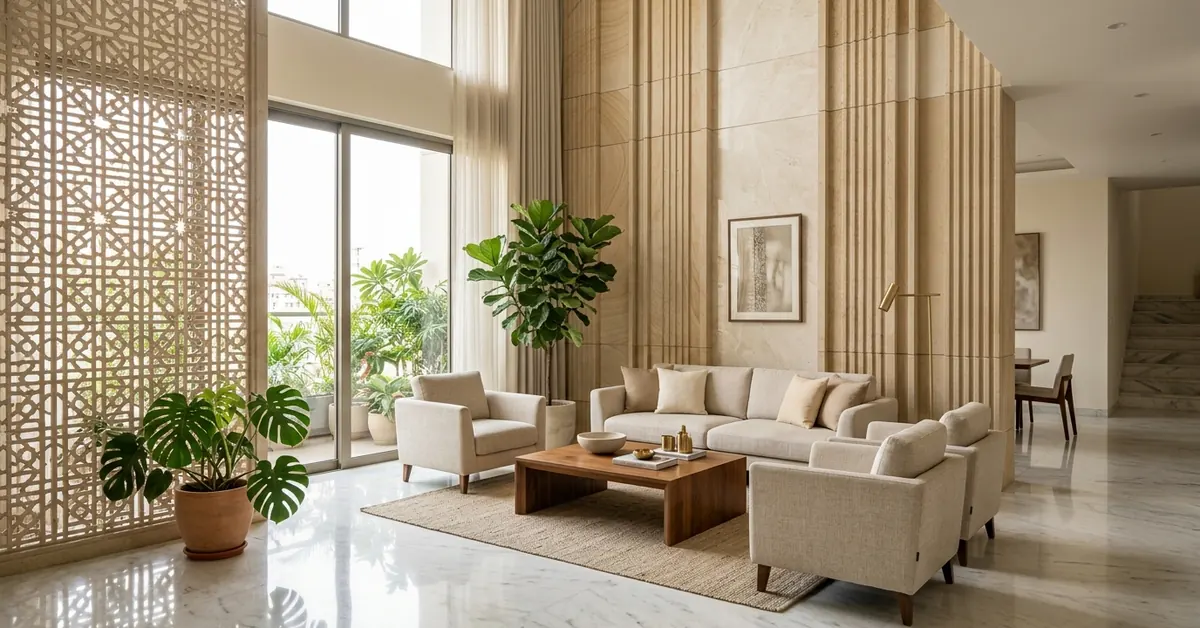
Designers are actively moving back to defined spaces. You do not need to build solid brick walls to achieve this. The trick is to use visual separators that maintain the flow of light while creating distinct zones. A popular method is installing a CNC carved stone jaali between the foyer and the living room. It gives guests a beautiful focal point when they enter, while keeping the family’s seating area private.
You can also define spaces using flooring. Mixing wood in the dining area with natural stone in the kitchen creates a psychological boundary without needing a physical wall. We cover several excellent layout ideas in our guide to warm and welcoming interior trends. When you define your rooms properly, your home instantly feels more structured and far easier to live in day-to-day.
2. Warm Neutral Colour Palettes
Bright, aggressive colours go out of style quickly. A vibrant teal accent wall might look fun for six months, but eventually, you get tired of looking at it. That is why high-end designers rely heavily on warm neutral palettes.
Neutrals act as a blank canvas. When your walls, floors and major furniture pieces are in shades of beige, ivory or soft grey, you have the freedom to experiment with smaller accessories. You can swap out throw pillows, rugs or artwork to completely change the mood of the room without taking on a major renovation project.
The secret to making a neutral room look expensive rather than boring is texture. A flat beige wall is dull. But a textured sandstone panel in the exact same shade looks deeply architectural. Layering different materials—like linen upholstery, ribbed glass, matte brass fixtures and natural stone—gives a neutral room life and dimension. From a Vastu perspective, warm neutrals like cream and light yellow are highly recommended for living areas because they promote balance, beautifully complementing various indian interior design styles and encouraging positive energy flow throughout the house.
3. Natural Materials for Permanent Style
If you want a home that feels premium, you have to use premium materials. Synthetic laminates and vinyl flooring try very hard to look like wood or stone, but they never quite manage it. They feel flat and hollow to the touch.
Authentic natural materials bring a grounded, earthy quality to a home. If you want to make your indian interior design timeless, wood adds warmth, while stone adds permanence and structural weight. We see a massive shift toward using natural stone claddings for interior feature walls. A rough-cut slate or a fluted sandstone panel creates incredible shadow play under warm lighting. It is a texture that synthetic materials simply cannot fake.
The main advantage here is longevity. A good stone wall will outlast the building itself. It won’t peel in the monsoon humidity and it doesn’t need repainting every five years. Yes, natural materials require a higher upfront investment, but they pay for themselves in durability. If you are curious about exactly how these stones are processed for modern homes, take a look at our breakdown of natural stone finishes to see what fits your aesthetic best.
4. Biophilic Design and Indoor Greenery
Biophilic design is a technical term for a very simple concept: humans feel better when they are surrounded by nature. In dense Indian cities where private gardens are rare, bringing the outside in is no longer just a trend—it is a necessity for mental well-being.
Adding indoor plants is the easiest and most cost-effective way to transform a sterile room into a welcoming one. Plants soften the hard, straight lines of modern architecture. A tall Ficus or a mature Monstera in a neglected corner completely changes the geometry of the space.
But biophilic design goes beyond potted plants. It includes maximising natural sunlight through larger windows, using organic shapes in furniture and incorporating water features. A small, gently flowing water feature near the entrance not only sounds incredibly relaxing but also aligns perfectly with Vastu principles for attracting wealth and calm. When you combine natural greenery with raw stone backdrops, you get an interior that feels like a high-end resort retreat right in your own city.
5. White and Bright Interiors
There is a reason art galleries paint their walls white. It makes everything else in the room look better. White and bright interiors have an enduring appeal because they instantly make any room feel larger, cleaner and more open.
Many homeowners worry that an all-white room will feel too clinical, like a hospital waiting area. The solution is contrast. You pair crisp white walls with warm, rich flooring. A white living room sitting on top of a dark walnut wood floor or a highly polished natural stone floor looks incredibly sophisticated.
White also acts as the perfect backdrop for luxury finishes. If you have brass light fixtures or a bold piece of modern art, they will get lost against a dark, busy wall. Against white, they pop immediately. Using a material like Banswara White Marble for a mandir or a foyer wall gives you that clean, bright look while adding the subtle, high-end veining that only natural stone provides.
6. Large Statement Pieces Over Clutter
We all have a habit of collecting small decorative items over the years. A tiny vase here, a small frame there, a little souvenir on the bookshelf. Eventually, the room feels cluttered and dusty. The easiest way to make a space feel more expensive is to clear out the small items and invest in one large statement piece.
Designers call this the “rule of scale.” One massive, beautifully framed painting commands attention. Ten small paintings scattered across a wall just look messy.
This principle applies to architectural finishes as well. Instead of cluttering a living room with overly complex furniture, let the walls do the talking. A floor-to-ceiling custom stone panel acts as a permanent piece of art. It draws the eye immediately and sets a confident, luxurious tone for the rest of the house. You don’t need much else in a room when you have a stunning focal point holding it all together.
How to Choose Materials That Last
When you are planning to implement these trends, the materials you choose are just as important as the layout. To help you understand the long-term value of different finishes, here is a quick comparison.
| Material Type | Expected Lifespan | Maintenance Level | Best Timeless Application |
|---|---|---|---|
| Natural Stone Panels | 50+ Years | Very Low (Occasional dusting) | Living room feature walls, exterior facades |
| Solid Hardwood | 30-40 Years | Medium (Requires polishing) | Dining room flooring, bespoke furniture |
| Synthetic Laminates | 5-8 Years | High (Prone to peeling/fading) | Temporary budget renovations |
| Textured Wallpaper | 3-5 Years | High (Tears easily, traps moisture) | Low-traffic guest bedrooms |
If you want a detailed look at how modern wall applications are changing, we highly recommend checking out our breakdown of natural stone wall panels to see exactly how these materials are installed in premium homes today.
Ready for Timeless Stone?
Stop wasting money on materials you will have to replace in five years. Build a home that lasts a lifetime.
Get a Free Design Consultation →Speak to Our Stone Experts
Have questions about which stone fits your specific home layout? We are here to help.
WhatsApp Us Today →Frequently Asked Questions
Why do designers prefer neutral colour palettes?
What exactly are defined spaces?
Why is natural stone considered a timeless material?
How can I make an all-white room feel less clinical?
Making the Right Choice
From committing to warm neutrals to investing in custom stone installations, these design trends go far beyond passing fads. They are the structural decisions that ensure your home remains stylish, highly functional and deeply welcoming for decades.
Building a premium space is about choosing quality over quantity. With Stone World’s massive range of architectural finishes and custom CNC work, you have everything you need to bring these proven, timeless ideas to life in your own project. Your perfect home isn’t built on a trend; it’s built on permanent quality.