


Your backyard feels dull. Muddy patches collect after every rain and that patch of grass you keep nurturing just refuses to hold up. Weekends go in pulling weeds or staring at a flat lawn that adds nothing to your home. Season after season, money gets spent on quick-fix landscaping that never holds.
This is honestly one of the most common problems homeowners bring to us at Stone World. The real fix is not another bag of fertiliser. It is changing the base of your landscape entirely. Well-planned garden designs with stones completely shifts how you use and enjoy your outdoor area. Stones do not wilt in summer and they do not turn into slush during the monsoon. We have helped hundreds of homeowners across India swap frustrating, high-upkeep lawns for clean, long-lasting stone features.
This guide covers practical, good-looking ways to bring natural stone into your garden. From simple pebble borders around flower beds to granite water features that double as conversation starters, you will get clear, workable ideas by the time you finish reading.
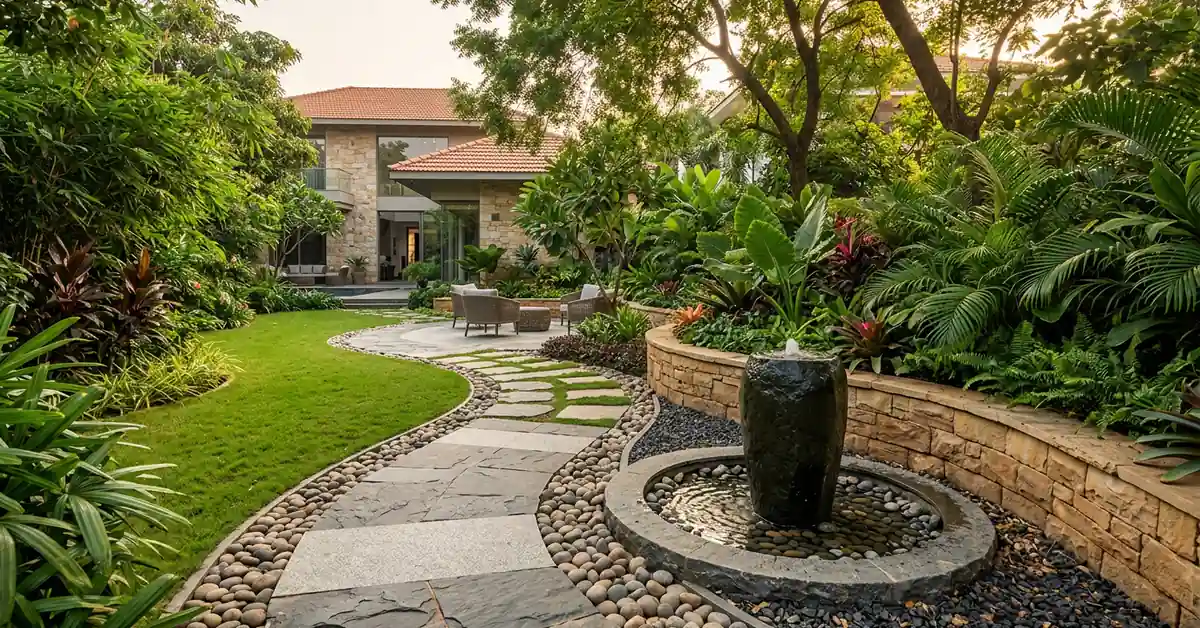
Table of Contents
Why Should You Use Stones in Your Garden Design?
Garden designs with stones are popular because natural stone holds up for decades without regular upkeep. It does not need watering, trimming, or pest control. Stone also handles monsoon flooding, scorching Indian summers and heavy foot traffic better than most landscaping materials available today.
A lot of people worry that adding stone will make their garden feel stiff or cold. That only happens when stone is used without thought, like paving over an entire yard with grey concrete. The right approach is mixing hardscaping (stone structures) with softscaping (plants and soil). A deep green fern tucked against a rough slate wall looks far more interesting than either would alone. The stone gives the plant a backdrop; the plant gives the stone warmth.
Here is something practical to think about. I have spoken with clients across Rajasthan and Maharashtra who used to spend a good amount every year just on lawn upkeep: water, fertiliser, re-seeding and labour. Once they switched to a mix of native plants and a natural stone path through the garden, those costs dropped by nearly half. The garden looked better too, not worse. That is a trade worth making.
Stone also quietly solves problems that plants cannot. Low-lying areas that flood every monsoon? Fill them in with river pebbles graded to drain properly. A slope that loses topsoil every time it rains? A dry-stacked stone retaining wall holds the earth in place and adds real visual interest. These are not just decorative choices. They are functional ones that last for years.
Which Stones Work Best for Garden Designs in India?
The best stones for Indian garden designs are slate for paths, granite for cooking and seating zones, sandstone for traditional courtyards, limestone for raised walls and river pebbles for mulching. The right pick depends on the weather exposure, foot traffic and overall style of your outdoor space.
1. Is Slate Good for Garden Walking Paths?
Slate is a fine-grained rock that breaks naturally along flat planes. That cleft surface is what makes it so good for stone garden path ideas. You get real grip, even after rain. It does not go smooth with age the way polished stone does.
I recommend slate for shaded walkways and areas near water features that stay damp for long stretches. Dark greens, charcoal greys and near-blacks are the typical colours. They pair well with bright flowering plants because the contrast makes both the stone and the blooms look sharper. Placing large irregular flagstones directly into a lawn, with grass growing in between, gives you that relaxed, cottage-garden feel without looking unplanned. For more on how slate performs outside, our post on natural stone outdoor flooring covers the specifics in detail.
2. Why Choose Granite for Heavy-Use Outdoor Areas?
Granite is about as hard as stone gets. It holds up against heat, dropped tools, heavy planters and years of foot traffic without showing much wear. This is why it is the go-to material for outdoor kitchen countertops, barbecue surrounds and driveway edging.
I have watched homeowners try cheaper synthetic materials for outdoor cooking surfaces. Within two summers under the Indian sun, those surfaces are faded, blistered and developing cracks. Granite does not do any of that. The stone I installed in a client's rooftop garden in Ahmedabad six years ago looks the same as it did the day we laid it.
Because granite is so dense, it does not draw in moisture. That makes it solid for pool edging, fountain bases and any area that sees regular water contact. It comes in far more colours than most people realise. Deep reds, forest greens, pale greys and heavily speckled blacks are all quarried right here in India.
3. Can Sandstone Be Used for Patios and Courtyards?
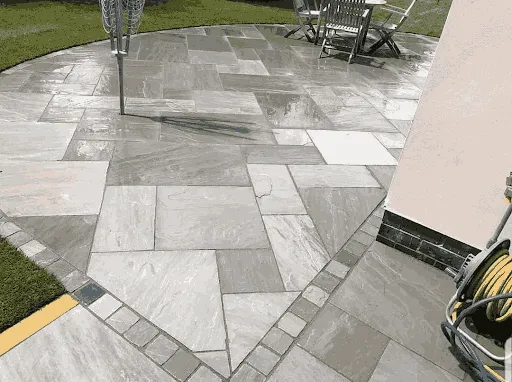
Sandstone has that warm, earthy quality that works especially well for traditional Indian courtyard designs. The texture is slightly rough (not scratchy, but not slippery either) and the colours range from sandy beige to deep Dholpur red. Under bare feet on a warm evening, sandstone feels genuinely comfortable.
Mint Sandstone is a popular choice for modern homes with light-coloured exteriors. Dholpur Red suits older bungalow styles and heritage properties. Both types age well, developing a soft, natural patina over the years that only adds to the character of the space.
One thing to keep in mind: sandstone is fairly porous. If your patio is in an area that collects rain, apply a good penetrating sealer before the first monsoon season. After that, it is largely hands-off.
4. Is Limestone Suitable for Garden Walls and Raised Beds?
Limestone comes in quiet, muted tones (soft yellows, warm creams and light greys), which makes it a good pick for vertical features where you do not want the stone to compete with the planting.
Low retaining walls, raised flower bed borders and boundary features are where limestone does its best work. Building raised planters from limestone brings the plants closer to eye level and gives the garden an organised, thought-through appearance. The stone acts as a frame for the greenery rather than drawing attention to itself. If you are thinking about building a retaining structure, our guide on choosing natural stone for landscape walls is worth reading before you finalise your material.
5. How Do Pebbles and Gravel Add Texture to a Garden?
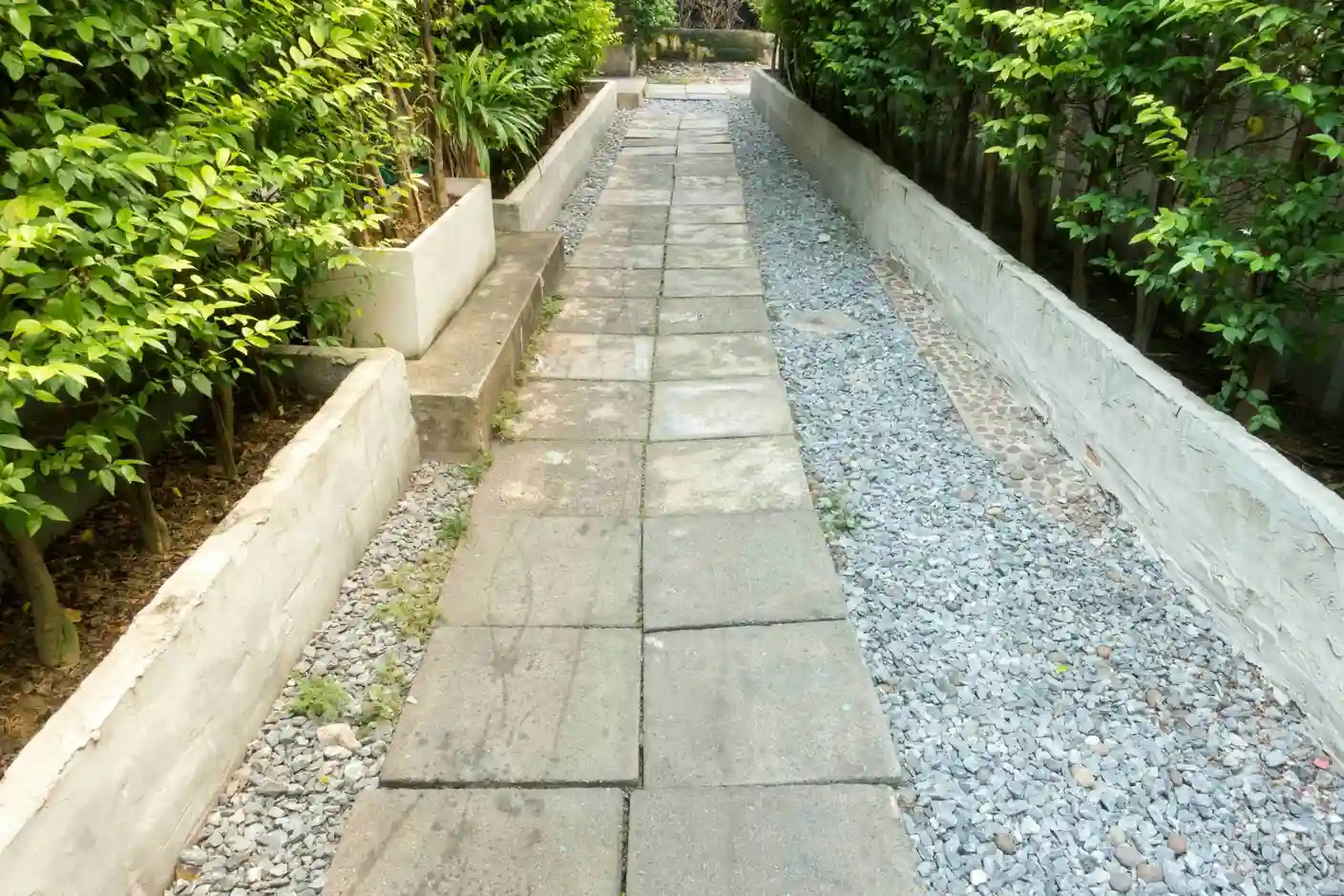
River pebbles and crushed stone are the unsung workhorses of a stone garden. They fill gaps between stepping stones, act as ground cover in flower beds and form the base of dry creek beds or Japanese-style gravel gardens.
Swapping organic mulch for pebbles is one of the smartest things you can do in a low-water garden. Organic mulch breaks down, blows away in strong winds and needs replacing every year or two. A few centimetres of river pebbles sits exactly where you lay it, keeps moisture in the soil and blocks weeds just as well. The cost difference is small over three to four years; the work difference is huge.
What Are the Best Stone Garden Landscaping Ideas?
The most impactful natural stone garden landscaping ideas are functional, not just decorative. A stone fire pit extends the usable season of your garden into winter evenings. A rock garden cuts water use by 60 to 70 percent. A simple granite water feature changes the entire sound and feel of a courtyard in a way no plant can.
How to Build a Stone Water Feature in Your Garden?
Running water changes a garden in ways that are difficult to describe until you experience it. The sound masks road noise, draws birds in and makes the whole space feel alive, even when no one is doing anything in particular.
A granite millstone fountain is one of the simpler options. You drill a channel through the centre, set it on a small reservoir and the water bubbles up and runs back in a loop. It takes up very little room and needs almost no upkeep. For something bigger, a cascading sandstone or slate waterfall uses the natural layering of those rocks to guide water in a realistic-looking stream. When wet, the stone takes on much richer, deeper colours than you see when it is dry. That is a nice detail worth knowing.
How to Create a Low-Water Rock Garden with Stones?
Water scarcity is not an abstract concern in many parts of India. It is a monthly reality. A rock garden built around drought-tolerant plants is a practical response to that reality, not just a design trend.
The structure is simple: place a few large boulders as anchor points, fill in around them with gravel or crushed stone and plant succulents, agave, native Indian shrubs, or ornamental grasses in gaps between the rocks. No irrigation system needed. No weekly watering schedule. Just occasional weeding and that is about it. For ideas on which specific stones suit this kind of landscaping in Indian conditions, see our post on landscaping-friendly stones.
How to Build a Natural Stone Fire Pit in Your Garden?
A fire pit turns a garden into a space you actually use after dark and during the cooler months. Natural stone is the right material for this. It handles heat without cracking, does not leach chemicals when it gets hot and looks far better than a ready-made metal bowl placed on a concrete pad.
Stacked granite blocks or large sandstone slabs work well for the surround. Set the pit on a base of compacted gravel to keep rainwater from pooling underneath. Arrange flagstone or a wide gravel circle around the fire pit. It catches stray embers before they reach dry grass and gives your outdoor seating a defined, level area to sit on.
How Do Stone Borders Improve Garden Edging?
Clean edges are the difference between a garden that looks professionally maintained and one that just looks busy. Small cobblestones or cut sandstone blocks placed along the boundary between lawn and flower bed stop grass from spreading where you do not want it. It gives the whole yard a tidier appearance with very little effort.
You can also set the border stones flush with the lawn surface to create a mowing strip. The outer wheel of your mower runs along the top of the stone, meaning the blade cuts right to the edge without you having to go back with a trimmer afterwards. For larger gardens, this alone saves a noticeable amount of time each week.
Why Are Natural Stone Steps Better Than Concrete?
If any part of your garden slopes, timber steps will eventually rot and concrete steps will develop cracks within five to seven years in Indian weather. Natural stone steps are the better call. They last indefinitely and actually look more attractive as they settle into the landscape.
Wide limestone or sandstone slabs work well here. Leave narrow gaps between each step and plant low-growing ground cover like creeping thyme or baby's breath in the cracks. Walk on the thyme and it releases a mild herbal scent. It is a small touch, but it turns a plain staircase into something you notice.
How Do You Pick the Right Stone Colour for Your Garden?
Choose stone colours that sit in contrast with your home's exterior without clashing. Warm-toned houses in cream, ochre, or terracotta pair naturally with Mint Sandstone or Dholpur Red. Stark white or concrete-finish modern homes pair well with charcoal slate or black granite edging.
Colour matching is where a lot of DIY garden projects go wrong. People pick whichever stone is on offer without checking how it sits against the walls and exterior paint of the house. You end up with a garden that feels disconnected from the home, as if two different people made the decisions.
Here is a simple rule to follow. If your house has warm tones (cream walls, terracotta tiles, pale brick), go for warm stone. Mint Sandstone and Dholpur Red both read as warm and earthy. If your home is more modern with a stark white or exposed concrete finish, you can afford to go bold with dark stone. Charcoal slate or black granite edging against a white wall is a clean, contemporary contrast that works particularly well in cities like Mumbai, Bengaluru and Hyderabad where contemporary architecture is common.
Try to keep the stone palette to two types maximum in a single space. One primary stone for the main surface (patio, path, or wall) and one accent material like gravel for the gaps. Mixing three or four different stones in a small garden makes it feel cluttered rather than considered.
Which Stone Is Right for Your Garden? A Quick Comparison
| Stone Type | Best Garden Use | Durability | Grip When Wet | Sealing Needed? |
|---|---|---|---|---|
| Slate | Pathways, water features | High | Excellent | Rarely |
| Granite | Outdoor kitchens, edging | Very High | Medium | No |
| Sandstone | Patios, courtyards, steps | Medium | Good | Yes |
| Limestone | Retaining walls, raised beds | Medium | Good | Recommended |
| Pebbles / Gravel | Mulching, dry creek beds | High | N/A | No |
How Do You Maintain Garden Stones Without Much Effort?
Maintaining stone garden features requires very little effort. Sweep regularly to stop grit from scratching the surface, hose down every couple of months and apply a penetrating sealer once a year to porous stones like sandstone or limestone. Avoid acidic or bleach-based cleaners on any natural stone.
People often assume that outdoor stone is high-maintenance because it sits in the weather. It is not. The upkeep is minimal once you know what to do and, more to the point, what not to do.
Sweep often. Sand and fine grit carried in by wind or shoes act like sandpaper under foot traffic. If you get rid of the grit regularly with a stiff broom or dry mop, the stone surface stays scratch-free for much longer. This single habit extends the life and look of your patio or path more than anything else.
Every two or three months, or after a particularly heavy storm dumps debris across the garden, run a garden hose over the stone. If you spot algae or moss (which happens in shaded, north-facing areas during monsoon), scrub it off with a soft brush and a diluted dish soap solution. Keep high-pressure washers away from sandstone and limestone. The pressure can chip away the softer surface layer and leave the stone looking rough and uneven.
Sealing is the one step people skip because it feels unnecessary, then regret later. A penetrating sealer soaks into porous stone like sandstone and limestone and fills the tiny gaps before staining agents like bird droppings, berries, or spilled chai can get in. Apply it with a soft cloth, leave it for ten minutes, wipe off the excess. One hour of work once a year. Worth doing.
How Much Does a Stone Garden Design Cost in India?
Stone garden projects in India can fit most budgets. Loose gravel and pebble groundwork falls in the low budget range, flagstone paths and sandstone patios sit in the medium budget range and custom-cut granite features or large water installations are high budget projects. Local Indian varieties like Kota, Dholpur and Mint Sandstone are always more affordable than imported stone.
Let's be straightforward about money. Stone is not the cheapest starting point. But the right comparison is not stone versus gravel or stone versus concrete. It is stone versus what you will spend replacing cheaper options every five to ten years.
Gravel and river pebbles sit firmly in the low budget category. You can cover a large flower bed without breaking the bank and the material lasts indefinitely. Slate and sandstone flagstones for pathways fall in the medium budget range, especially when you pick locally quarried Indian varieties from Rajasthan or Madhya Pradesh where abundant deposits keep transport costs reasonable. Custom granite installations, large water features and carved stone steps are high budget choices that pay for themselves over decades. The most expensive part in any category is skilled labour for proper base preparation. That is not a place to cut corners, because a poorly laid stone will sink, shift and crack within a year.
At Stone World, we work directly with quarries so we can get good pricing without dropping on quality. We can also help you plan a mixed approach: high-visibility areas like a seating patio or entrance path get the better stone and affordable gravel or pebbles fill the rest. This gives you a garden that looks properly thought-out without any obvious shortcuts.
FAQ's
1. What are the best stones for garden designs in India?
2. Which stone is best for a garden path in India?
3. How do I create a low-maintenance stone garden at home?
4. How much does a stone garden design cost in India?
5. Do outdoor garden stones need sealing?
6. How do I stop weeds from growing between garden stones?
7. What type of stone works best for an outdoor water feature?
Where Do You Start with Garden Designs Using Stones?
Look at your garden honestly. Is it a space you actually enjoy, or is it one more thing on your maintenance list? Natural stone changes that. Once it is laid, it is done. No replanting, no repainting, no replacing. A good stone path or patio will outlast every other thing you install in that garden by a long margin.
Whether it is a narrow slate path winding through your flower beds or a wide sandstone courtyard for evening gatherings, the material is genuine, the look holds up over decades and the upkeep is minimal. That is a combination that is hard to beat with anything else on the market.
WhatsApp us or contact Stone World for a free consultation. We will help you pick the right stone for your space, your budget and your climate and make sure the end result is something you are genuinely happy with.