


You spend a lot of time and money planting shrubs, maintaining your lawn and buying outdoor furniture, only for your garden to turn into a muddy mess during the monsoons. A poorly structured outdoor space is just frustrating. When pathways flood or your patio furniture sinks into soft dirt, you simply stop using your garden. The smartest architects and landscape designers solve this problem with permanent hardscaping. By choosing the best stones for landscaping, you get a structured, usable outdoor area that requires almost zero maintenance.
If you are planning to upgrade your home’s exterior, you need materials that can handle intense summer heat and heavy rainfall. Instead of pouring concrete or using cheap cement pavers that crack within a few years, investing in natural stone delivers permanent value. This guide breaks down exactly which materials work best for different outdoor applications, helping you make a confident decision for your property.
Table of Contents
1. Why hardscaping with natural stone matters
Most people focus entirely on plants when designing a garden. They buy expensive exotic palms and lay down rolls of turf. But without a solid hardscaping plan, those soft elements fail quickly. When it rains heavily, exposed soil washes away, lawns turn to mud and the space becomes unusable.
Adding natural stone fixes the structural flaws in your outdoor area. A properly installed landscape stone pathway directs foot traffic, meaning nobody tramples on your flower beds. A heavy stone retaining wall holds back sliding earth on sloped properties. A paved patio gives you a clean, level surface for entertaining guests without worrying about chairs sinking into the grass.
Stone also brings a grounded quality to your home. It connects the built environment of your house with your garden. Synthetic materials like poured concrete or dyed cement blocks look cheap against natural greenery. Over time, concrete cracks and the artificial dye on pavers fades under the harsh Indian sun. Natural stone develops a beautiful patina. It looks better at year ten than it did on day one.
2. Sandstone: The most versatile paving option
If you want a material that balances cost and durability, sandstone is a great choice. It’s one of the most widely used landscaping stones in India because it’s easy to source and performs well outdoors. You’ll find it used in heritage properties across Rajasthan and Gujarat, which proves its longevity.
The main advantage of sandstone is its texture. Even when polished, it keeps a slight granular feel. This makes it naturally slip-resistant, which is exactly what you need for a garden path or a patio exposed to rain. You can walk across it without slipping.
It also comes in many colours. From the warm, woody tones of Teakwood sandstone to the subtle shades of Mint sandstone, you can find a variation that matches your home’s exterior. When planning a large patio, designers use large format sandstone slabs to create an expansive look. If you want to know how surface treatments change the grip of these materials, our guide to natural stone finishes explains what to specify for outdoor use.
3. Granite: Built for high-traffic areas
Sometimes you need a material that is extremely tough. That’s where granite comes in. Because it’s so dense, water doesn’t penetrate it easily and it won’t chip under standard residential use.
Because of this strength, architects use granite for heavy-use areas of a property. If you need a driveway that can handle SUVs without cracking, granite cobblestones or thick flamed granite slabs are the best choice. It’s also the ideal material for outdoor kitchen countertops. If you accidentally drop a heavy barbecue tool, the granite won’t chip.
The key to using granite outdoors safely is the finish. A polished granite floor becomes very slippery when wet. Instead, you should specify a flamed or brushed finish for exterior applications. These processes add a rough texture to the surface, providing traction while maintaining the stone’s appearance.
4. Slate: Adding rustic texture to pathways
Not every garden needs straight, structured paving. Sometimes, you want a softer look. Slate is great for this. It splits naturally into uneven layers, creating a textured surface known as a cleft finish.
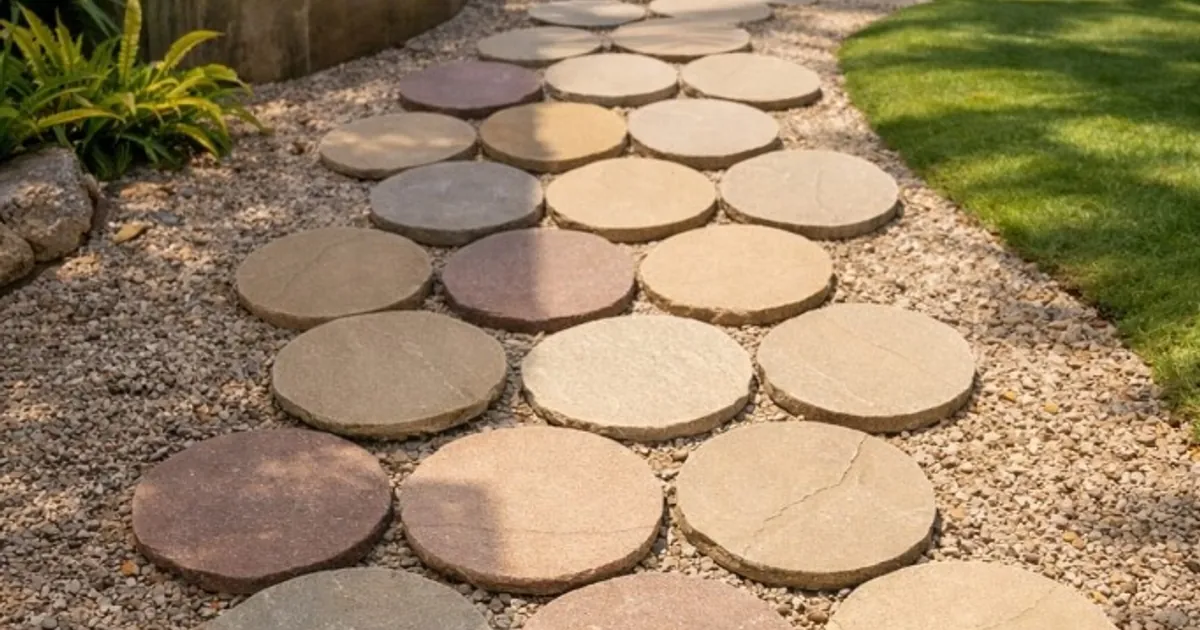
This texture works well for garden stone paths. When you lay irregular pieces of slate as stepping stones across a lawn, it creates a relaxed walkway. It slows you down and lets you look at the garden around you, rather than just hurrying across.
Slate also offers a great colour palette. While we typically think of slate as dark grey or black, Indian slate comes in rust reds and subtle greens. These earthy tones hide dirt and create a contrast against green grass and flowers. It’s an affordable way to add character to a side yard or a secondary walkway.
5. Limestone: Heat-reflective and elegant
If you have a south-facing garden in India, you know how hot paving can get by mid-afternoon. Dark stones absorb the sun’s heat, making it impossible to walk on them barefoot. Limestone solves this problem. Its lighter colours mean it reflects heat rather than absorbing it.
This heat resistance makes limestone popular for pool decks and sunny outdoor seating areas. You can step out of the pool in the middle of May and walk comfortably across a limestone patio.
Limestone has a very clean aesthetic. Unlike the rustic look of slate, limestone often features a smooth, matte surface with subtle colour variations. If you are designing a modern home, limestone paving fits that architecture. Popular Indian varieties like Kota stone are used widely because they offer this elegant look at a reasonable price, while lasting for decades.
6. Quartzite: Subtle shimmer for garden features
Many homeowners only think about how their garden looks during the day. But if you work long hours, you probably spend more time sitting on your patio in the evening. This is where quartzite stands out.
Quartzite contains tiny flecks of quartz crystal. When you install low-level outdoor lighting near a quartzite wall or pathway, the stone catches the light and creates a subtle shimmer. It adds a layer of luxury to the space that flat, matte stones can’t replicate.
Don’t let its appearance fool you, though. Quartzite is tougher than sandstone and highly resistant to scratching. This durability makes it a favourite among landscape architects. If you are building a custom water fountain or a stone bench for a seating area, quartzite ensures the piece remains a focal point for years.
7. Basalt and cobblestones: Classic borders and edging
A good garden needs structure. Without clear borders, soil spills out of flower beds during heavy watering, and grass creeps into your pathways. You spend hours every month just edging your lawn. Installing permanent stone borders solves this problem.
Basalt is a volcanic rock that comes in charcoal and black tones. When used as an edging material, it creates a sharp line that looks modern. The dark stone frames your plants, making them stand out more than they would against plain dirt.
If your home has a traditional style, granite or sandstone cobblestones are a good alternative. Their small shape lets you follow the curved edges of a garden path. Setting a double row of cobblestones along the edge of a driveway looks premium and stops car tires from crushing your lawn.
How to choose the right material for your garden
With so many options available, picking the right material can be confusing. You have to match the stone’s physical properties to the job. Putting a soft stone in a high-traffic driveway won’t work well. To simplify the decision, here is a breakdown of these materials.
| Material Type | Durability Level | Heat Resistance | Best Landscaping Application |
|---|---|---|---|
| Granite | Extremely High | Medium | Driveways, heavy-use outdoor stairs, seating |
| Sandstone | High | High | Main patios, large walkways, exterior walls |
| Limestone | Medium-High | Very High | Pool surrounds, sunny courtyards, barefoot areas |
| Slate | Medium | Medium | Stepping stones, rustic paths, secondary borders |
Creative ways to implement stone in your layout
You don’t have to pave your entire garden to get the benefits of natural stone. Good landscape designs use stone strategically to enhance the greenery, not replace it.
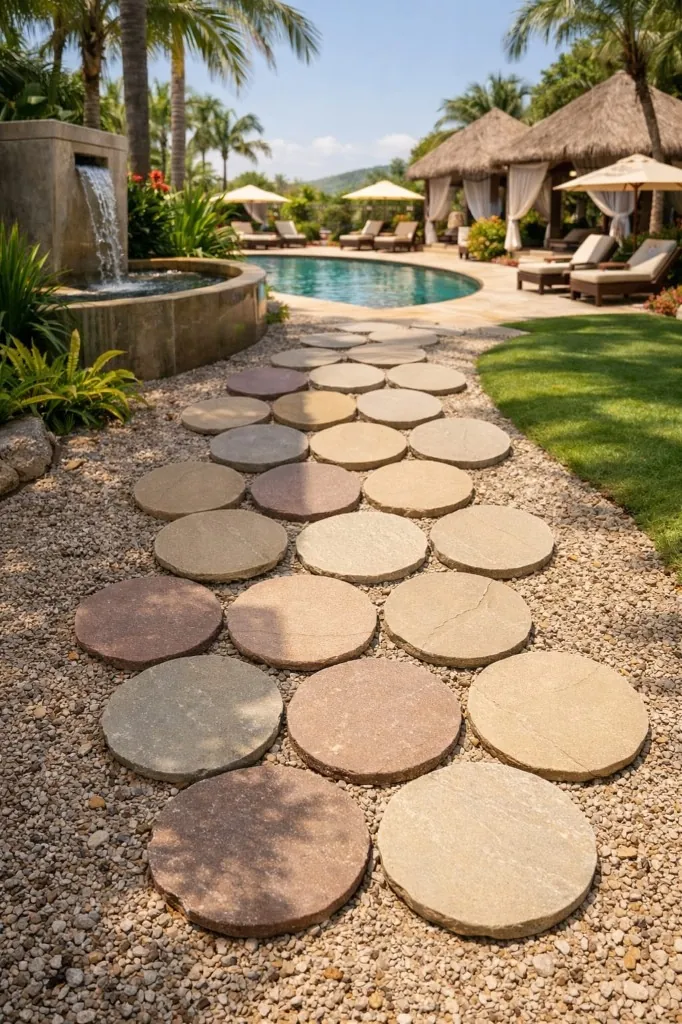
One technique is combining large paving slabs with loose aggregates. Instead of laying sandstone slabs tightly together with cement joints, try leaving a two-inch gap between them. Fill that gap with river pebbles or crushed granite chips. This approach looks stylish and helps with drainage during heavy rains. The water seeps down through the pebbles rather than pooling on top of the patio.
Another use of stone is for vertical features. If you have a flat yard, building a low sitting wall out of stacked basalt or limestone adds architectural interest. It gives people a place to sit during outdoor parties and provides a visual backdrop for your planting beds. For more ideas on how to incorporate stone vertically, read our guide on natural stone wall panel design ideas.
Ready for permanent landscaping?
Stop replacing cheap cement pavers every few years. Invest in natural stone that lasts a lifetime.
Get a Free Stone Consultation →Speak to our exterior experts
Not sure which stone can handle your driveway traffic? We have the technical answers you need.
WhatsApp Us Today →Frequently asked questions
Which stone is best for walkways in Indian gardens?
Is stone landscaping an eco-friendly choice?
Do natural stones need sealing in gardens?
Which stone stays cool in the summer heat?
Making the right choice
A garden should be a place of relaxation, not a source of maintenance chores. When you rely solely on grass and dirt, you end up fighting against the weather. By incorporating proper hardscaping, you solve this.
Whether you choose granite for your driveway or a sandstone patio, investing in the best stones for landscaping ensures your outdoor space lasts. It’s a permanent upgrade to your home.
At Stone World, we help homeowners select premium exterior materials. Stop fighting the mud every monsoon. Invest in quality stone and build a landscape you can use year-round.