


Stone World in Indore is Central India's premier natural stone design studio. We specialise in premium natural stone claddings, carved features and custom architectural installations. Whether you are an architect, interior designer, or a homeowner, protecting your investment requires proper care. Visit our 12,000 sq ft live concept showroom in Indore or enquire via WhatsApp for expert advice on stone selection and maintenance. We serve clients across India with dedication and craftsmanship.
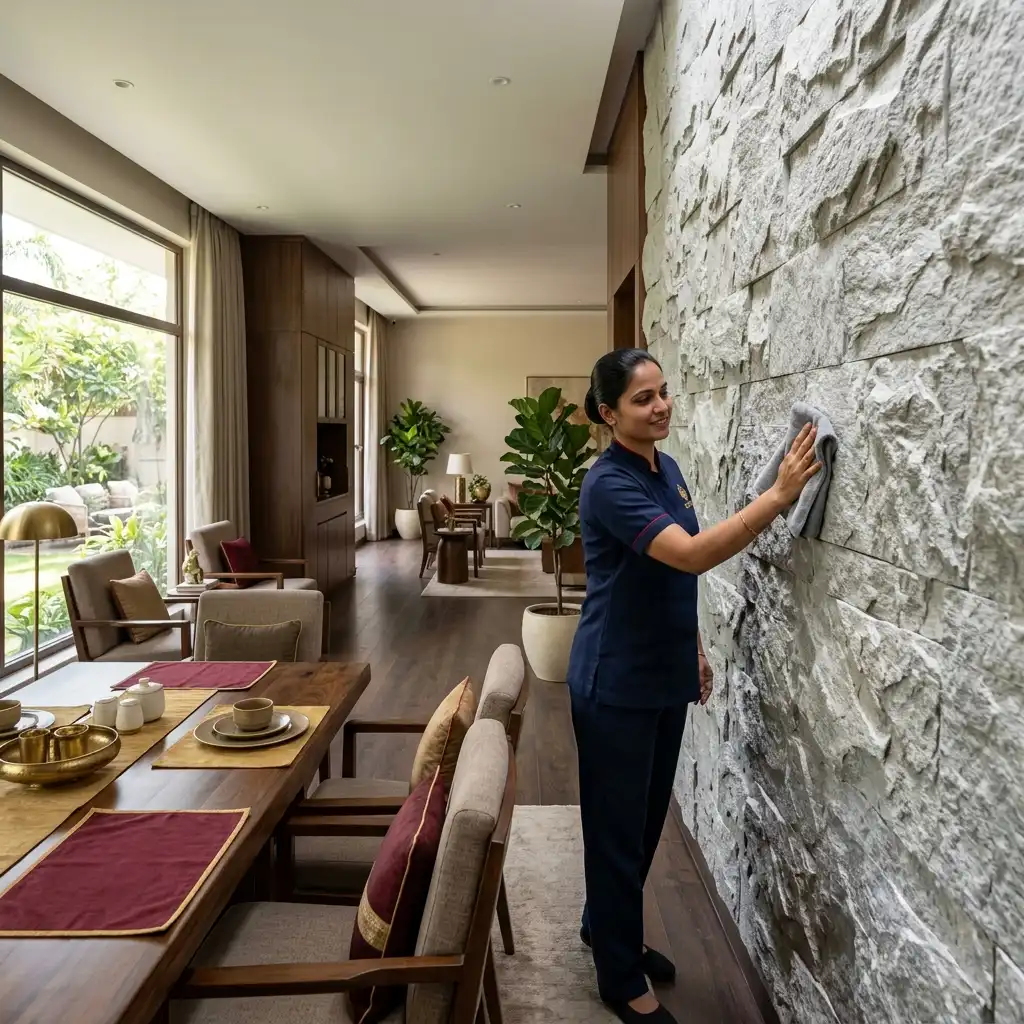
Natural stone brings permanent elegance and unparalleled character to any property. Unlike conventional paint or synthetic wallpapers, high-quality stone cladding is designed to last for generations. However, maintaining that pristine factory finish requires a solid understanding of how natural materials react to their environment over time. Whether you have installed intricate carved stone features or expansive smooth wall panels, knowing how to clean natural stone wall panels is absolutely essential for preserving their organic beauty.
In this comprehensive natural stone maintenance guide, our experienced artisans and stone experts at Stone World share industry best practices. You will learn the exact methods for routine care, the safest techniques for removing stains from stone cladding and how protecting your architectural investments through proper sealing stone panels can save you significant time and resources in the long run.
Table of Contents
Why Proper Maintenance Matters for Stone Cladding
Proper maintenance of natural stone wall panels prevents structural degradation and discolouration over time. Routine care preserves the organic textures and vibrant colours of the stone while avoiding the accumulation of dust and environmental pollutants. Stone World recommends a consistent cleaning schedule to ensure your architectural stone cladding retains its premium aesthetic and structural integrity for decades.
When you invest in premium natural stone for your home exterior or interior feature walls, you are adding a permanent architectural element that significantly increases property value. Natural stone is porous by nature, meaning it breathes and interacts with the surrounding environment. Without proper maintenance, these pores can trap dust, moisture and pollutants, leading to a dull appearance.
Neglecting your stone installations can result in the gradual fading of the stone’s natural colour profile. In exterior applications, exposure to harsh sunlight, monsoon rains and urban pollution can accelerate this weathering process. Inside the home, dust accumulation on textured surfaces like split-face quartzite or CNC carved marble can obscure the intricate details crafted by our artisans.
By following a structured maintenance plan, you not only preserve the visual impact of your stone walls but also protect the underlying structure. A well-maintained stone wall will continually reward you with its timeless elegance, making every room feel as luxurious as the day the installation was completed.
Essential Tools for Cleaning Natural Stone
The best tools for cleaning natural stone include soft microfiber cloths, ph-neutral stone cleaners and soft-bristle brushes. Avoid using acidic household cleaners, abrasive scouring pads, or high-pressure washers on delicate interior stone panels, as these can etch the surface and cause permanent damage to the natural stone finish.
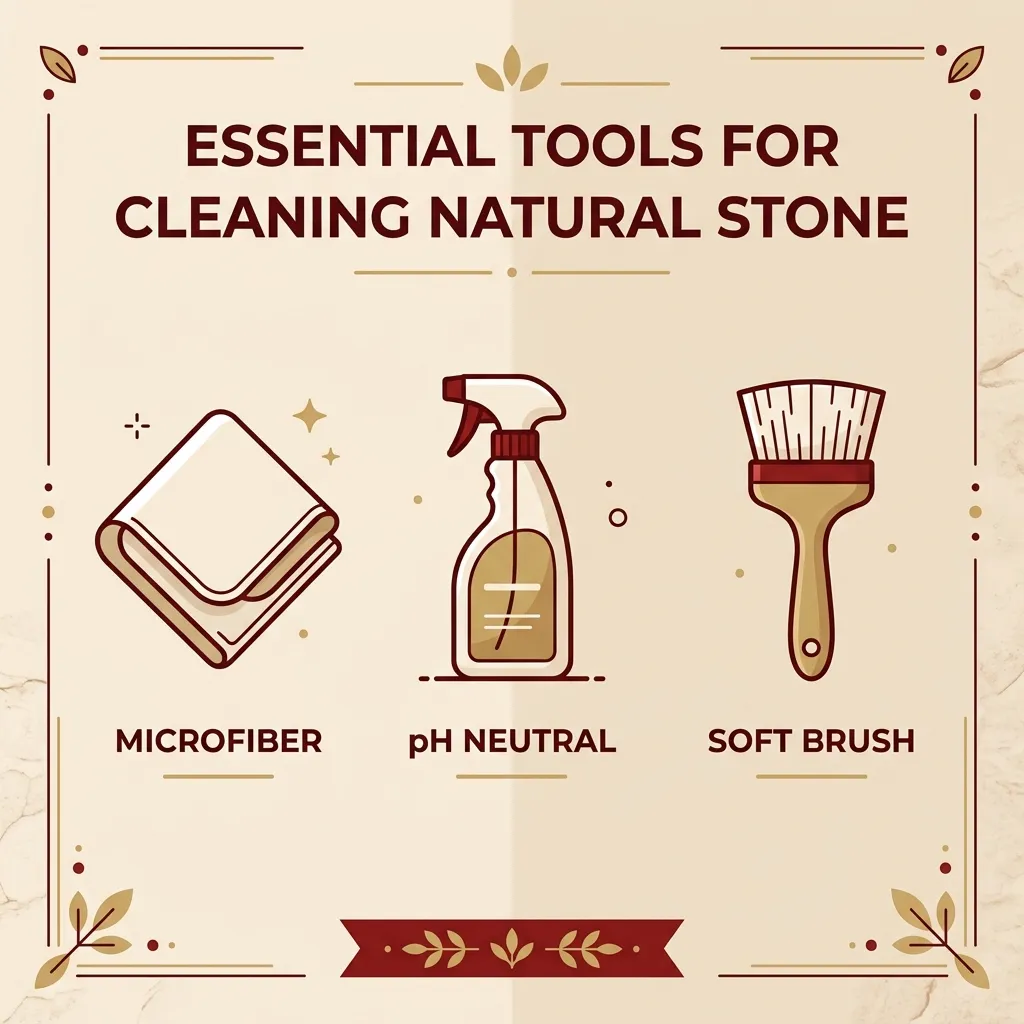
Using the correct tools is the first step in ensuring your natural stone remains undamaged during the cleaning process. Many homeowners make the critical error of applying standard bathroom or kitchen cleaners to their stone walls, completely unaware that the acidic components in these products can severely etch natural marble and limestone.
To build your dedicated stone care kit, ensure you have the following items readily available:
- Premium microfiber cloths that trap dust without scratching the surface
- A high-quality pH-neutral stone cleaner specifically formulated for architectural stone
- Soft-bristle brushes for reaching into the deep crevices of textured or carved stone panels
- A clean bucket for diluting cleaning solutions
- Distilled water for final rinsing to prevent hard water mineral deposits
By keeping these specific tools reserved only for your stone care, you eliminate the risk of cross-contamination from harsher chemicals used elsewhere in your home.
Routine Cleaning: How to Clean Natural Stone Wall Panels
Routine cleaning of natural stone wall panels involves weekly dry dusting with a microfiber cloth and monthly gentle washing using a diluted ph-neutral stone cleaner. Always wipe the stone in the direction of its natural veins and immediately dry the surface to prevent water spots, ensuring your stone cladding maintains its original showroom finish.
Establishing a routine cleaning schedule is the most effective way to manage your architectural stone features. The approach differs slightly depending on whether the stone is installed indoors or outdoors, but the fundamental principles remain the same.
For interior applications like living room feature walls or foyer welcome statements, dry dusting should be performed weekly. Use a dry microfiber cloth or a soft feather duster to gently remove surface dust. For deeply textured panels or CNC carved mandir backdrops, a soft-bristle brush works perfectly to dislodge dust from intricate grooves without causing abrasion.
Once a month, a deeper clean is recommended. Mix your pH-neutral stone cleaner with warm water according to the manufacturer’s instructions. Dampen your microfiber cloth in the solution, wring it out thoroughly so it is only slightly moist and gently wipe the stone panels. It is crucial to avoid soaking the stone, as excess water can seep into the pores. After washing, always use a separate dry cloth to buff the surface dry. This final step prevents hard water stains and leaves the stone looking vibrant and fresh.
Removing Stains from Stone Cladding Effectively
Removing stains from stone cladding requires identifying the stain type before treatment. Oil-based stains require a poultice powder mixed with water, while organic stains from leaves or algae respond best to a diluted hydrogen peroxide solution. Promptly addressing spills and using the correct poultice method ensures your natural stone panels remain pristine and free from permanent discolouration.
Despite your best efforts, accidents happen and stains can occur. The key to successfully removing stains from stone cladding is acting quickly and using the appropriate treatment for the specific type of stain. Natural stone is highly reactive and using the wrong chemical can turn a minor spot into a permanent mark.
Here is a breakdown of how to tackle common stone stains:
- Oil-Based Stains: Grease, cooking oil, or cosmetics can darken the stone. Create a poultice by mixing a dedicated stone poultice powder with water until it forms a thick paste. Apply the paste over the stain, cover it with plastic wrap and leave it for 24 to 48 hours. As the poultice dries, it draws the oil out of the stone pores.
- Organic Stains: Leaves, bird droppings, or algae on exterior facades can leave brown or green marks. A very weak solution of hydrogen peroxide and water applied directly to the spot can help lift the organic matter. Rinse thoroughly with clean water afterwards.
- Water Spots: Hard water from sprinklers can leave white mineral deposits on exterior cladding. Use a specialized non-acidic mineral deposit remover and gently buff the area with a soft pad.
Never attempt to scrape off hardened substances with metal spatulas or knives, as this will inevitably scratch the stone. If a stain proves too stubborn, it is always best to consult with professional stone restorers.
The Importance of Sealing Stone Panels
Sealing stone panels acts as a critical protective barrier that repels water, oils and environmental dirt from penetrating the porous surface. Applying a premium penetrating sealer every one to three years drastically reduces maintenance efforts, prevents permanent staining and protects the structural integrity of both interior and exterior natural stone architectural installations.
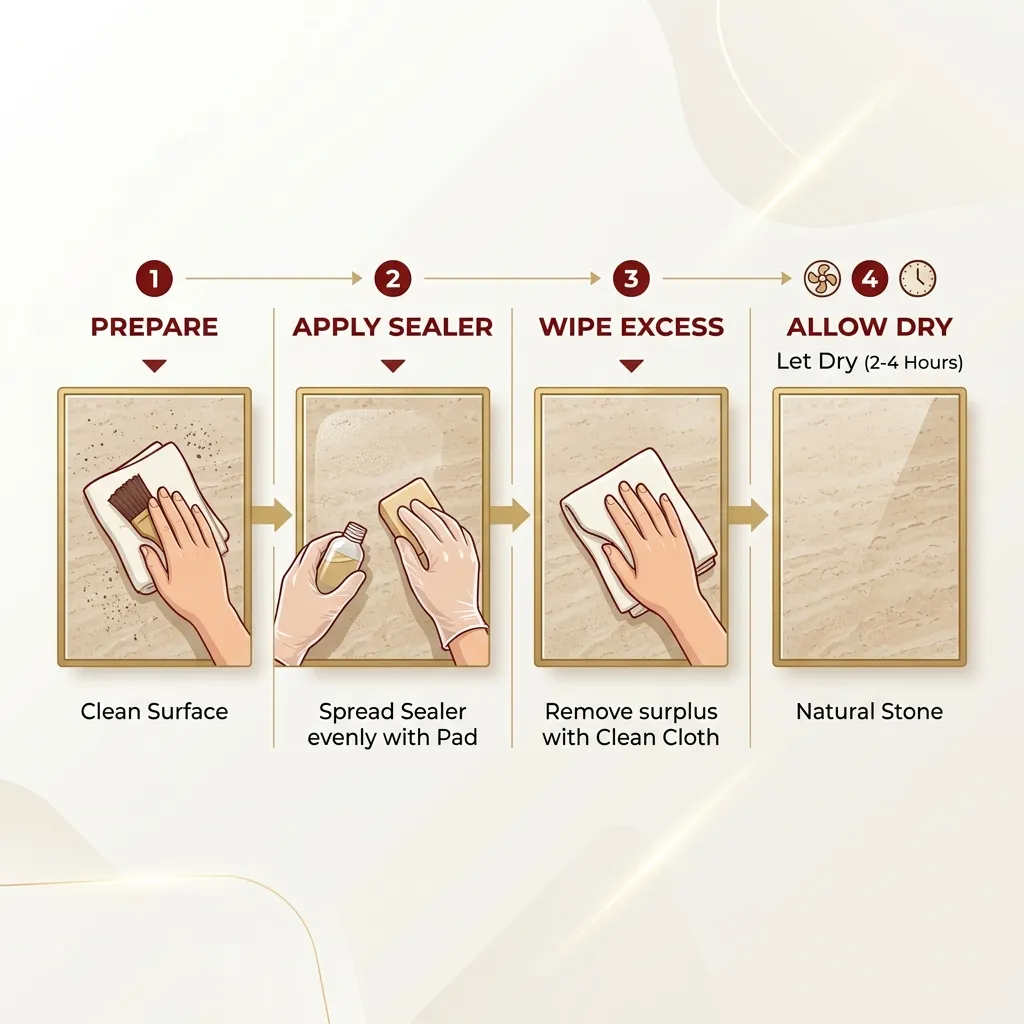
If there is one proactive measure you can take to protect your investment, it is sealing stone panels. Think of a sealer as an invisible shield that sits just below the surface of the stone. Natural stone features a network of microscopic pores. When left unsealed, these pores easily absorb liquids, which leads to deep, difficult-to-remove stains.
A high-quality penetrating sealer fills these pores without altering the natural look or texture of the stone. This means that when water or oil hits the surface, it beads up rather than soaking in, giving you ample time to wipe it away.
For exterior facades exposed to the Indian monsoon and harsh sun, sealing is non-negotiable. It prevents moisture ingress, which can lead to efflorescence (the white, chalky powder that sometimes appears on masonry). We recommend resealing exterior stone cladding every one to two years. For interior feature walls that experience less environmental stress, an application every three to five years is generally sufficient.
Specialized Care for Different Stone Types
Different natural stones require highly specific maintenance approaches. Sandstone cladding needs frequent sealing due to its high porosity, while smooth marble panels require strict avoidance of acidic substances to prevent surface etching. Granite and quartzite are more durable but still benefit from ph-neutral cleaning to maintain their brilliant natural finish and architectural impact.
Not all stones are created equal. The geological composition of your cladding dictates exactly how it should be treated. Applying a universal cleaning method to all stone types is a recipe for long-term damage.
Consider the following specialized care routines for popular Indian natural stones:
- Gwalior Mint Sandstone: Highly popular for exterior elevations, sandstone is beautifully textured but highly porous. It requires a robust, breathable sealer to prevent algae growth and water absorption. When cleaning, avoid high-pressure washing, which can blast away the natural sand grains.
- Banswara White Marble: Used extensively in luxury interiors and mandir backdrops, marble is primarily composed of calcium carbonate, making it extremely sensitive to acids. Even a splash of lemon juice or vinegar can instantly etch the surface. Always use strict pH-neutral cleaners and wipe up spills immediately.
- Quartzite and Granite: These are among the hardest and least porous natural stones. They are highly resistant to scratching and etching, making them excellent for high-traffic areas. While they are low maintenance, they still require regular dusting and occasional sealing to keep their colours vibrant.
Common Mistakes to Avoid During Stone Maintenance
The most common mistakes in natural stone maintenance include using acidic household cleaners, neglecting regular sealing schedules and using abrasive scrubbing tools. These errors lead to permanent surface etching, loss of natural colour and deep stains. Always adhere to recommended care guidelines to protect your premium stone cladding from irreversible architectural damage.
Even with the best intentions, homeowners often inadvertently damage their stone walls. Being aware of these common pitfalls is half the battle in stone preservation.
The absolute worst offender is the use of generic bathroom tile cleaners or glass cleaners. These products often contain ammonia, bleach, or acidic compounds that will aggressively eat away at the polished or honed surface of natural stone. Another frequent mistake is ignoring the sealing schedule. Many believe that once the stone is installed and sealed initially, it requires no further protection.
Additionally, relying on excessive water during cleaning is highly detrimental. Drenching a stone wall can force water deep into the installation joints, potentially weakening the adhesive behind the panels over time. Always use a damp cloth, never a soaking wet one.
Frequently Asked Questions
Stone World Indore provides expert answers regarding natural stone maintenance, highlighting that vinegar should never be used on stone, exterior cladding requires annual inspections and professional restoration is possible for severely stained panels. We guide our clients through every step of long-term stone care for their luxury residential projects.
1. Can I use vinegar to clean my natural stone wall panels?
2. How often should I seal my exterior stone cladding?
3. What is the best way to dust heavily textured or CNC carved stone?
4. Can a stained natural stone panel be restored?
5. Do you provide maintenance guidelines after installation?
Maintain Your Architectural Stone with Stone World
Protecting your architectural natural stone investment requires commitment to proper cleaning techniques and scheduled sealing. Stone World Indore stands ready to supply premium stone claddings and provide expert guidance on lifelong maintenance. Partner with us to ensure your luxury home maintains its distinctive elegance and permanent structural beauty.
Your natural stone walls are a testament to your commitment to quality and architectural permanence. By implementing a consistent routine of dry dusting, gentle pH-neutral washing and scheduled sealing, you guarantee that your stone panels will remain a breathtaking focal point in your home for decades.
If you are considering adding natural stone to your next residential project, or if you need professional advice on maintaining your current installations, the expert team at Stone World is here to assist you. With over 18 years of experience and Central India’s largest live concept showroom, we are the trusted partner for architects and homeowners alike.
Visit our showroom in Indore to explore our extensive collections, or reach out to our design consultants today.