


Stand in any flooring store today and the sales pitch for large-format glazed tiles sounds tempting. They mimic stone veins with high-definition inkjet prints, promise zero upkeep and arrive in neat cardboard boxes. Yet five years after moving in, the reality of living on factory-baked clay hits home. A heavy brass kadhai slips in the kitchen and leaves a crater exposing pale ceramic dust underneath, or the glossy surface turns into an ice rink the moment wet monsoon shoes walk through the door. That gap between retail store lighting and decades of lived wear is exactly why architects and seasoned homeowners still weigh natural stone vs vitrified tiles carefully before signing off on floor finishes.
At Stone World, our stone studio and stone experience center in Indore guides homeowners, interior designers and civil contractors through this exact decision every single week. Genuine Indian stones such as Makrana white marble, Banswara marble, Rajasthan black granite, Kota limestone and dense quartzites perform differently from pressed porcelain clays because their structure runs solidly from top face to bottom bed. In this guide, we examine ten practical, site-tested reasons to specify natural stone over vitrified tiles, backed by structural comparisons, installation standards, lifecycle economics and direct answers to common buyer questions.
Table of Contents
What Separates Natural Stone vs Vitrified Tiles Beneath the Surface
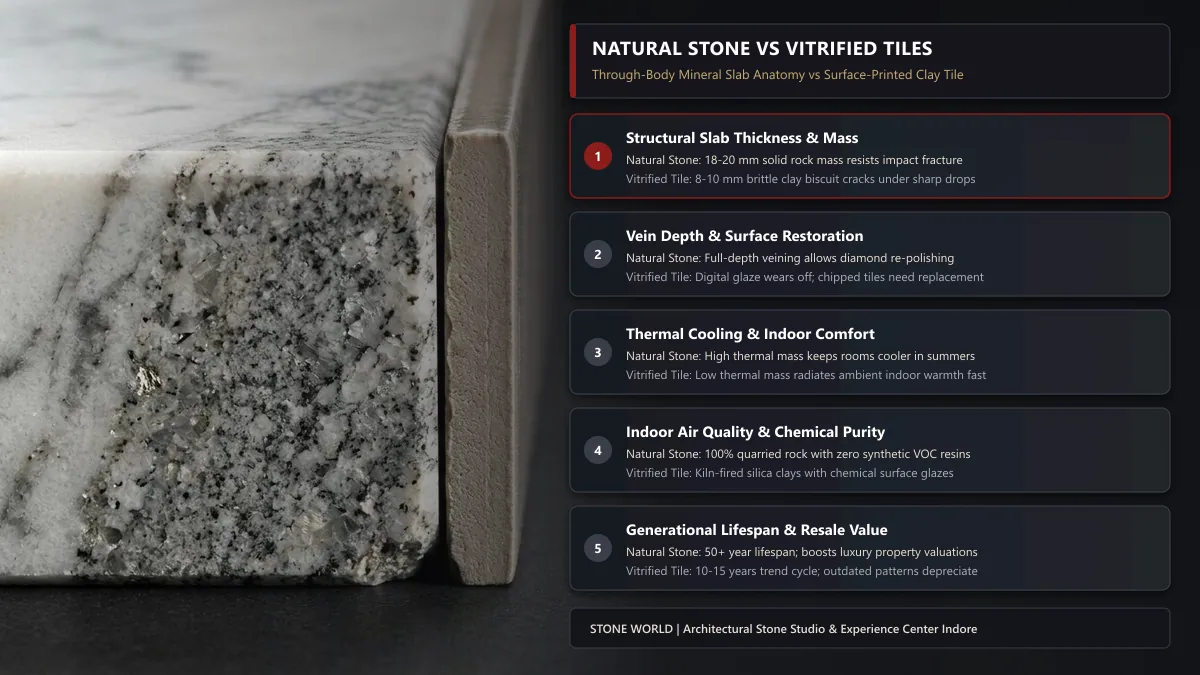
Natural stone slabs are solid 18 to 20 mm geological rock with uniform mineral structure throughout. Vitrified tiles are 8 to 10 mm kiln-fired clay bodies relying on thin surface pigments or glaze films that cannot be ground down or restored.
Before comparing aesthetics or maintenance schedules, look closely at the cross-section edge of both materials. Vitrified tiles are manufactured by hydraulically pressing clay, feldspar and silica powder, then firing them at roughly 1,200 degrees Celsius. In glazed vitrified tiles (GVT) and polished glazed vitrified tiles (PGVT), the stone pattern you admire is literally sprayed onto the top face by an industrial inkjet printer and sealed under a fraction-of-a-millimeter glass glaze. Even double-charged tiles only fuse two thin pigment layers onto the upper two or three millimeters of the biscuit.
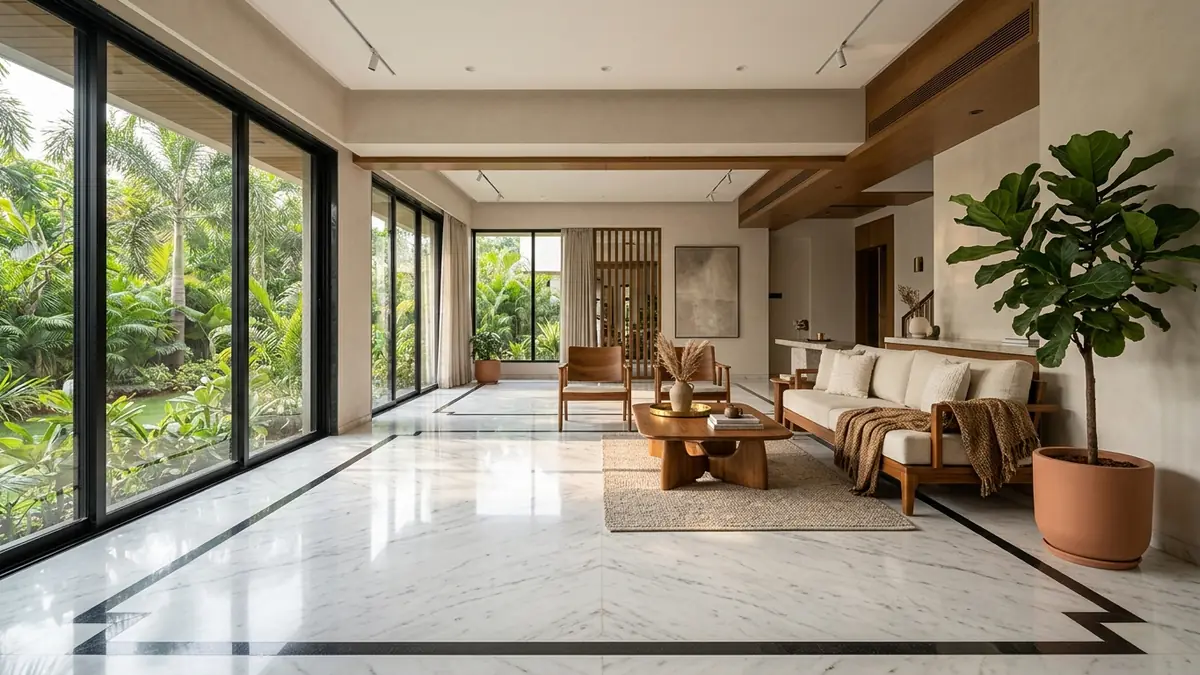
Natural dimension stones are completely different animals. When gang saws slice blocks of Makrana marble, Ambaji white marble, Rajasthan granite or Kota stone into 18 mm to 20 mm flooring slabs, every crystal, vein and mineral fleck runs right through the full slab thickness. You are walking on solid metamorphic, igneous or sedimentary rock rather than a printed ceramic photograph. Architects specifying indoor natural stone flooring solutions choose solid stone specifically because its wear layer never runs out.
10 Reasons to Choose Natural Stone Over Vitrified Tiles
Choosing natural stone over vitrified tiles delivers 50-year structural lifespans, full diamond re-polishing, natural summer cooling, safer wet traction, high impact tolerance, zero synthetic VOC emissions, non-repeating organic veining and measurable long-term property value growth across Indian homes.
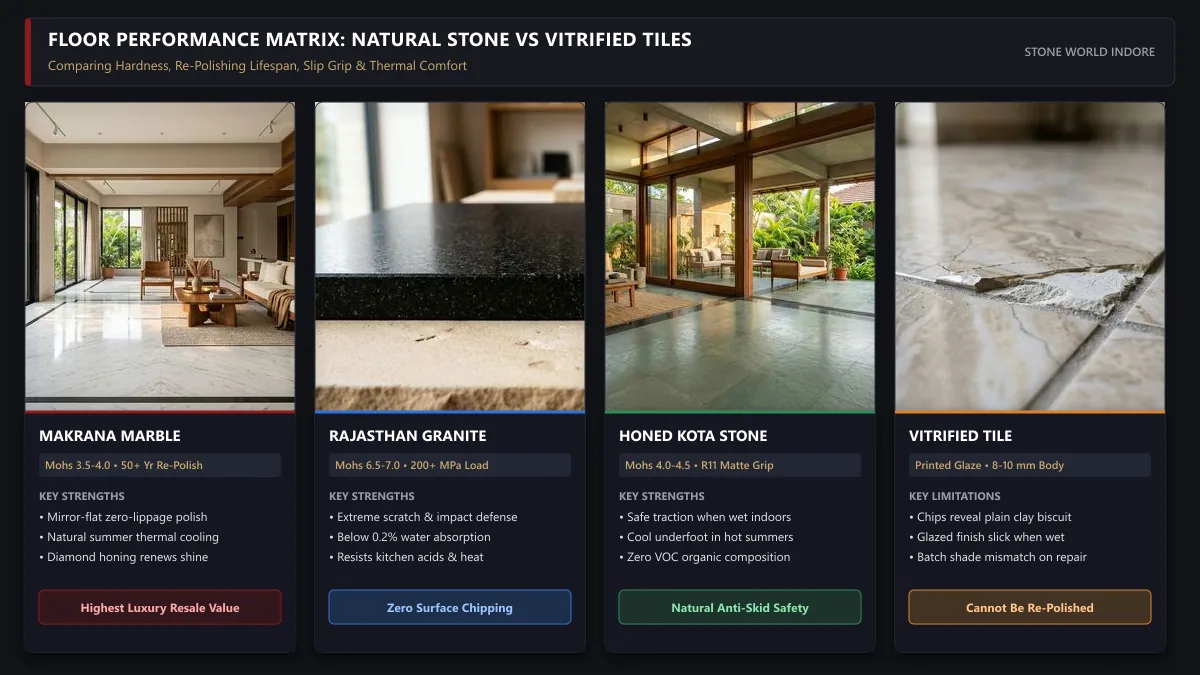
Once you live with both surfaces across changing Indian summers, monsoons and family gatherings, the practical gap widens fast. Below are ten grounded reasons why homeowners, builders and architects consistently favor authentic stone over synthetic tiles.
1 Generational Durability: Lifespan of Natural Stone vs Ceramic Tiles
Walk into an eighty-year-old haveli in Rajasthan or a heritage bungalow in Indore and the original Makrana marble or Kota limestone floors are usually still intact. When evaluating the lifespan of natural stone vs ceramic tiles, real stone routinely serves two or three generations without structural fatigue. A 20 mm stone slab bedded properly on cement mortar becomes part of the permanent building structure.
By contrast, ceramic and vitrified floor installations typically last ten to fifteen years before grout lines discolor, nano-polished glazes wear cloudy along walking paths or heavy furniture legs crack hollow corners. Worse, tile factories discontinue patterns every three to five years, leaving you unable to match a single broken unit later.
2 Through-Body Strength: Granite vs Double Charged Vitrified Tiles
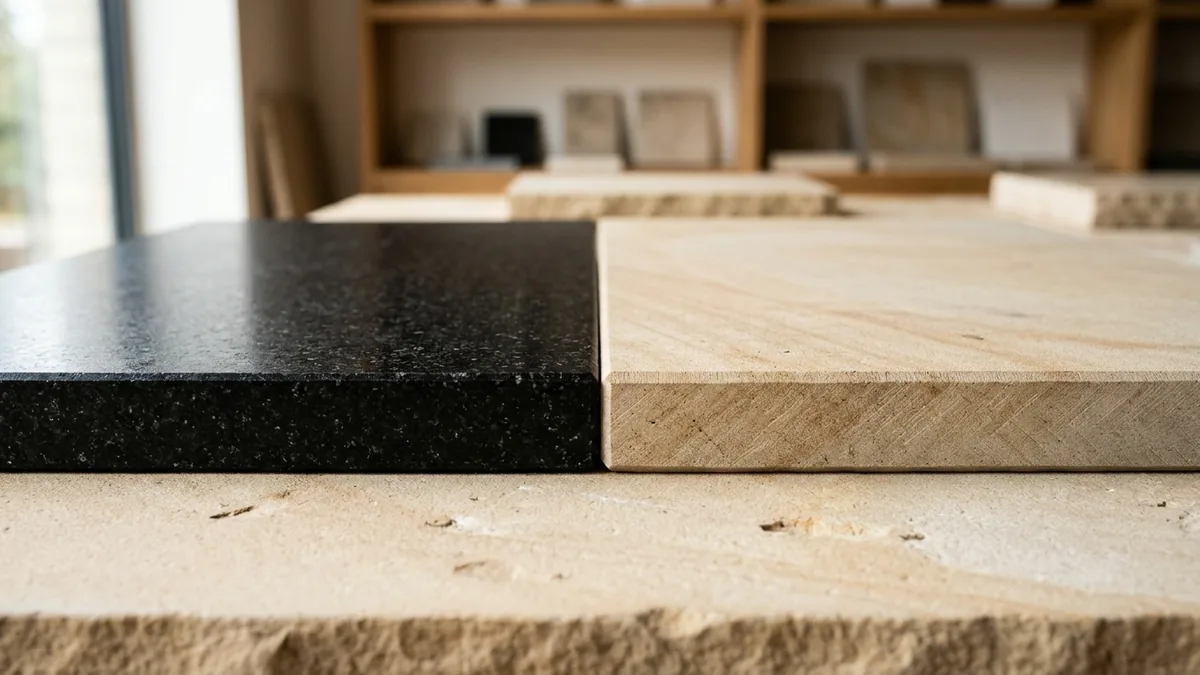
Double-charged tiles are often pitched as heavy-duty equals to natural rock because two layers of colored clay paste are pressed together during manufacturing. Yet comparing granite vs double charged vitrified tiles on structural metrics shows a sharp difference. Natural Rajasthan granite reaches a Mohs hardness of 6.5 to 7.0 and compressive strength above 200 MPa across a full 18 to 20 mm slab.
A double-charged tile still puts all its color in the upper two or three millimeters on top of a brittle 9 mm porcelain base. If a sharp edge chips or if an electrician cuts a floor channel, the plain neutral clay core shows through immediately. Explore our durable granite stone flooring options to see how solid igneous slabs handle heavy hallways and kitchens.
3 Surface Renewability: Re-Polishing Marble vs Replacing Cracked Tiles
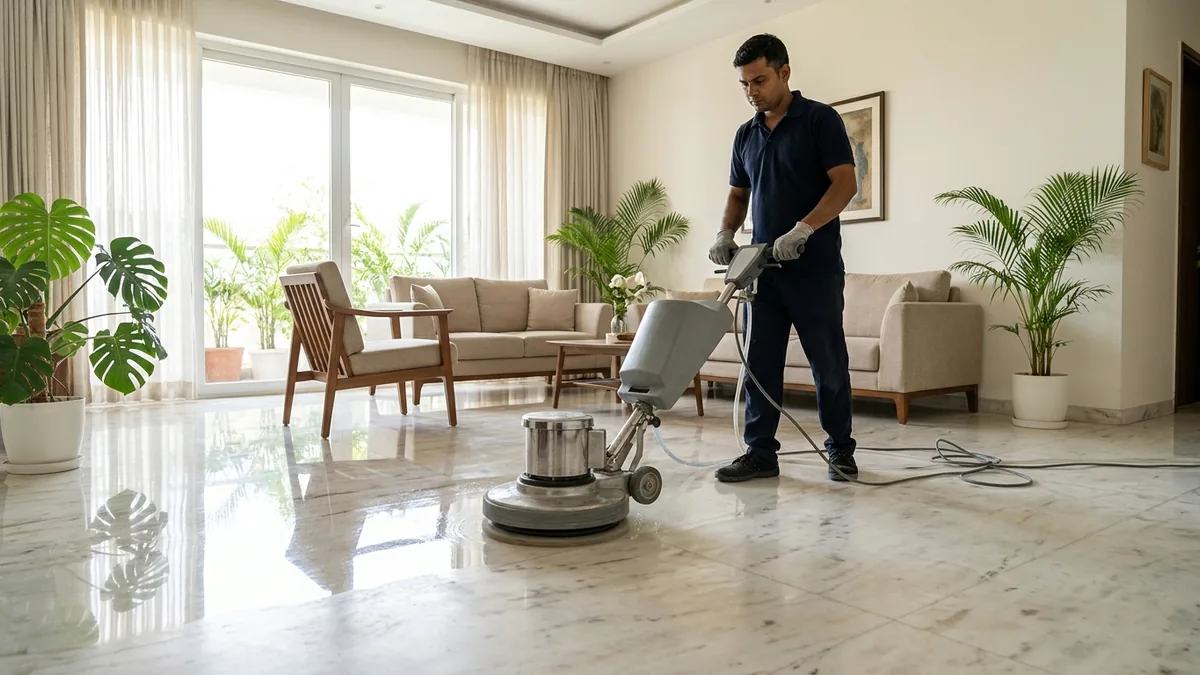
This single advantage settles the debate for many repeat homebuilders. Every floor collects scuffs over ten years of dragging dining chairs, shifting sofas and sandy monsoon footwear. Weighing re-polishing marble vs replacing cracked tiles reveals how forgiving real stone is over time.
Because natural marble and granite carry identical stone depth underneath, a technician brings in a wet planetary machine with diamond pads from 400 to 3000 grit, shaves away a paper-thin fraction of a millimeter and brings back a brand-new mirror finish with zero dust. Try polishing a scuffed glazed vitrified tile and you burn right through the printed layer into dull grey biscuit. Your only repair option is jackhammering the broken tile out, risking adjacent tiles and hunting for a discontinued shade. Keeping up with simple seasonal stone floor maintenance keeps marble fresh for decades without demolition.
4 Built-In Summer Relief: Thermal Cooling Benefits of Natural Stone
Anyone who has walked barefoot across an Indore living room in May knows the instant temperature difference under their heels. The thermal cooling benefits of natural stone come from its dense mineral crystal lattice and high specific heat capacity. Natural Makrana marble, Ambaji marble and Kota stone absorb indoor heat slowly during peak afternoon hours and stay noticeably cooler to bare skin.
Thin vitrified tiles sit on shallow adhesive beds and have lower thermal mass. In hot west-facing rooms, glazed porcelain warms up rapidly and feels stale underfoot, making air-conditioning work harder through April and May.
5 Safer Wet Footing: Slip Resistance of Honed Stone vs Glazed Tiles
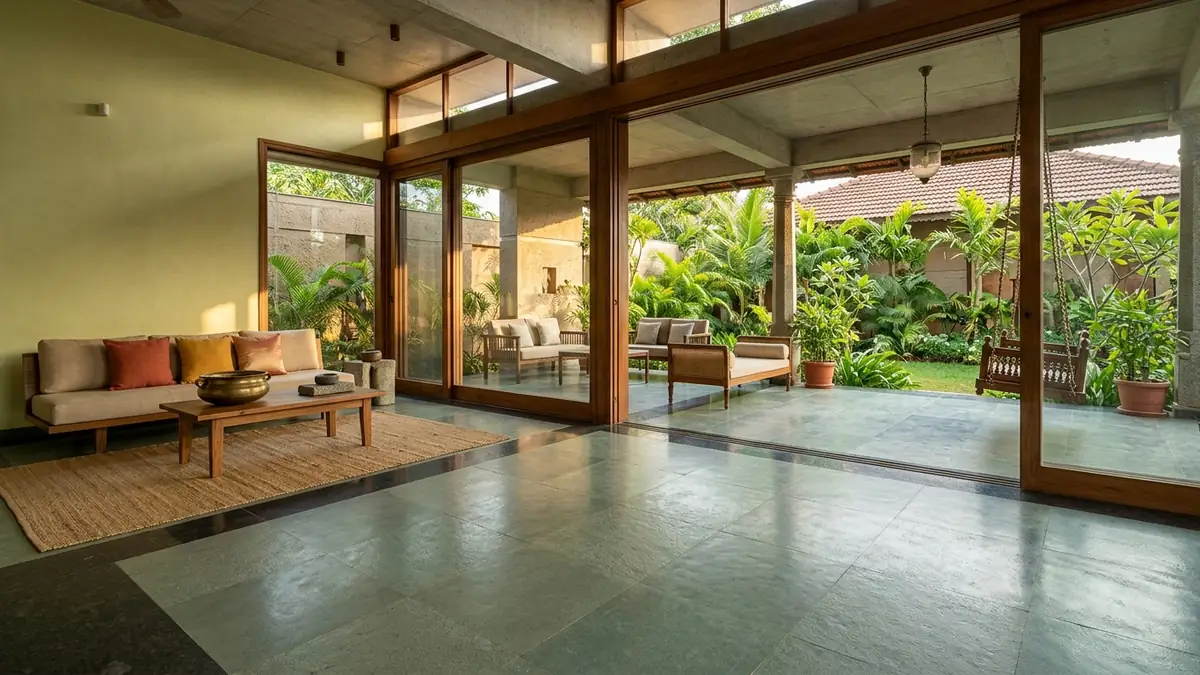
Glossy PGVT floors look dazzling in empty new apartments, yet even a few drops of spilled water or wet bathroom slippers turn them treacherous for children and elderly parents. Comparing the slip resistance of honed stone vs glazed tiles highlights why thoughtful mechanical finishes matter so much in Indian homes.
Natural stones can be honed, brushed, leathered, river-washed or thermally flamed at the stone studio to dial in exact foot traction without looking rough or industrial. Honed Kota limestone or leathered Rajasthan black granite gives bare feet gentle tactile grip in foyers, kitchens and courtyard transitions while remaining easy to mop clean. Browse our tailored range of architectural stone finishes to feel how matte and leathered textures improve wet-area safety.
6 Impact Tolerance: Scratch and Impact Resistance Comparison
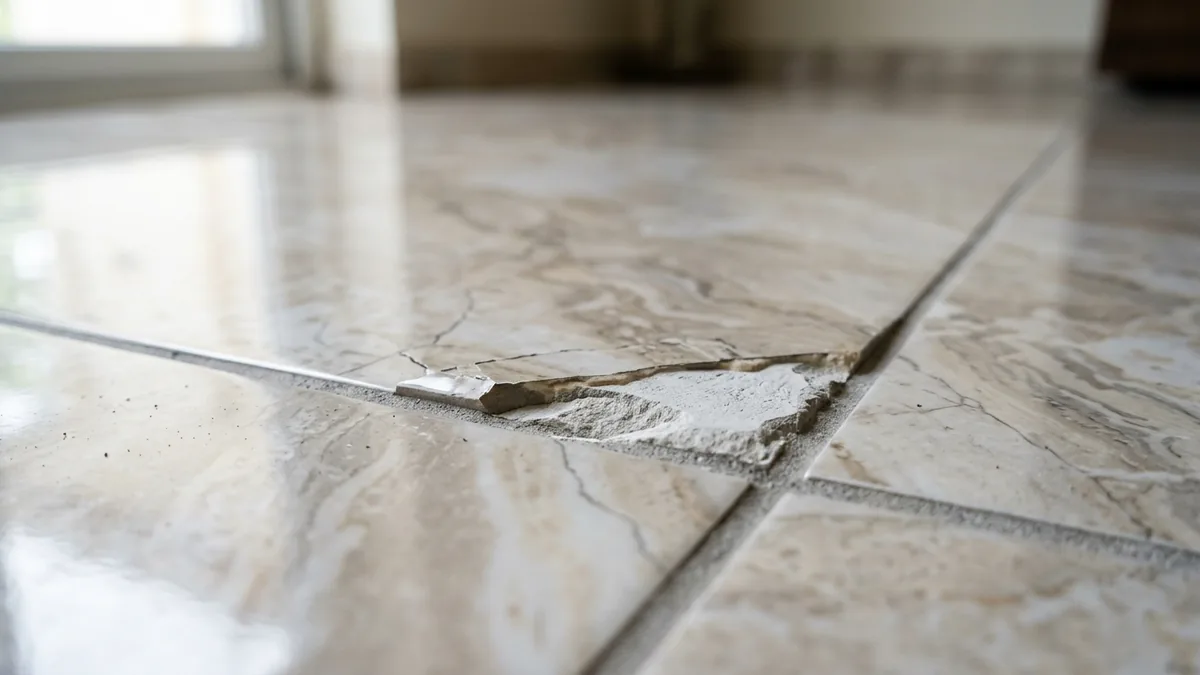
Tile brochures often highlight surface scratch ratings on glazed porcelain, yet real households break floors through point impact rather than gentle wear. A solid scratch and impact resistance comparison must separate thin brittle edges from dense rock mass.
Vitrified tiles are fired under high tension. If a mason leaves even a tiny air pocket under a tile corner during laying, dropping a cast-iron skillet, gas cylinder or marble mortar onto that spot frequently snaps the corner right off. With 18 to 20 mm thick Rajasthan granite, quartzite or dense Kota slabs fully buttered onto mortar beds, heavy point impacts are absorbed into the solid mineral mass without splintering.
7 Cleaner Indoor Air: Zero VOC Natural Stone vs Chemical Tile Glazes
Families spending eight to ten hours daily indoors increasingly pay attention to off-gassing from building finishes. Comparing zero VOC natural stone vs chemical tile glazes reveals a straightforward difference in material chemistry. Natural marble, granite, sandstone and limestone are pure excavated rock containing zero synthetic binders, formaldehyde glues or chemical topcoats.
In contrast, mass-produced vitrified tiles rely on synthetic nano-sealant coatings, chemical surface glazes and heavy resin-rich epoxy grouts across tight grid lines to mimic sheen and stain defense. Sealed with breathable water-based fluoropolymer or silane treatments, real stone leaves indoor air crisp, non-allergenic and clean.
8 One-of-a-Kind Continuity: Vitrified Tiles vs Natural Marble Flooring
Step back across a wide hall laid in marble-look tiles and your eye quickly spots the giveaway: the exact same diagonal vein repeats every fourth or fifth tile. Digital tile printers typically cycle between four and eight graphic faces per design, creating an artificial rhythm across open living rooms.
Looking closely at vitrified tiles vs natural marble flooring demonstrates what nature does effortlessly. Genuine Makrana white marble, Banswara marble and Morwad slabs have continuous organic movement that flows across book-matched slabs. Combined with on-site diamond honing after installation, stone joints vanish cleanly into a unified mirror-flat plane, accented effortlessly with custom natural stone inlays and brass borders.
9 Lower Embodied Footprint: Eco Friendly Stone Flooring vs Synthetic Tiles
From an environmental perspective, evaluating eco friendly stone flooring vs synthetic tiles requires looking at full energy lifecycles rather than marketing tags. Quarrying and diamond-sawing Indian granite, sandstone and limestone consumes mechanical cutting energy using recycled water loops, without burning massive fossil-fuel kilns.
Vitrified tile plants run continuous gas or coal kilns above 1,200 degrees Celsius for hours per batch, emit industrial carbon and generate non-biodegradable ceramic rubble whenever homeowners rip out dated tile patterns every decade. Real stone stays in place for generations and can even be lifted, re-dressed and reused.
10 Lasting Market Prestige: Luxury Resale Value of Natural Stone Homes
Ask any seasoned real estate valuer or luxury homebuyer walking into an upscale villa in Indore or Bhopal what signals authentic build quality right from the foyer. The luxury resale value of natural stone homes stems from tactile permanence that printed tiles simply cannot fake.
Discerning buyers immediately recognize real Makrana marble, Ambaji white stone, honed Kota or custom granite borders by their cool touch, zero-lippage monolithic joints and subtle depth under daylight. Whereas ten-year-old vitrified tiles often date a property and trigger immediate renovation discounts during price negotiations, well-kept natural stone floors hold property prestige high. Explore inspiring drawing room stone flooring concepts to see how stone upgrades architectural interiors.
Side-by-Side Technical Comparison: Natural Stone vs Vitrified Tiles
Side-by-side testing confirms natural stone outperforms glazed and double-charged vitrified tiles in slab thickness (18 to 20 mm vs 8 to 10 mm), repairability through diamond honing, non-repeating vein geometry, natural thermal cooling and long-term property equity.
Different rooms impose distinct loads, moisture exposure and foot traffic demands. The comparison table below breaks down how genuine indigenous natural stones stack up against standard vitrified tiles across seven measurable architectural benchmarks.
| Performance Metric | Natural Stone (Makrana, Granite, Kota) | Vitrified Tiles (GVT / PGVT / Double-Charged) |
|---|---|---|
| Standard Slab Thickness | 18 mm to 20 mm solid mineral rock | 8 mm to 10 mm pressed clay biscuit |
| Functional Lifespan | 50 to 80+ years with periodic repolishing | 10 to 15 years before glaze wear or style aging |
| Surface Restoration | Full wet diamond honing (400 to 3000 grit) | Impossible; damaged tiles require demolition |
| Visual Pattern Depth | 100% unique, full-depth natural veining | Repeating 4 to 8 digital print faces on surface |
| Summer Thermal Feel | High thermal mass keeps floors cool barefoot | Warms rapidly in direct sun and humid rooms |
| Wet Slip Safety | Custom honed, leathered or flamed R10-R12 grip | Glossy PGVT turns dangerously slick when wet |
| VOC & Chemical Profile | Zero synthetic resins, zero factory VOC glazes | Chemical glaze topcoats and synthetic resins |
How to Specify and Install Natural Stone Flooring for Zero Lippage
Proper natural stone installation relies on dry-lay vein matching prior to cutting, clean polymer-modified cement beds or white non-staining stone adhesives, flexible perimeter movement joints, sequential wet diamond honing and breathable fluoropolymer sealing for lasting performance.
Natural stone performs reliably only when treated as precision civil masonry rather than thin tile pasting. Following standard laying protocols under Indian Standard IS: 13757 prevents hollow spots, edge lippage and rising subgrade moisture staining.
- Full Dry-Lay Vein Mapping: Unpack and spread all numbered stone slabs across a dry clean layout bay before cutting. Arrange Makrana or Banswara marble slabs so natural mineral veins flow across room doorways without jarring color jumps.
- Subfloor Leveling and Primer Coat: Clean the structural RCC slab thoroughly, remove loose plaster and cure an even leveling screed. For light white marbles, coat the back of every slab with a white polymer-modified stone primer or clear epoxy moisture barrier so dark grey cement minerals cannot bleed upward into the stone pores.
- Full-Contact Mortar Bedding: Set 18 to 20 mm calibrated slabs over a damp 1:4 cement-river sand bedding bed (or white S1-grade flexible stone adhesive) using full back-buttering so zero hollow pockets remain beneath corners.
- Movement Joint Detailing: Maintain clean 2 to 3 mm perimeter expansion gaps along walls and structural columns, filled with flexible non-staining silicone before skirting boards cover the seam.
- Site Diamond Honing and Impregnating Seal: Allow mortar beds to cure for ten days, then grind stone joints dead flat using sequential wet diamond pads from 100 to 3000 grit. Once completely dry, apply a breathable fluoropolymer impregnating sealer to lock out tea, turmeric and cooking oil stains.
Homeowners comparing room-by-room durability can also explore our practical guide to benefits of natural stone flooring across kitchens, lobbies and bedrooms.
Lifecycle Economics: Natural Stone Flooring Cost vs Vitrified Tiles
Evaluating natural stone flooring cost vs vitrified tiles over a thirty-year ownership cycle favors genuine stone. While initial stone fabrication and diamond honing require higher upfront effort, vitrified tiles incur repeated tear-out, disposal and re-tiling disruption every twelve to fifteen years.
First-time builders frequently look strictly at carton stickers when weighing natural stone flooring cost vs vitrified tiles. On day one, mass-printed ceramic tiles appear simpler to budget because they arrive pre-polished from automated factories. However, real architectural accounting spans twenty-five to forty years of occupancy.
The qualitative drivers that shape natural stone investment include:
- Quarry Rarity and Regional Freight: Locally quarried Kota stone and Dholpur sandstone offer remarkable baseline value across Central India, whereas clear white Makrana blocks or rare Rajasthan black granite command higher quarry selection premiums.
- Vein Alignment and Slab Wastage: Laying straight modular stone blocks produces minimal offcuts, whereas book-matching dramatic marble veins across large open halls requires wider slab allowances and precision bridge-saw trimming.
- On-Site Grinding and Polishing Stages: Pre-polished vitrified tiles skip site finishing, whereas natural marble and granite receive dedicated multi-stage wet diamond grinding on site to eliminate edge lippage completely and bring out full mineral clarity.
- Avoided Replacement Disruption: Factoring in demolition noise, dust, furniture shifting and wasted contractor labor when replacing chipped or outdated vitrified tiles after twelve years turns genuine natural stone into the wiser long-term investment.
| Flooring Tier | Typical Material Profile | Restoration Path | 30-Year Ownership Outcome |
|---|---|---|---|
| Vitrified Tile Assembly | Glazed or double-charged porcelain | Full demolition on damage or wear | Likely requires 1 to 2 full replacements |
| Regional Limestone & Sandstone | Honed Kota stone or Dholpur slabs | Light rotary scrub and resealing | Zero replacement; ages cleanly with patina |
| Calibrated Indian Granite | 20 mm Rajasthan black or pink granite | Rare diamond buffing every decade | Virtually scratch-free permanent flooring |
| Indigenous Luxury Marble | Makrana or Banswara white marble | Wet diamond honing restores mirror glow | Gains heritage equity and buyer prestige |
Visiting a Bespoke Natural Stone Studio in Indore
Inspecting full-size slabs at a dedicated stone experience center removes uncertainty from material selection. Stone World in Indore offers live honed and polished mockups, custom CNC border cutting, dry-lay slab previews and technical bedding advice for architects and villa owners.
Choosing between synthetic tiles and real rock is far easier when you stand barefoot over full-scale slab displays rather than squinting at small catalog thumbnails. As a bespoke natural stone studio in indore, Stone World works alongside architects, interior designers and residential builders across Central India to curate authentic indigenous Indian stones tailored for every room.
What sets a visit to the Stone World stone experience center apart from ordinary tile counters:
- Live Tactile Comparisons: Touch mirror-polished Makrana marble alongside honed Kota limestone, leathered Rajasthan black granite and brushed sandstone under natural daylight to judge grip, reflection and color tone first-hand.
- Dry-Lay Slab Previewing: Inspect full-size slabs arranged sequentially on our studio floor so you see exact mineral movement and natural veining before a single saw blade touches the stone.
- Precision Waterjet & Inlay Craft: Custom brass-and-stone floor borders, foyer medallions and stair nosings are fabricated in-house at our Indore stone studio for millimeter-tight fits on site.
- Complete Specification Guidance: Our stone specialists coordinate directly with your site contractor on adhesive chemistry, subfloor damp-proofing and breathable impregnating sealers tailored to each stone variety.
Visit the Stone World Experience Center in Indore
Inspect live mockups, feel stone textures in person and discuss your upcoming architectural or villa project.
Frequently Asked Questions
Which lasts longer in an Indian home: natural stone or vitrified tiles?
Natural stone floors routinely last 50 to 80 years or more because the mineral structure runs continuously through an 18 to 20 mm solid slab. Vitrified tiles typically require replacement within 10 to 15 years once surface glazes dull, corners chip or patterns fall out of style.
Can double-charged vitrified tiles be re-polished like natural marble?
No, vitrified tiles cannot be mechanically re-polished on site like marble or granite. Grinding a vitrified tile strips away the thin top nano-glaze or pigment layer, exposing the plain clay biscuit underneath, whereas natural marble can be diamond-honed multiple times to restore a fresh mirror shine.
Does natural stone keep rooms cooler than vitrified tiles in summer?
Yes, indigenous natural stones such as Makrana white marble and Kota limestone have higher thermal mass and mineral density than thin ceramic tiles. They absorb indoor ambient heat slowly during hot Indian afternoons, keeping floors noticeably cooler underfoot without holding trapped warmth.
Are honed natural stone floors safer than glossy vitrified tiles when wet?
Yes, honed Kota stone, brushed sandstone and leathered granite offer dependable R10 to R12 slip resistance when damp. Mirror-glossy vitrified tiles lose surface friction immediately under wet footwear, creating higher slip risks for children and older family members.
Is natural stone harder to maintain than vitrified tiles?
Once sealed with a modern breathable impregnating fluoropolymer sealer, natural stone requires simple daily dust mopping and weekly damp cleaning with a pH-neutral cleaner. Unlike vitrified tiles that trap grime inside wide dark grout grids, honed and sealed stone joints stay flush and easy to clean.
How does natural stone impact the resale value of a residential property?
Authentic natural stone flooring such as Makrana marble, Rajasthan granite and bespoke stone inlays boosts luxury buyer confidence and property valuation. Real estate appraisers treat solid stone as a permanent architectural upgrade, whereas worn ten-year-old vitrified tiles often trigger replacement deductions.