


Your home is starting to take shape. The Italian marble floors are laid down, the custom woodwork is complete and the lighting feels just right. But when you look at the focal points, perhaps the dining room feature wall or the master bathroom vanity, they feel slightly ordinary. Standard quartz or ceramic tiles just do not capture that final layer of exclusivity you want.
Every day you settle for common finishes, your luxury spaces fail to reach their true potential. Those generic walls blend into the background. You want a material that commands attention, physically interacts with light and tells a story of rare, earth-born beauty.
This is where semi precious stones for interior design change the entire conversation. Unlike mass-produced slabs, these are naturally occurring gemstones like Agate, Tiger Eye and Amethyst, carefully cut and assembled by master craftsmen. They turn a simple wall into a backlit piece of art and a standard countertop into a conversation starter. Let's explore the top five semi-precious stones reshaping luxury Indian homes, how they perform practically and the best ways to integrate them into your spaces.
Table of Contents
Why Choose Semi Precious Stones for Interior Design?
Semi precious stones for interior design offer rare exclusivity because no two slabs are ever identical. They provide natural translucency for backlighting, extreme durability against daily wear and an immediate sense of luxury that standard marble simply cannot replicate.
Most premium materials look good. Very few look entirely unique. When you specify a standard Italian marble, you largely know what you are getting. But semi-precious stone slabs are different. Artisans hand-select individual geodes and crystals, slice them with precision and bind them using strong epoxy resin to create a single, continuous slab.
This process means the final product is a mosaic of natural earth elements. If you are remodelling your home, these stones offer something truly special. The most compelling reason designers turn to them is their relationship with light. Many of them, particularly Agate and Quartz, are naturally translucent. When you install an LED lighting panel behind them, the entire wall or countertop glows from within. It highlights the internal crystal structures and mineral banding in a way that paint or wallpaper never could.
They are also incredibly hard. Because they are formed deep within the earth under immense pressure, stones like Quartz and Agate rank very high on the Mohs scale of mineral hardness. This makes them highly resistant to scratches and everyday wear. You are getting the visual appeal of a fragile gemstone with the structural integrity needed for architectural applications. Pairing a bold gemstone wall with a classic gold leaf interior finish on the ceiling can upgrade a room from premium to royal.
5 Best Semi Precious Stones for Luxury Interiors
The five most impactful semi precious stones for interior design are Agate for backlit walls, Tiger Eye for active chatoyancy, Quartz for durable kitchen surfaces, Malachite for rich green accents and Amethyst for deep violet bathroom vanities.
Choosing the right stone depends entirely on the mood you want to set. Some stones energize a room, while others calm it down. Here is a detailed look at the top five options and how they perform in real-world Indian homes.
1. Agate: The Backlit Masterpiece
Agate is a banded chalcedony known for its swirling colours and high translucency. It is the premier choice for backlit feature walls in living rooms, dining areas and luxury bar fronts, offering a bright, glowing aesthetic.
If there is one stone that dominates the semi-precious interior space, it is Agate. It forms in concentric layers within volcanic rocks, resulting in stunning, swirling patterns. You can find it in natural tones like brown and grey, but the most popular choices are the rich dyed blues, pinks and oranges that create an immediate focal point.
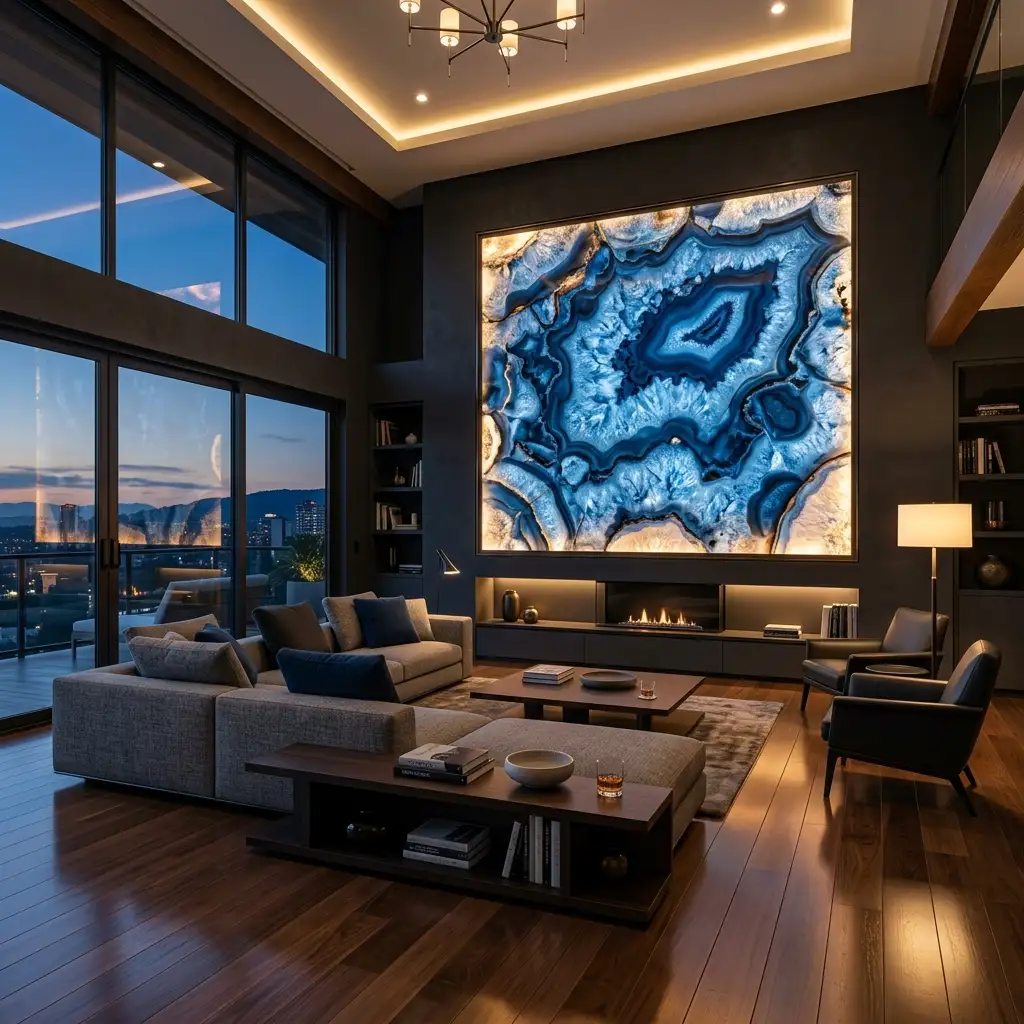
The magic of Agate happens when you introduce lighting. Because the slices are translucent, a custom-built LED panel placed behind the slab brings it to life. We frequently see this used as the primary feature wall in a luxury dining room or as a statement front for a home bar. When the lights dim in the evening, the Agate wall provides a soft, warm ambient glow that completely changes the atmosphere of the room.
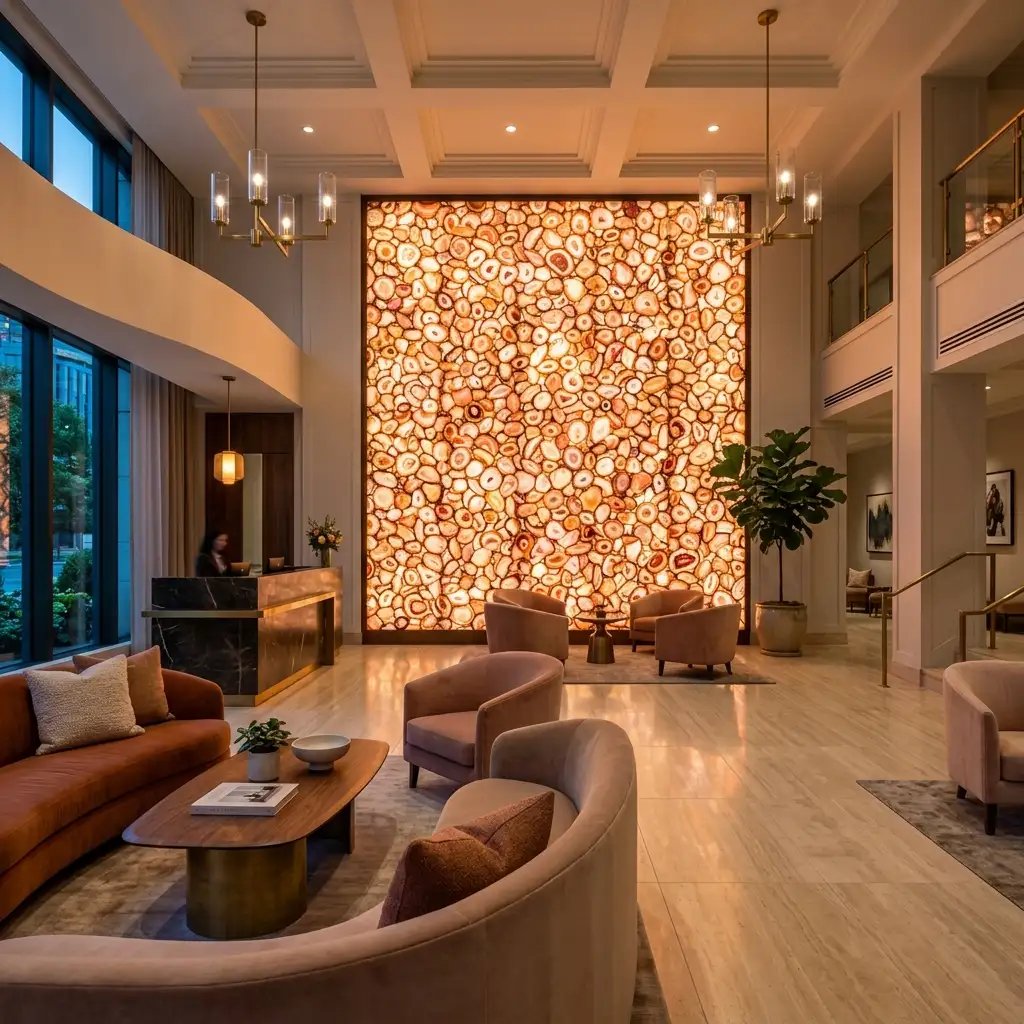
Agate is surprisingly durable, but it does require professional installation. The backlighting system needs to be perfectly even; if the LEDs are too close to the stone, you will see individual light dots instead of a smooth wash of light.
2. Tiger Eye: Active Golden Warmth
Tiger Eye features a unique optical effect called chatoyancy, where bands of golden light seem to move across the stone as your viewing angle changes. It is perfect for executive desk inlays, accent furniture and intimate study rooms.
Tiger Eye is for those who want quiet, confident luxury. It does not need backlighting to stand out. Instead, it relies on its natural structure. The stone contains parallel intergrowths of quartz crystals and altered amphibole fibres. This creates chatoyancy, which is the same shimmering, shifting light effect you see in a cat's eye.
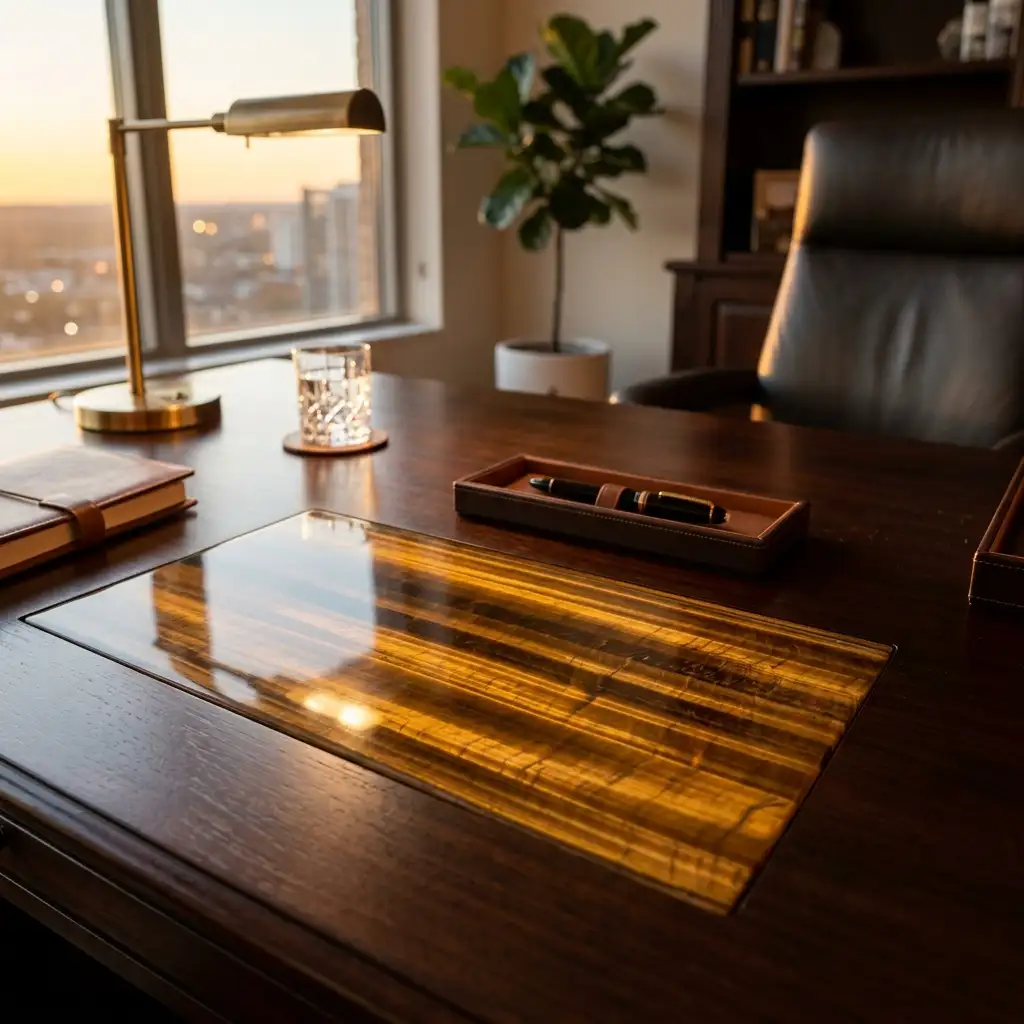
As you walk past a Tiger Eye surface, the bands of golden-brown and amber light appear to move and shift. It is a highly active material. Because of its dark, moody tones, it works exceptionally well in formal spaces. Think of a custom inlay on an executive office desk or an accent tabletop in a private cigar lounge.
Tiger Eye pairs beautifully with dark woods like walnut or mahogany and brushed brass and leather. It grounds a room, providing warmth without the aggressive brightness of lighter stones.
3. Quartz: Crystal Clear Practicality
Natural Quartz slabs offer crystal-clear elegance combined with extreme durability. Highly resistant to heat, stains and scratches, Quartz is the most practical semi-precious stone for high-traffic areas like luxury kitchen countertops and bathroom vanities.
Do not confuse natural Quartz slabs with engineered quartz (which is crushed stone mixed with resin). A semi-precious Quartz slab is made from large, naturally formed quartz crystals bound together. It retains the raw, icy beauty you find in a luxury gemstone.
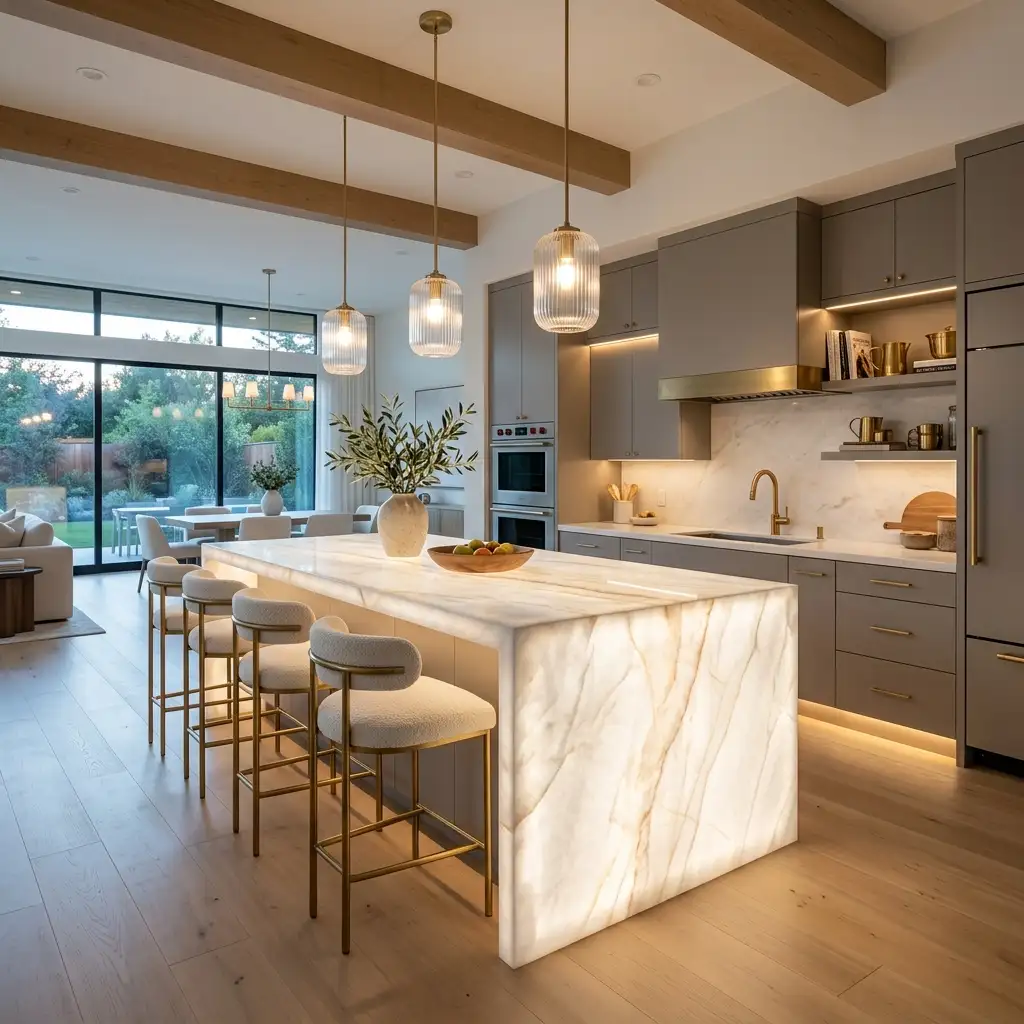
Quartz is the workhorse of the gemstone world. It is incredibly hard and non-porous. This means it will not stain when you spill wine and it will not easily scratch when you slide a heavy pot across it. If you are designing a high-end kitchen and want a centrepiece island, a backlit white Quartz countertop is the ultimate choice.
It provides a crisp, clean aesthetic that fits perfectly into modern, minimalist homes. Unlike Agate, which brings heavy colour, white or smoky Quartz provides texture and light without dictating the entire colour palette of the room. It also looks striking when set against dark, matte architectural surfaces like Stonelam porcelain slabs.
4. Malachite: Deep Regal Green
Malachite is defined by its deep, swirling bands of emerald green. Historically associated with royalty, it serves best as an accent material for console tables, luxury mirror frames and dramatic entryway features.
If you want drama, you want Malachite. This copper carbonate hydroxide mineral has been a symbol of wealth for centuries, famously used to decorate the Winter Palace of the Russian Tsars. Its intense green colour and swirling, eye-like banding make it impossible to ignore.
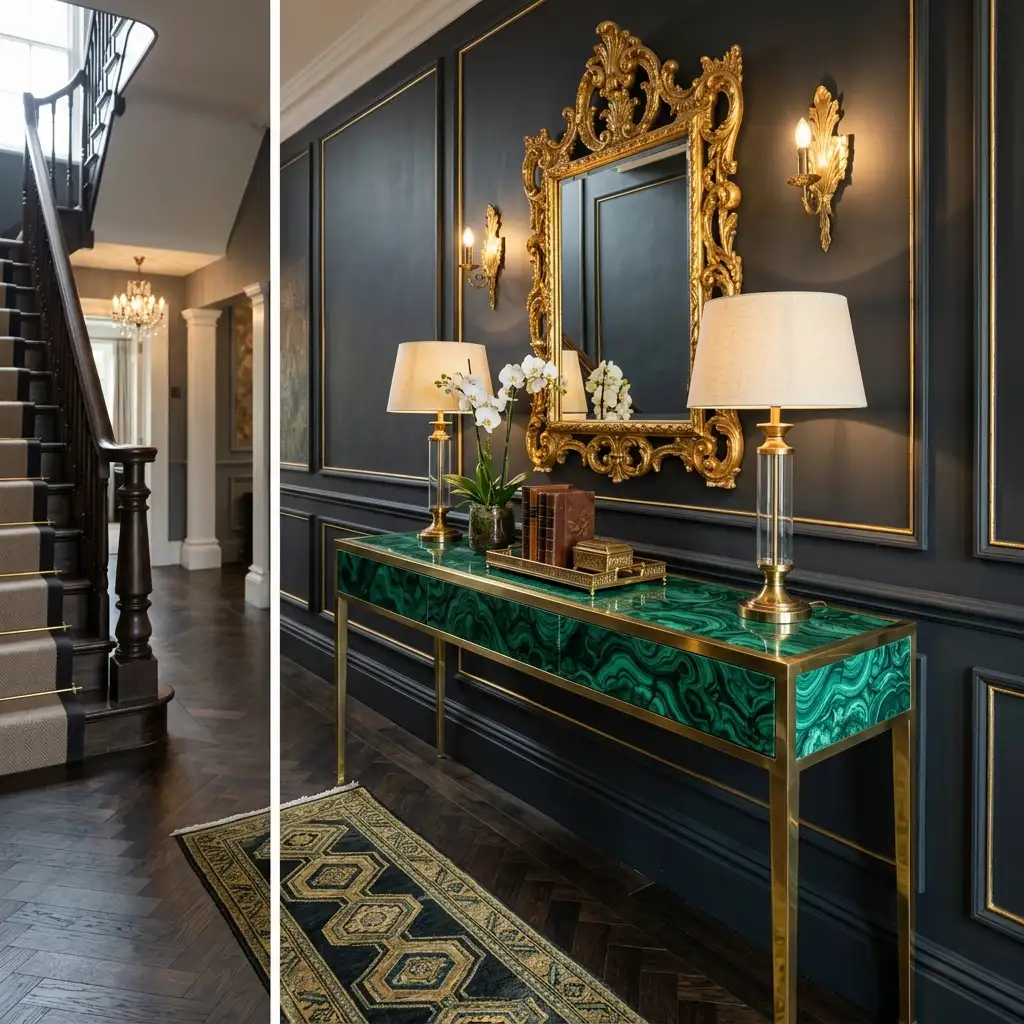
However, Malachite is softer and more porous than Quartz or Agate. It is not suitable for a kitchen countertop or a high-traffic floor. Instead, designers use it for vertical applications and accent furniture. A custom console table with a Malachite top, framed in polished brass, instantly upgrades an entryway.
Because the green is so overpowering, it is best used in moderation. Pair it with matte charcoal walls or soft neutral fabrics to let the stone command the space without making the room feel chaotic.
5. Amethyst: Mystical Violet Luxury
Amethyst brings deep violet hues and prominent crystal structures to interior spaces. Associated with calm and serenity, it is a highly sought-after material for luxury bathroom vanities, spa areas and intimate bedroom feature walls.
Amethyst is a variety of quartz, but its striking purple colour gives it a completely different personality. The slabs often display large, jagged crystal formations surrounded by lighter lavender and white banding. It feels raw, earthy and incredibly luxurious.
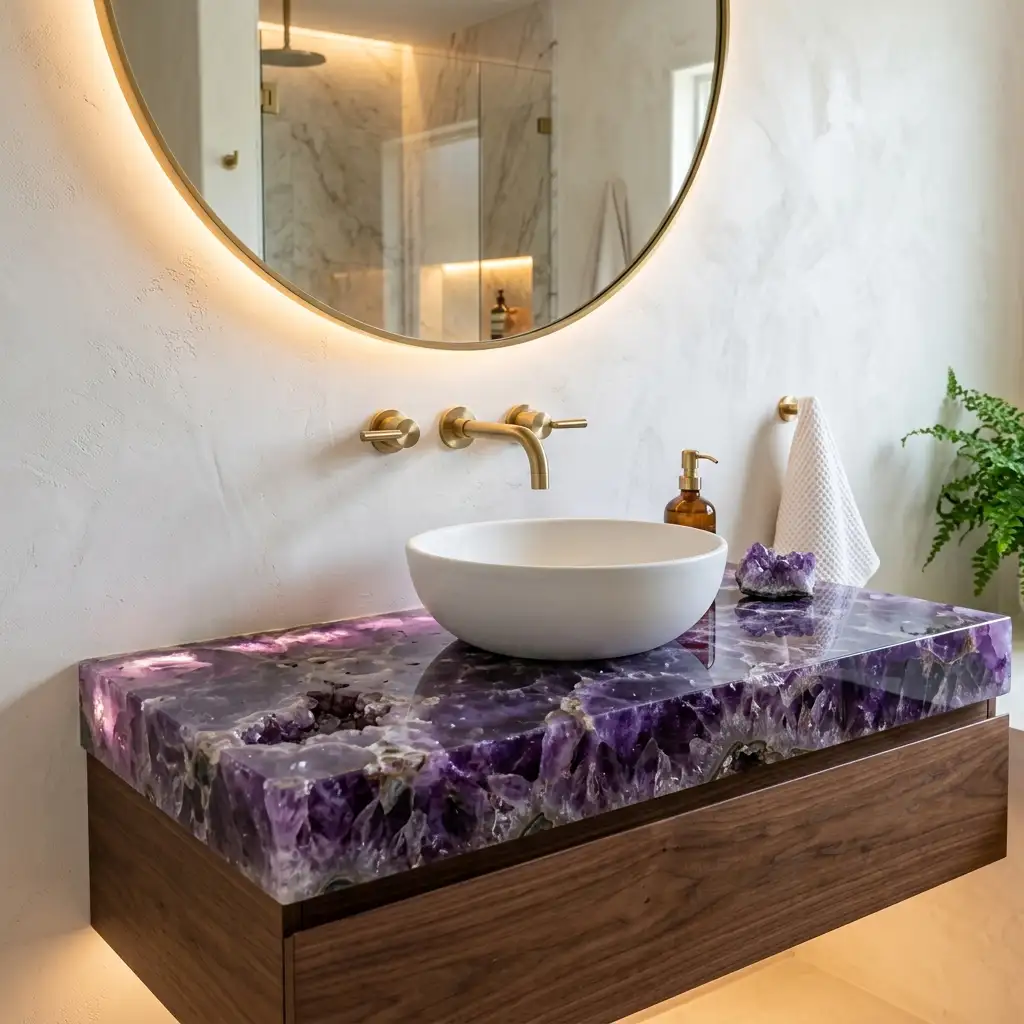
In colour psychology, purple is tied to royalty, calm and spirituality. This makes Amethyst the perfect semi-precious stone for private spaces designed for relaxation. We frequently see it used for vanity tops in master bathrooms, often paired with brushed brass or matte black fixtures. When backlit, the deep violet crystals take on a warm, almost mystical glow that turns a standard bathroom into a private sanctuary.
Where to Use These Gemstones
Deploy semi precious stones strategically as focal points. Use them for living room feature walls, kitchen islands, bathroom vanities and custom furniture pieces. Avoid overusing them, as their visual weight demands breathing room.
The biggest mistake you can make with semi-precious stones is using too much of them. If you cover an entire room in Agate, it stops looking luxurious and starts looking overwhelming. These materials are divas; they need the stage to themselves. Here is how to position them correctly:
- The Living Room: Create a single backlit feature wall behind the main seating area or the television console. Keep the surrounding walls muted.
- The Kitchen: Reserve Quartz for the centre island. Use a quieter, solid-colour material for the perimeter countertops to create contrast.
- The Bathroom: Use Amethyst or Agate for the vanity top and the immediate backsplash. Keep the shower walls clean and simple.
- Commercial Spaces: Hotel lobbies, high-end retail stores and corporate boardrooms benefit massively from gemstone reception desks or large structural pillars wrapped in backlit stone.
Care and Maintenance Guide
Maintain semi precious stones by cleaning them with pH-neutral soap and water. Never use harsh acidic cleaners. While stones like Quartz are non-porous, softer stones like Malachite require periodic sealing to prevent staining and etching.
Despite their exotic appearance, most semi-precious slabs are bound together with a high-strength commercial epoxy resin. This resin gives the slab structural integrity and seals the natural pores of the stones. However, they still require proper care to maintain their high-gloss finish.
| Stone Type | Hardness (Mohs) | Maintenance Requirement |
|---|---|---|
| Quartz and Amethyst | 7.0 (Very Hard) | Wipe with damp cloth. Highly resistant to stains. No regular sealing required. |
| Agate and Tiger Eye | 6.5 - 7.0 (Hard) | Use pH-neutral cleaners. Avoid placing hot pans directly on the surface. |
| Malachite | 3.5 - 4.0 (Soft) | Requires regular professional sealing. Avoid acidic liquids (lemon, vinegar) entirely. |
For backlit installations, ensure your contractor leaves an access panel. LED strips eventually burn out or require maintenance. You need a way to reach the lighting system without having to dismantle the expensive stone slab in front of it.
FAQ
1. Are semi precious stones suitable for kitchen countertops?
2. How are semi precious stone slabs made?
3. Can I backlight any semi-precious stone?
4. How much do semi precious stones for interior design cost in India?
5. Do the colours in dyed Agate fade over time?
Upgrade Your Space with Rare Gemstones
A well-designed room should make you pause. When you integrate semi precious stones for interior design into your home, you are not just covering a wall; you are installing a piece of geological history. From the active golden chatoyancy of Tiger Eye to the glowing, ambient warmth of a backlit Agate wall, these materials offer a level of customisation and pure luxury that standard finishes can never achieve.
Whether you are upgrading a master bathroom or designing a completely new corporate lobby, executing these gemstone features requires true artisanal skill and premium sourcing.