


Your home feels mostly finished. You have chosen the right natural stones, painted the walls and brought in solid furniture. But something is missing. The spaces feel slightly flat, lacking that final layer of warmth and custom character that turns a good room into a premium one. Standard metallic paints or wallpapers just don't capture the light properly and brass fixtures can only do so much.
You need a material that physically interacts with light. This is exactly where the ancient craft of gold leafing for interiors steps in. Unlike mass-produced metallic finishes, real gold leaf carries a natural depth. The application process leaves fine overlapping lines and textures that catch the sun during the day and glow softly under artificial lighting at night.
This is not about making your home look like a loud palace. When done correctly, gold leafing adds a quiet, confident luxury. Let's break down exactly how you can use this technique, the traditional craftsmanship behind it and where it works best in modern Indian homes. We will also cover how it compares to cheaper alternatives and how to maintain its brilliance for decades.
Table of Contents
Why Choose Gold Leafing For Interiors?
Gold leafing provides superior light reflection, bringing warmth and depth to rooms. It carries strong cultural significance in India, representing prosperity. Unlike trendy finishes, authentic gold leaf complements both contemporary and traditional spaces, offering a durable, high-end aesthetic.
Most decorative finishes try to mimic real materials. They fall short. Gold leafing uses actual sheets of hammered gold, typically 24-karat, applied delicately by hand. The primary reason designers specify it is how it handles light. Gold has a unique atomic structure that reflects yellow and red light while absorbing blue light. This physical property makes spaces feel naturally warmer.
In Indian culture, gold is never just a colour. It signifies wealth, stability and auspicious beginnings. Bringing this element directly into your living spaces creates an environment that feels rooted in heritage while remaining entirely modern. When you pair gold accents with earthy materials - perhaps taking inspiration from limestone options for remodelling - you create a balanced, grounded look that never feels cold.
The durability of real gold also matters. Gold does not oxidise or tarnish. While silver leaf will turn black over time if exposed to air, pure gold remains brilliant for centuries. You are not just decorating a wall; you are putting your money into a lasting architectural feature that will age gracefully.
5 Ways to Use Gold Leafing for Interiors
The best applications for gold leafing in interiors include feature walls, architectural mouldings, ceiling recesses, custom furniture accents and small decorative details. Each application uses the reflective properties of gold to enhance the room's natural and artificial lighting.
Integrating gold foil interior design requires restraint. If you cover everything, the room looks like a themed hotel. The secret is contrast. You want the gold to sit next to matte, textured surfaces. Here are the five most effective ways to apply this craft in your home.
1. Gold Leaf Wall Design and Feature Walls
A gold leaf wall design turns a plain surface into a massive light reflector. It works exceptionally well in dining rooms or entrance foyers, creating a textured, glowing backdrop that shifts in appearance throughout the day.
An entire accent wall covered in gold leaf wall design makes a serious statement. The artisans apply individual square leaves, slightly overlapping them. This overlapping creates a grid-like texture known as the "fault line" pattern. You cannot replicate this natural texture with wallpaper or spray paint.
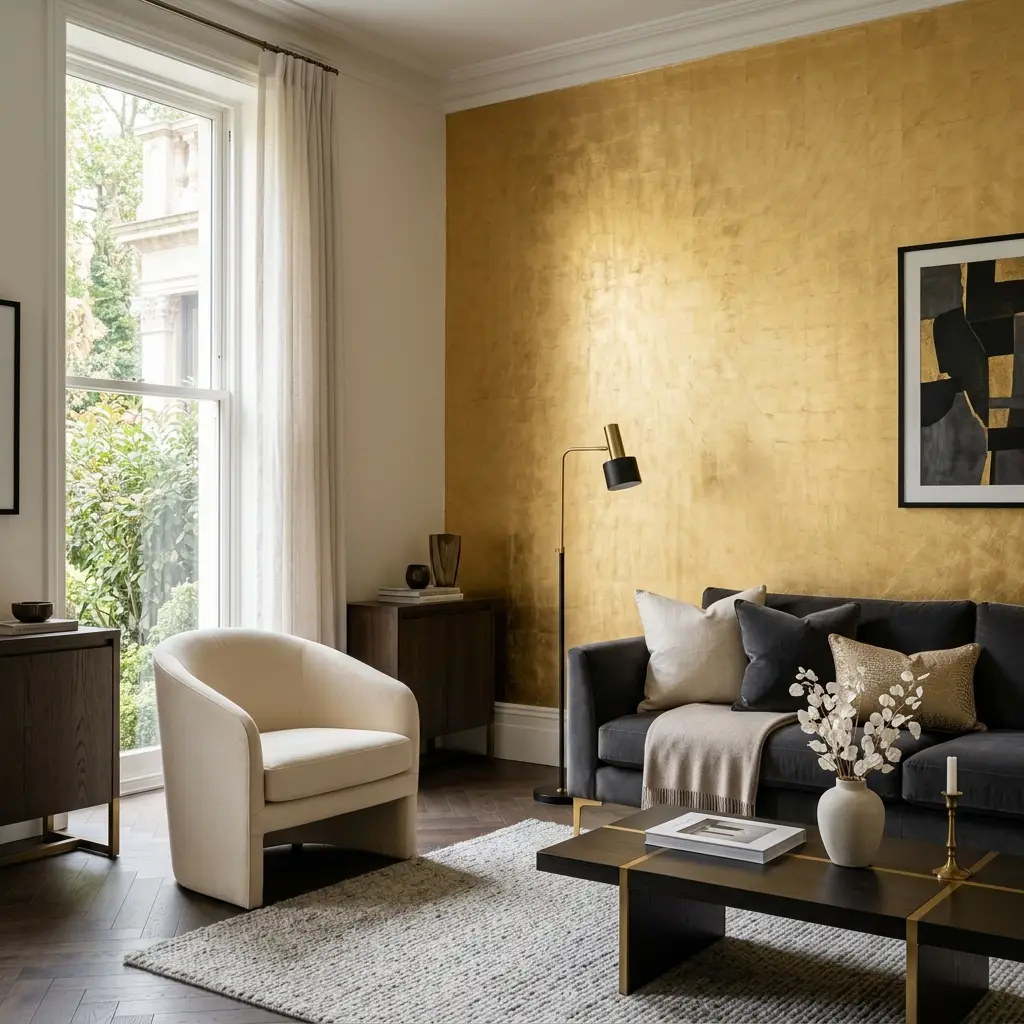
If you are planning dining area interiors, a gold leaf feature wall acts as the perfect backdrop. Under dim, warm dining lights, the wall will glow softly, providing enough ambient light to make the space feel intimate and expensive. We strongly recommend pairing it with matte charcoal walls or deep navy blue to let the gold breathe.
2. Architectural Columns and Mouldings
Applying gold leaf to architectural details like cornices, columns and skirting boards highlights the structural bones of a room. This technique adds classic elegance without overwhelming the primary design scheme.
You don't always need a massive feature wall. Sometimes, the best use of gold leafing is on the edges. If your home has intricate natural stone carvings, plaster cornices, ceiling roses or internal pillars, picking out specific ridges in gold leaf lifts the entire structure. It also looks striking when paired next to modern materials; for instance, framing premium Stonelam tiles with gilded metal trims gives you the perfect mix of rugged durability and sharp luxury.
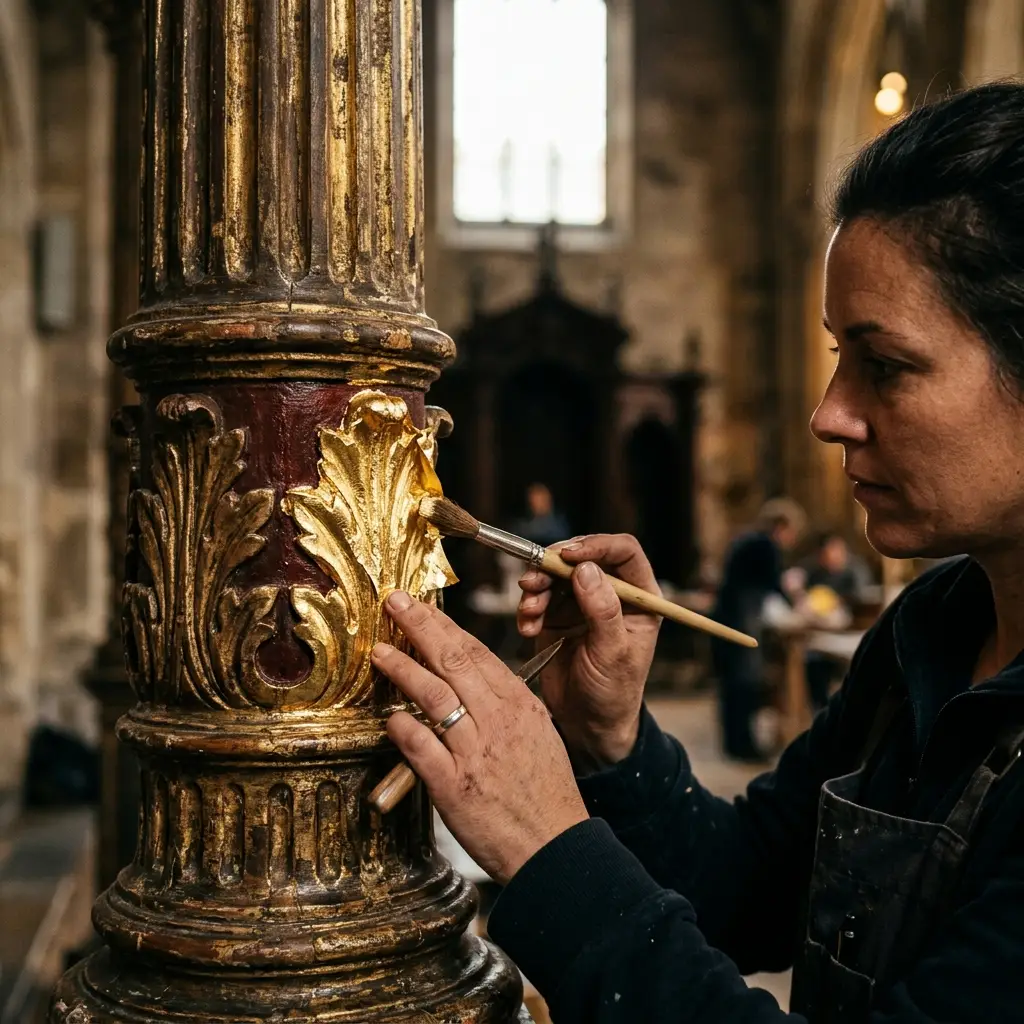
This is where the skill of the artisan truly shows. They use specialized brushes to press the wafer-thin gold into the deep recesses of the carving. The contrast between the flat white plaster and the brilliant gold creates sharp, defined shadows that give the room immediate depth.
3. Luxurious Ceiling Highlights
Gold leaf ceiling designs push the visual height of a room upward. Coating the inside of a tray ceiling or a dome creates a warm canopy that reflects chandelier lighting downward into the living space.
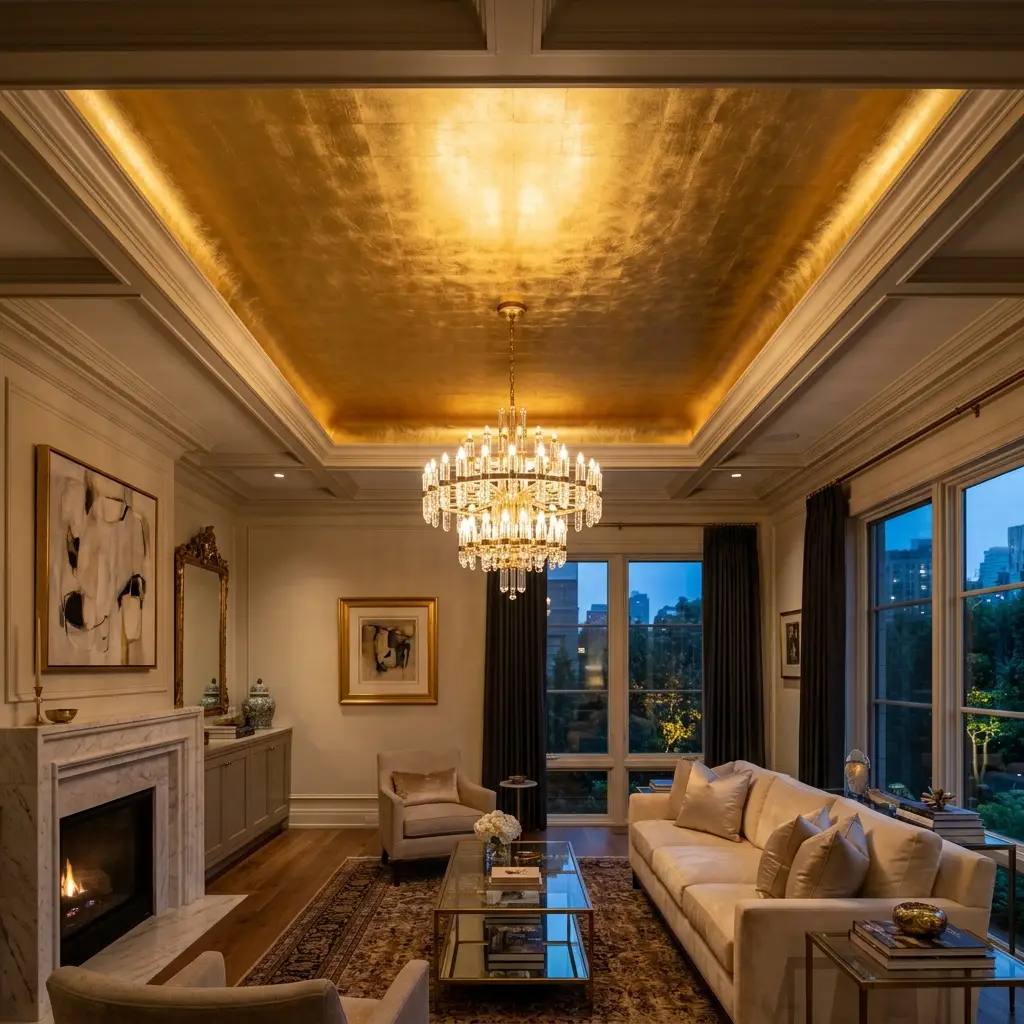
Ceilings are often ignored in modern design. We paint them flat white and forget about them. But if you have a recessed tray ceiling in your living room or a small dome in your prayer room, using gold leaf ceiling designs changes the entire atmosphere.
When you install a chandelier beneath a gold-leafed recess, the light bounces off the irregular gold surface and scatters softly across the room. It eliminates harsh shadows. The room feels taller because the reflective surface breaks the hard visual boundary of a standard painted ceiling. It is an old architectural trick used in European opera houses, adapted beautifully for Indian homes.
4. Custom Furniture Accents
Gilding wooden furniture edges, table frames or cabinet handles with gold leaf adds custom luxury to standard pieces. It bridges the gap between the room's architecture and its movable decor.
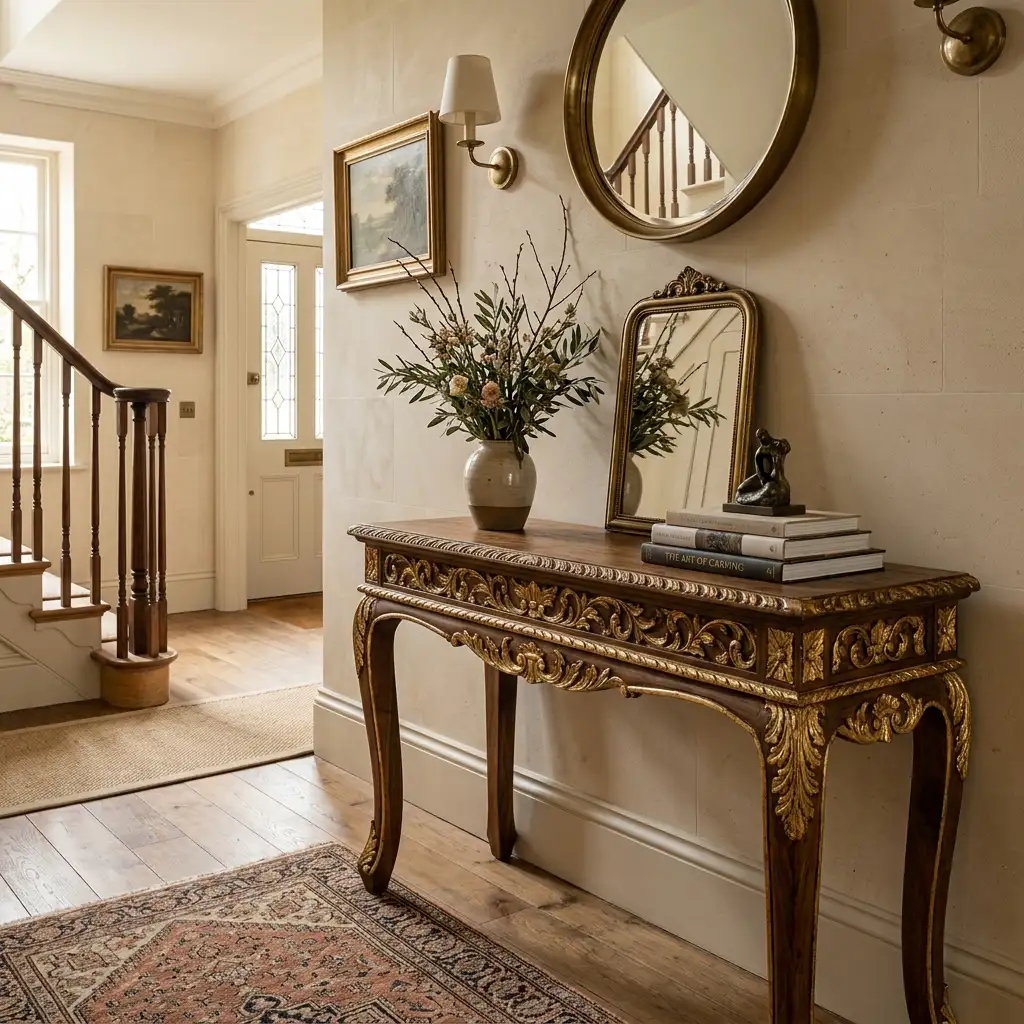
The craft extends beyond walls. Furniture makers have used it for centuries to highlight carvings on wooden chairs and console tables. If you have a solid teak wood console in your entryway, adding gold leaf to the carved edges or the feet instantly upgrades it from a standard piece to a custom heirloom.
The beauty of furniture gilding is the patina. Over years of use, the gold might wear slightly on the high-touch areas, revealing the red clay base coat (called bole) beneath it. This natural wear process makes the piece look historically significant, a characteristic that mass-produced brass plating simply cannot achieve.
5. Fine Decorative Details
Applying gold leaf to small decorative elements like mirror frames, picture frames and switch plates unifies the interior design. These micro-details ensure the luxury theme remains consistent throughout the house.
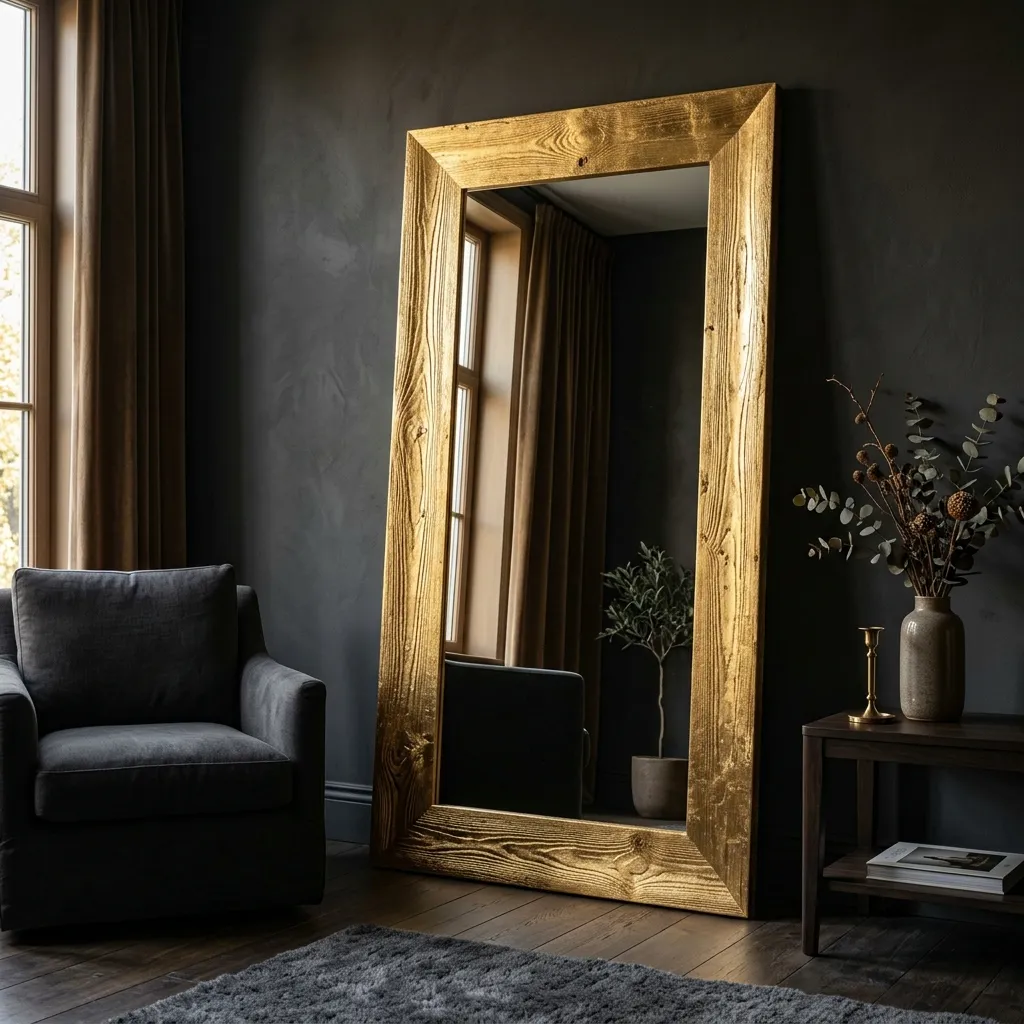
God is in the details. A room might look great overall, but cheap plastic switch plates or generic mirror frames break the illusion. Taking the time to have these small elements gilded ties the whole room together.
A large floor mirror with a heavily textured, gold-leafed frame leaning against a dark wall provides an incredible focal point. It catches the eye immediately. Because the gold leaf is so thin, it conforms perfectly to the texture of the wood grain beneath it, preserving the natural feel of the material while giving it a metallic skin.
The Traditional Gold Leafing Art Process
The traditional gold leafing process involves surface preparation, applying a clay bole base, painting on a specific adhesive called size, delicately laying the gold leaves with a gilder's tip and burnishing the surface to a high shine.
Understanding how this is done makes you appreciate the final result much more. It is a slow, methodical process that requires patience and a steady hand. You cannot rush traditional gold leafing art. The material is so thin - often less than 0.1 microns - that a heavy breath will blow it away.
First, the artisan prepares the surface. It must be perfectly smooth. Any bump or speck of dust will show through the gold. They sand the wood or plaster carefully. Next comes the bole. This is a fine clay mixture, usually red or yellow, painted onto the surface. The bole provides a smooth bed for the gold and influences its final colour. A red bole gives the gold a warm, antique glow.
Then, the artisan applies the "size." This is a specialized glue. The tricky part is waiting. The size must dry until it reaches the perfect level of tackiness - sticky enough to grab the gold, but not wet enough to drown it. Using a wide, flat brush made of squirrel hair (called a gilder's tip), the artisan picks up a single sheet of gold and drops it onto the size.
Once the surface is covered, they use a soft brush to tamp down the gold and brush away the excess flakes. Finally, for a high-gloss finish, they rub the gold firmly with an agate stone tool. This process, called burnishing, compresses the gold atoms and creates a mirror-like shine.
Gold Leaf vs. Metallic Paint
Gold leaf offers superior depth, authentic texture and permanent brilliance compared to metallic paint. While paint is cheaper and faster to apply, it looks flat and often fades or oxidises over time. Gold leaf retains its value and physical glow indefinitely.
Homeowners often ask if they can just use a high-quality metallic paint instead. You can, but just like comparing different natural stone finishes, the results are entirely different. Let's look at the practical differences.
| Feature | Authentic Gold Leaf | Metallic Paint |
|---|---|---|
| Light Reflection | Brilliant, directional reflection. Glows warmly under ambient light. | Scattered, flat reflection. Relies on suspended mica particles. |
| Texture | Shows beautiful overlapping leaf lines ("fault lines"). Feels natural. | Completely flat or shows synthetic brush strokes. |
| Durability | Pure gold never tarnishes. Lasts for centuries indoors. | Binders degrade over time. Can oxidise or turn green/black. |
| Application Time | Slow, requires skilled artisans and precise timing. | Fast, can be rolled or sprayed by general painters. |
| Cost Profile | Premium investment based on gold prices and high labour costs. | Budget-friendly, standard material and labour costs. |
Paint tries to look like metal. Gold leaf is metal. When you walk past a gold-leafed wall, the light shifts and dances. A painted wall just sits there. If you want true luxury, the choice is clear.
How to Maintain Gold Leafing?
Maintain gold leafing by dusting gently with a soft, dry microfiber cloth or a soft-bristled brush. Never use harsh chemical cleaners, abrasive sponges or excessive water, as these can strip the protective topcoat and scratch the delicate gold surface.
People worry that gold leaf is fragile. It is thin, yes, but once it is applied and sealed correctly, it is surprisingly durable for interior applications. The key is gentle care.
For daily maintenance, a light dusting is all it needs. Use a clean, dry microfiber cloth. Do not press hard. If you have gold leaf applied to a high-touch area like a door frame, the artisan will usually apply a clear protective topcoat (like a polyurethane or specialized varnish). This topcoat takes the wear and tear, protecting the gold underneath.
If the surface gets dirty, you can use a slightly damp cloth with just water. Never spray glass cleaners, acidic solutions or heavy detergents onto a gilded surface. These chemicals will eat through the clear coat and dull the shine of the gold.
FAQ
1. Is gold leafing for interiors made of real gold?
2. How long does a gold leaf wall design last?
3. Can I use gold leafing in a bathroom or wet area?
4. Does gold foil interior design look too flashy?
5. How much time does it take to gold leaf a feature wall?
Ready to Add Royal Luxury to Your Home?
You don't renovate your home every year. When you decide to upgrade, choose materials that speak for themselves. The art of gold leafing for interiors brings a level of craftsmanship and physical beauty that mass-produced finishes cannot match. Much like a semi-precious gemstone, it warms the room, catches the eye and stands as a permanent fixture of luxury in your living space.
Whether you want a bold feature wall or fine architectural highlights, executing this requires true artisanal skill. It is an investment in your home's character.