


Walk into any heritage palace in Rajasthan or a contemporary luxury villa in Indore, and you will notice one constant material that shapes the space: natural stone. From load-bearing columns and thermal building facades to glowing backlit countertops and serene spa-style washbasins, stone brings an earthy permanence that manufactured alternatives cannot replicate. Exploring the different uses of stones in modern residential and commercial architecture reveals how raw geological formations transform into functional art across living spaces.
Today, architects and interior designers combine traditional stone masonry with modern CNC precision milling. This blend allows Indian homeowners to use dense granites for busy kitchen counters, porous sandstones for breathable exterior cladding, translucent quartzites for glowing accent walls and pure white marbles for bright, opulent living rooms. Whether you are building a new bungalow or renovating an apartment floor, understanding how each stone behaves in everyday Indian weather conditions helps you make choices that last for generations.
Table of Contents
Common Architectural Uses: Structural vs Decorative Applications
In modern construction, natural stone serves both structural purposes like load-bearing foundation plinths, retaining walls and cantilever stair steps, and decorative functions such as bookmatched feature walls, CNC carved partition screens, floor borders and backlit translucent quartz panels.
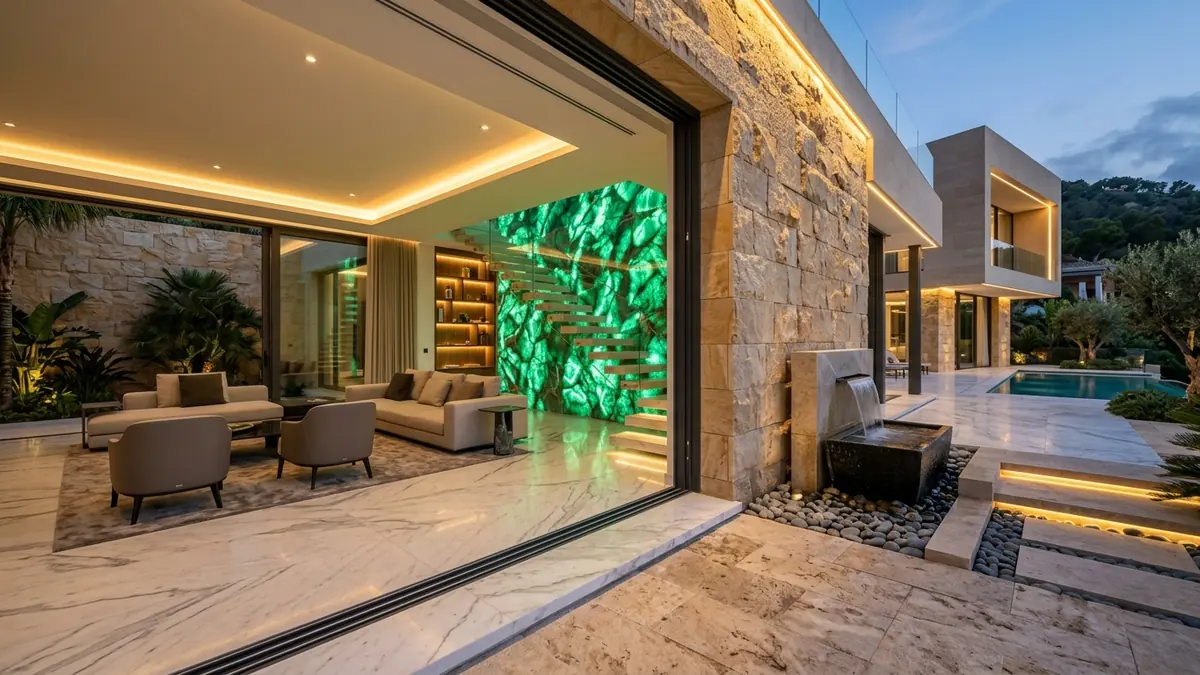
When studying what are the common uses of natural stone in architecture, architects classify applications into two core categories: structural elements that carry weight and decorative finishes that define visual aesthetics. Historically, massive granite and sandstone blocks supported entire fortresses. In today reinforced concrete structures, stone has evolved into high-performance cladding, flooring and bespoke art elements.
1. Structural and Load-Bearing Applications
Structural uses focus on compressive strength, weather resistance and physical mass. Key structural stone elements include:
- Solid Foundation and Plinth Courses: Dressed basalt and granite blocks protect buildings against rising damp and soil settlement.
- Cantilever Staircase Treads: Solid stone slabs engineered over steel spines create floating stairways without concrete risers.
- Retaining Walls and Boundary Enclosures: Dry-stacked fieldstone and rough-dressed limestone hold garden soil terraces firmly during monsoons.
- Pillar Columns and Entrance Archways: Monolithic stone pillars support entrance canopies, double-height foyers and courtyard verandas.
2. Decorative and Interior Accent Applications
Decorative applications celebrate natural grain variations, mineral colours and hand or machine textures. Key decorative stone features include:
- Bookmatched Living Room Walls: Mirror-patterned Italian and Indian marble slabs form dramatic TV backdrops and foyer focal points.
- CNC Carved Jali Screens: Intricate sandstone and marble lattice panels divide living and dining spaces while filtering sunlight.
- Stone Mosaic Carpets and Borders: Contrasting stone inlays define seating arrangements without physical room partitions.
- Backlit Quartzite and Onyx: Semi-transparent stone panels with rear LED lighting illuminate bar counters and vanity backsplashes.
To see how decorative stone panels enhance private residences, explore our detailed collection of CNC carved stone designs and accent panels.
Types of Natural Stones and Their Applications in Modern Homes
Different types of natural stones possess distinct mineral hardness, porosity and thermal ratings. Granite excels in heavy-traffic floors and kitchen counters, marble defines luxury formal living rooms, sandstone suits exterior facades and limestone provides cool courtyard flooring.
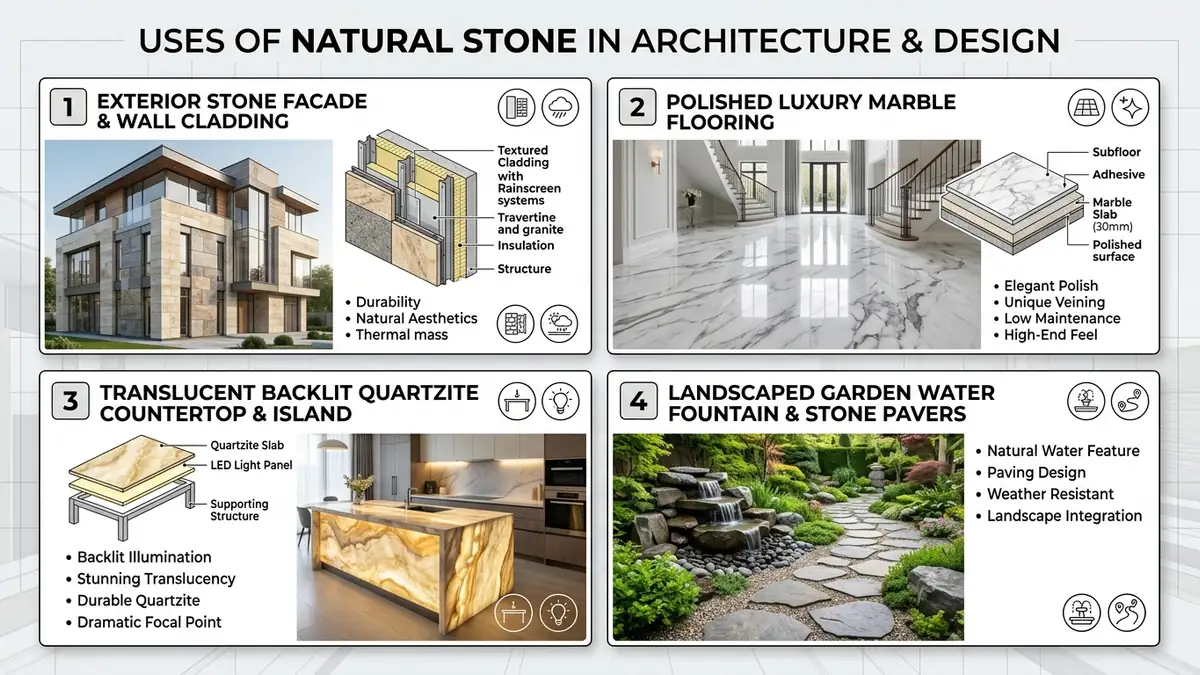
Every rock family possesses unique mineral bonds. Understanding the types of natural stones and their applications in homes prevents costly mistakes like using acid-sensitive marble on a spice-heavy Indian kitchen countertop or soft limestone in a high-impact car porch.
| Stone Family | Mohs Hardness | Porosity / Absorption | Primary Architectural Application | Recommended Finish |
|---|---|---|---|---|
| Granite | 6.0 - 7.0 | < 0.2% (Very Low) | Kitchen worktops, staircases and driveway paving | Polished, Flamed and Leather |
| Marble | 3.0 - 4.0 | 0.4% - 0.8% (Moderate) | Living room flooring, bathroom vanities and carved murals | High Gloss Mirror and Honed Satin |
| Sandstone | 4.5 - 5.5 | 1.5% - 3.5% (Porous) | Exterior elevation cladding, jali screens and boundary walls | Shot-blasted, Natural Cleft and Honed |
| Limestone (Kota) | 3.5 - 4.5 | 0.8% - 1.5% (Low-Mid) | Courtyard flooring, pathways and wall cladding | River Washed, Leather and Semi-Polished |
| Quartzite | 7.0 | < 0.1% (Impervious) | Backlit feature walls, luxury islands and dining table tops | Polished, Bookmatched and Translucent |
| Slate and Quartzite Slate | 4.0 - 5.0 | 0.3% - 1.0% (Low) | Water body cascades, rustic feature walls and roofing | Natural Split-face and 3D Stacked |
For more insights on how different surface textures affect light and slip resistance, read our practical guide on different types of natural stone finishes explained.
Exterior Facades vs Interior Flooring: Granite, Marble and Sandstone
Sandstone and flamed granite represent the ideal materials for outdoor building facades due to thermal stability and weather tolerance, while polished marble, honed Kota and quartzite deliver smooth, cooling surfaces for indoor flooring.
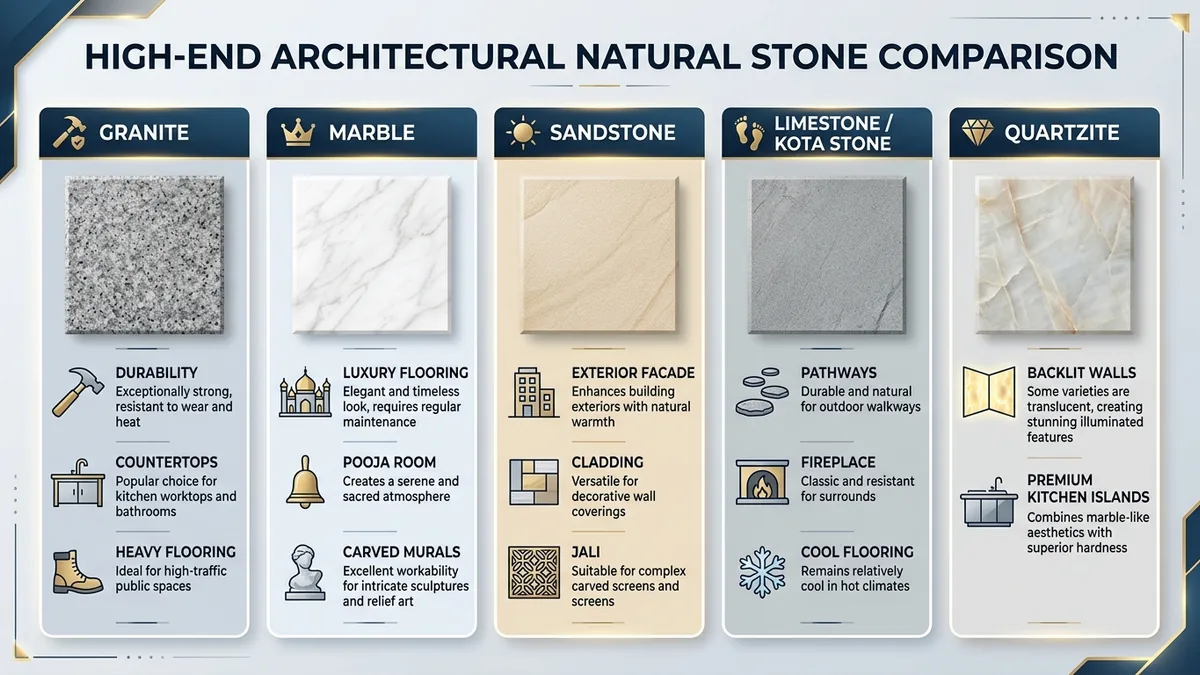
Homeowners frequently ask: which stone is best for exterior facade vs interior flooring? The direct answer depends on how moisture, sunlight, thermal expansion and daily foot friction interact with the stone surface. Here is a direct granite marble and sandstone uses comparison for these two distinct building zones:
Exterior Facade Cladding: Sandstone and Granite
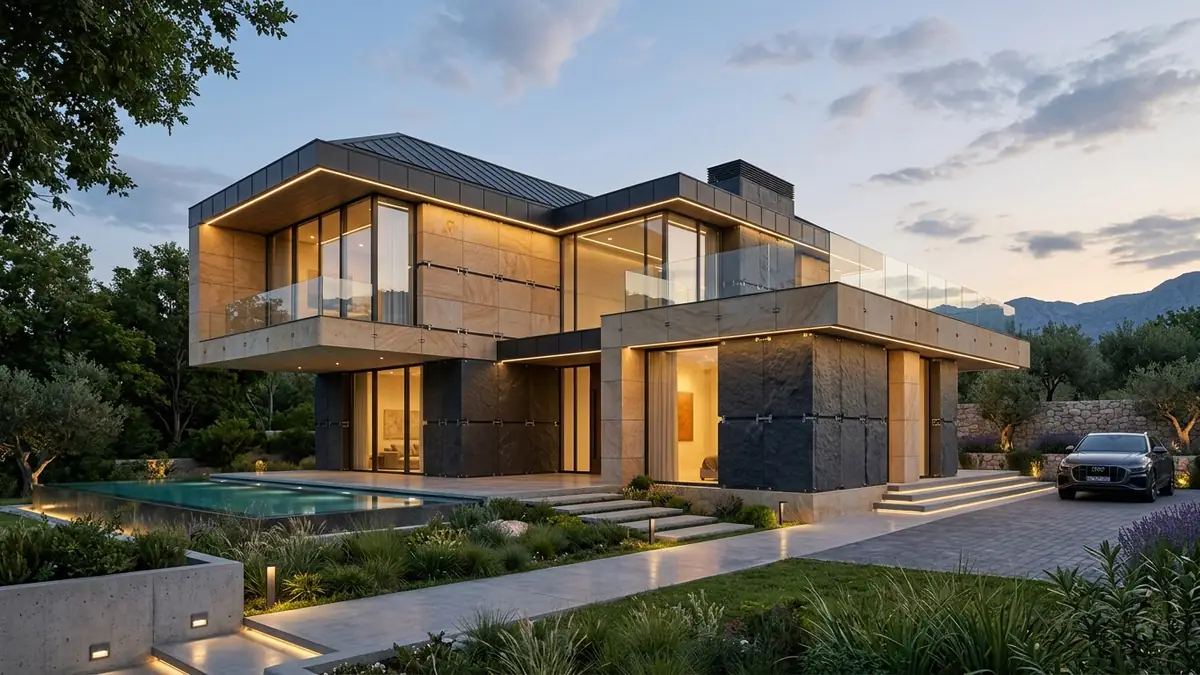
External wall surfaces endure harsh seasonal extremes, from 44 degrees summer heat in central India to intense monsoon downpours. Rajasthan sandstone (such as Dholpur beige, Mandana red and Kandla grey) and ventilated dry-cladded granite panels provide superior thermal insulation. Sandstone breathes naturally, allowing trapped moisture vapour to escape without cracking the masonry.
When installed using mechanical stainless steel brackets, stone facades create an air gap that cuts indoor room temperatures by 3 to 5 degrees during hot summer months.
Interior Flooring: Marble, Kota Stone and Granite
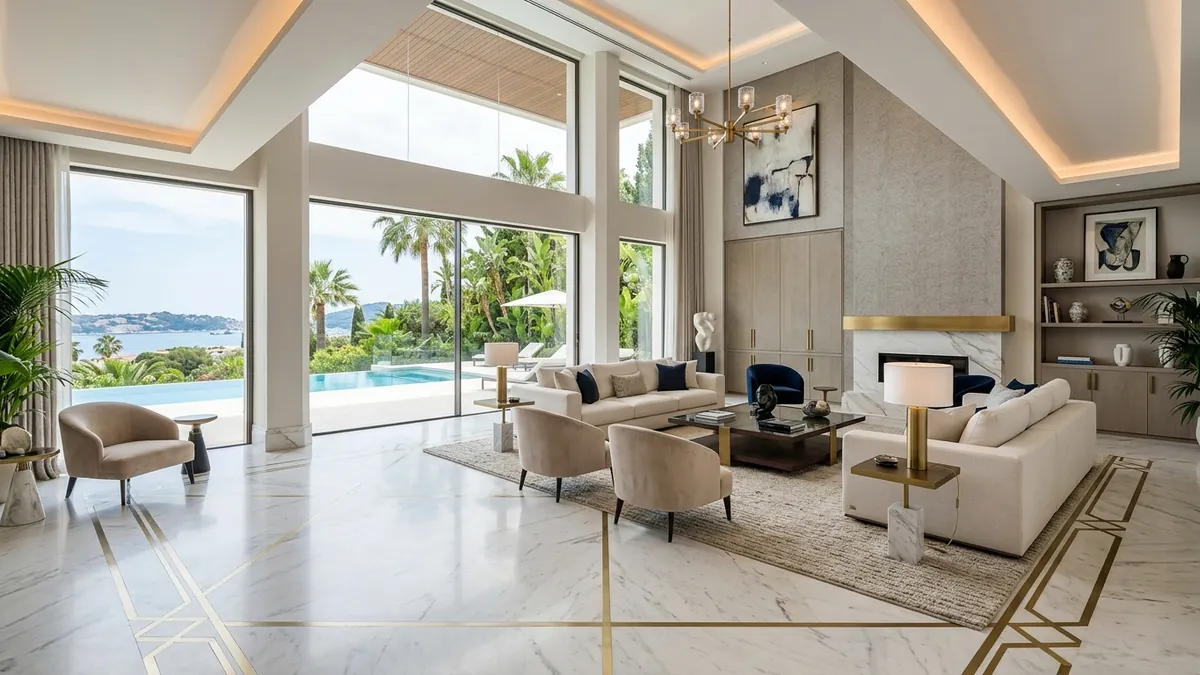
For indoor living and dining rooms, flooring must feel comfortable under bare feet, reflect natural daylight and resist daily wet-mopping. Makrana white marble, Banswara marble and polished imported marbles remain reliable choices for bright luxury. For bedrooms and informal study lounges, river-washed green Kota stone provides a naturally cool, earthy texture that stays soothing during scorching summer afternoons.
Explore our dedicated gallery of natural stone facade designs to see residential project installations.
Selecting Stone for Your Next Architectural Project?
Whether you need ventilated facade stone slabs, custom CNC carved jalis or bookmatched marble flooring, connect with our stone specialists in Indore.
Talk to Stone SpecialistQuartzite Countertops, Backlit Walls and Limestone Surrounds
Quartzite combines quartz crystalline hardness with translucent visual depth, making it ideal for scratch-proof kitchen islands and dramatic backlit accent walls, while limestone provides thermal endurance for fireplace surrounds and interior wall cladding.
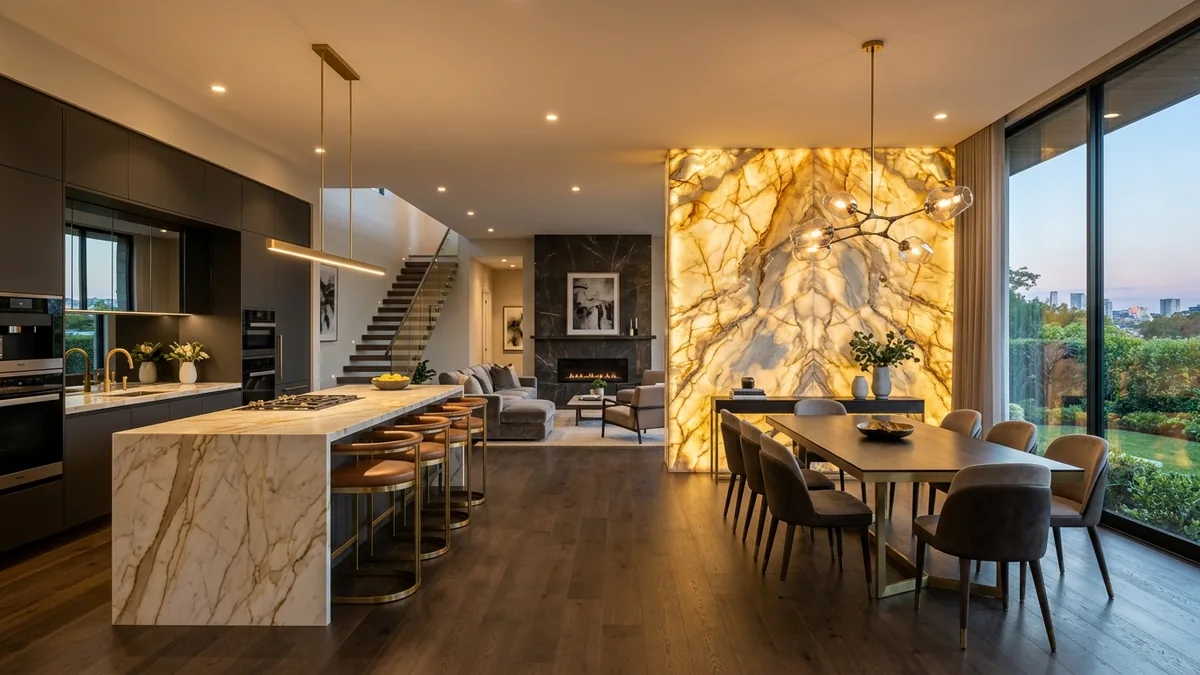
Technological improvements in diamond gang-saws and thin slab calibration have unlocked innovative uses of quartzite for kitchen countertops and backlit feature walls. Unlike marble, which etches when lemon juice or vinegar touches it, natural quartzite is a metamorphic rock formed from pure quartz sandstone under tectonic heat and pressure.
1. Luxury Quartzite Kitchen Worktops and Islands
At 7.0 on the Mohs scale, quartzite is harder than steel kitchen knives and completely non-porous when sealed. Its natural swirling veins resemble rare Calacatta and Statuario marbles, yet hot cooking utensils, turmeric stains and citrus spills will not damage the surface. Waterfall edge island counters made with Taj Mahal or Patagonia quartzite serve as practical workstations and conversation pieces.
2. Backlit Translucent Feature Walls and Bar Counters
Certain quartzite and onyx varieties contain crystal structures that allow light transmission. When fitted with flat LED light sheets behind calibrated slabs, the stone glows with warm honey, amber or emerald tones. This lighting technique highlights natural mineral fissures, making it popular for luxury powder room vanity backdrops and double-height living room walls.
3. Limestone Uses in Wall Cladding and Fireplace Surrounds
Looking into limestone uses in wall cladding and fireplace surrounds, limestone uniform granular texture and soft grey, beige and cream tones bring understated warmth to living spaces. Because limestone absorbs and radiates heat evenly without warping or cracking, it is widely specified for decorative electric or bio-ethanol fireplace surrounds, accent niches and textured foyer walls.
For more design inspirations on styling accent walls, check our guide on natural stone wall panel design ideas.
Luxury Bathrooms, Spa Spaces and Custom Stone Wash Basins
Natural travertine wall cladding, monolithic river stone washbasins and anti-slip honed quartzite shower trays transform master bathrooms into calming, spa-like spaces that resist water damage when properly sealed.
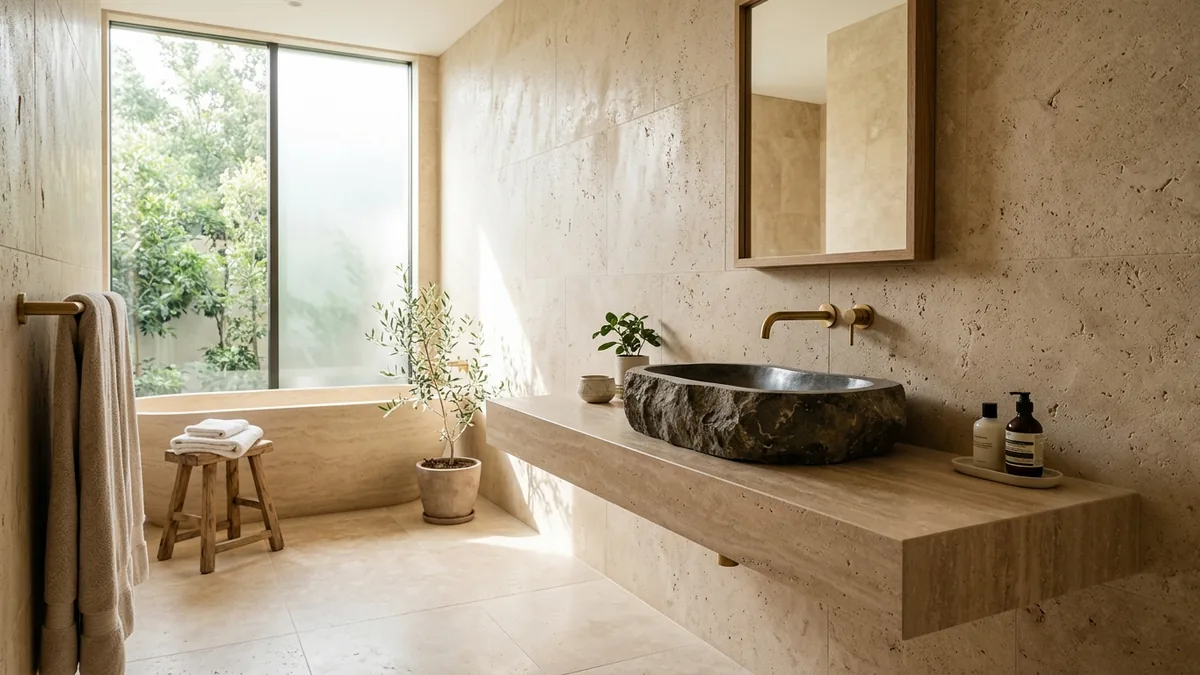
Modern luxury homes increasingly replace cold, synthetic ceramic bathroom fixtures with tactile natural stone elements. Incorporating custom stone washbasins, floating vanity counters and full-height wall cladding creates an organic, tranquil bathing environment:
1. Monolithic Carved Wash Basins
Carved out of single blocks of river boulder, black granite or beige marble, each countertop basin has organic, raw stone textures on the exterior and a smooth, polished bowl inside for effortless drainage.
2. Full-Height Travertine Wet Walls
Beige Roman and walnut travertine with filled honed finishes create continuous, smooth shower walls without fragile tile grout lines that harbour mould or mildew.
3. Anti-Slip Flamed Granite Shower Trays
Single-piece flamed or river-washed stone shower floors with CNC cut drainage slopes provide confident barefoot grip while looking integrated and refined.
Explore our handcrafted bathroom collection at luxury natural stone wash basins for residential designs.
CNC Carved Stone Jaalis, Wall Murals and Room Partitions
High-precision 3D CNC machines carve intricate geometric lattice screens, floral relief wall murals and fluted stone partitions from solid sandstone and marble, dividing open layouts while maintaining spatial airflow.
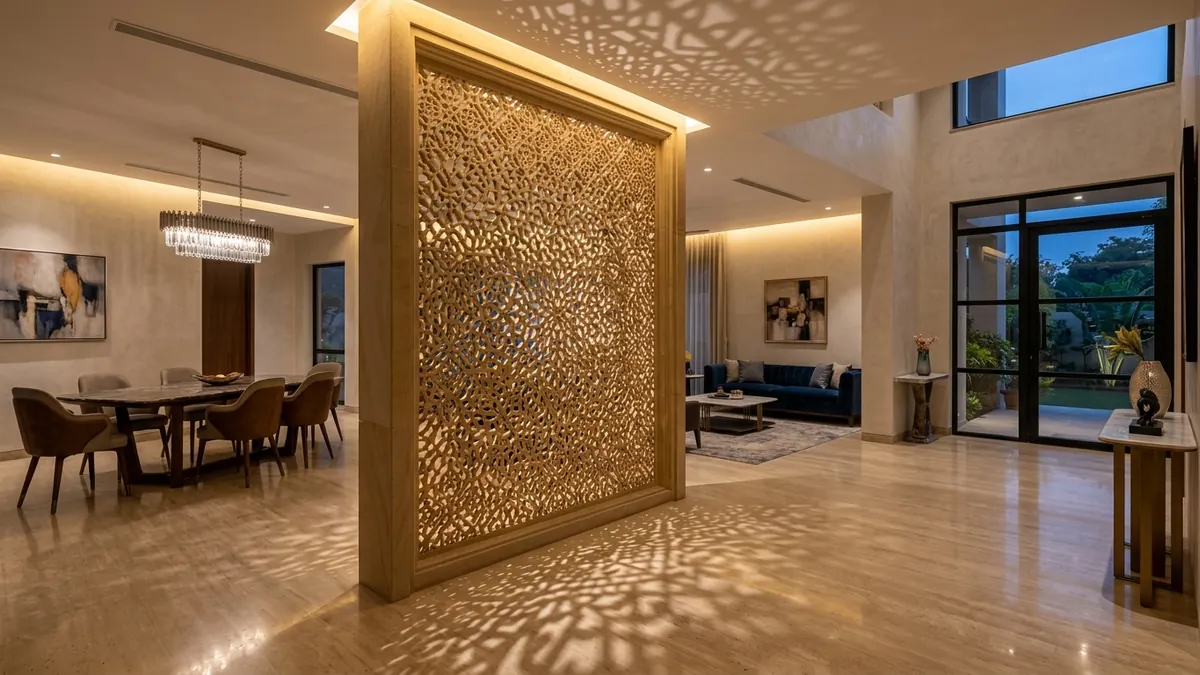
Traditional Indian architecture has celebrated the perforated stone jaali screen for centuries. In modern architecture, computer-controlled 5-axis CNC diamond routers carve custom motifs with exact precision, creating functional architectural partitions:
1. Open Foyer and Dining Area Privacy Screens
In open-plan bungalows, a freestanding sandstone jaali screen visually separates the main entrance foyer from the dining space. It maintains sightlines and allows cross-ventilation while casting beautiful geometric sunlight patterns across the floor throughout the day.
2. 3D Fluted Stone Feature Panels
Fluted, ribbed and wavy textures milled into Dholpur beige sandstone or Mint sandstone create dynamic shadow play when illuminated with warm graze lighting. They serve as TV backdrops, bedroom headboard feature walls and double-height lobby accents.
Discover our range of custom carvings in our natural stone jaalies collection.
Landscaping, Courtyards and Natural Stone Water Bodies
Rough-textured slate, granite cobbles, Kota limestone and textured sandstone boulders create slip-resistant outdoor pathways, garden cascades, boundary planters and calming outdoor water fountains.
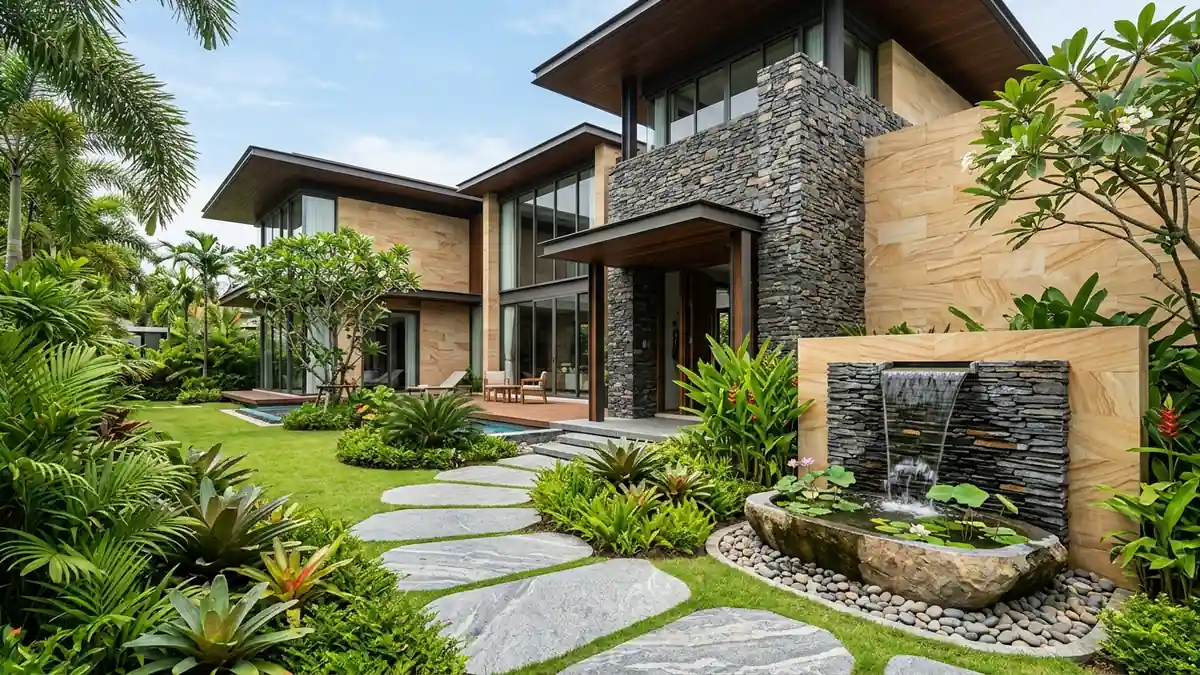
Outdoor landscape architecture relies heavily on natural rocks because synthetic paving materials deteriorate quickly under direct sunlight and moisture. Examining how natural stone is used in landscaping and water bodies illustrates why raw rock elements integrate naturally with garden foliage:
1. Natural Stone Water Fountains and Cascades
Water elements constructed with dark slate stone or rough-hewn granite create soothing sounds while cooling surrounding verandahs. Water running across textured split-face stone enhances mineral colour saturation, turning dull grey slate into deep charcoal and rich emerald tones.
2. Stepping Stones, Pathways and Driveways
Flamed granite cobbles and irregular sandstone crazy paving provide dependable traction around swimming pool decks and lawn walkways. Their textured surface prevents slips even during torrential monsoon rains.
Explore our outdoor installation designs in our landscape stone design gallery.
Why Architects Prefer Natural Stone Over Ceramic Tiles
Architects choose natural stone over ceramic or vitrified tiles because stone offers through-body thickness, unique mineral veining without repeating digital patterns, re-polishable surfaces and superior structural longevity.
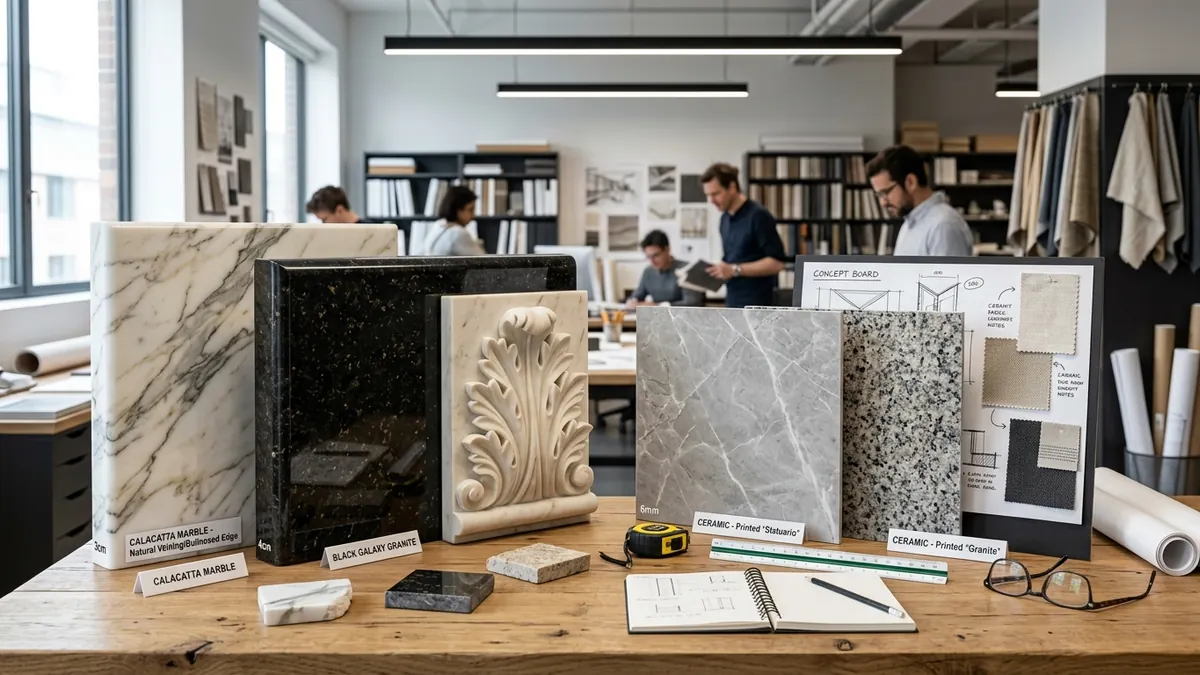
While factory-made vitrified tiles are affordable and easy to install, design professionals consistently specify natural rock for luxury residences. Understanding why architects prefer natural stone over ceramic tiles comes down to material authenticity and lifespan:
Key Advantages of Natural Stone Over Factory Tiles
- No Digital Print Repeats: Vitrified tiles use printed glaze layers with repeating patterns. In contrast, every slab of natural stone is one-of-a-kind, created over millions of years of geological formation.
- Through-Body Edge Profiles: If a ceramic tile chips, its pale clay base shows through. Natural stone has uniform composition across its full thickness and can be carved, bullnosed or engraved seamlessly.
- Restoration and Re-Polishing: When ceramic tiles wear out, the entire floor must be broken and replaced. Natural stone floors can be ground and diamond-polished multiple times, restoring original shine.
- Appreciating Asset Value: Homes featuring genuine marble, granite and sandstone finishes command substantial market premiums and retain aesthetic prestige over decades.
Sustainable and Thermal Benefits of Natural Stone Construction
Natural stone is an eco-friendly building material with minimal embodied carbon, zero chemical off-gassing and high thermal mass that reduces indoor air conditioning electricity consumption in tropical climates.
Green building certifications place strong emphasis on low embodied energy. The sustainable benefits of using natural stone in construction make it an environmentally responsible choice for modern eco-conscious architecture:
1. Low Embodied Carbon Footprint
Unlike synthetic tiles, bricks and aluminium composite panels that require energy-intensive kilns operating above 1200 degrees, natural stone is already formed by the earth. Processing stone involves quarry extraction, diamond gang-saw cutting and surface finishing, consuming significantly less energy per square metre.
2. Passive Thermal Regulation in Indian Climates
Dense stones like granite, Kota limestone and sandstone have high thermal mass. They absorb daytime ambient heat slowly, preventing living rooms from turning into heat traps during peak afternoon hours. At night, the stone gradually releases heat, keeping indoor temperatures balanced and reducing reliance on heavy air conditioning.
3. Non-Toxic Indoor Air Quality (Zero VOCs)
Natural stones contain no synthetic resins, formaldehyde adhesives or volatile organic compounds. They do not emit toxic fumes, making them completely safe for children, pets and asthma patients.
Maintenance Tips for Different Types of Stone Surfaces
Preserving natural stone requires routine pH-neutral cleaning, prompt wiping of acidic food spills, avoiding harsh bathroom acids and applying penetrating impregnating sealers every 12 to 24 months.
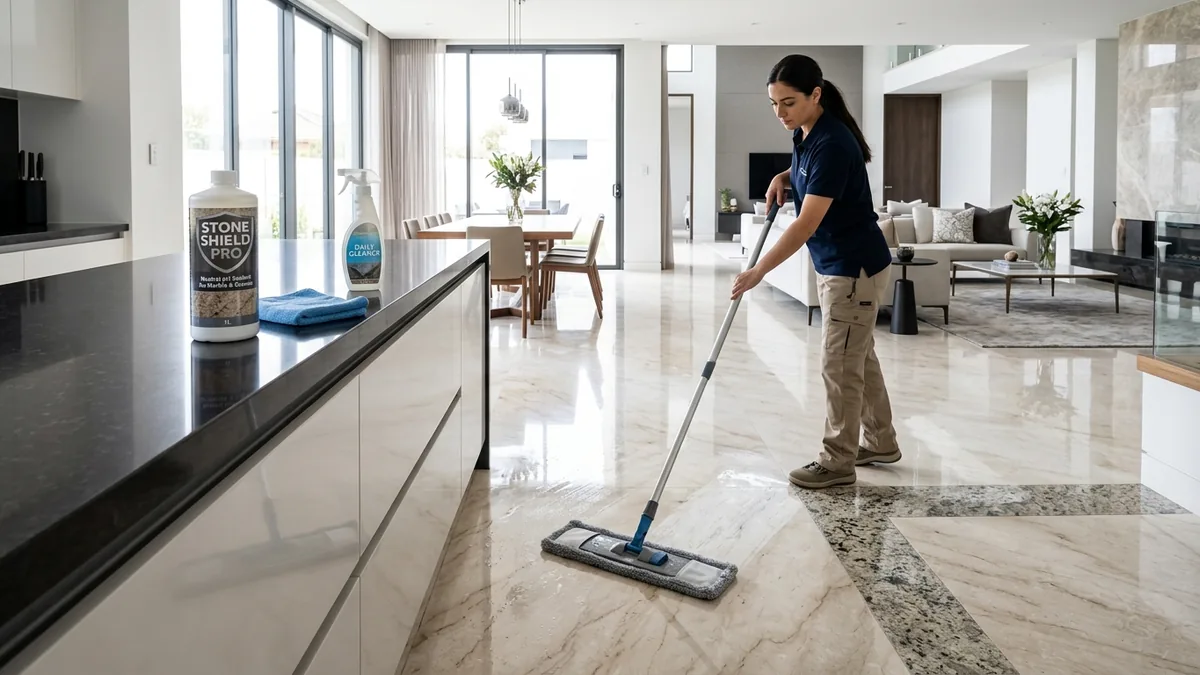
Following proper maintenance tips for different types of stone surfaces ensures your investment retains its natural beauty for decades:
Practical Natural Stone Care Guidelines
- Avoid Harsh Bathroom Acids: Hydrochloric and sulphuric acids in common cleaners dissolve calcite in marble and limestone. Always use pH-neutral stone detergents.
- Apply Penetrating Sealers: Seal porous sandstone, travertine and marble upon installation and re-apply every 12 to 18 months to repel oil and water stains.
- Manage Hard Water Crusts: In areas with hard borewell water, wipe vanity counters and stone washbasins dry after use to prevent white calcium scaling.
- Wipe Kitchen Spills Fast: Blot turmeric, coffee, tea, oil and citrus spills with a damp microfibre cloth promptly before pigments can penetrate open stone pores.
For more architectural guidance on stone stairs and entryways, read our complete guide on natural stone staircase design ideas.
Visit Stone World Experience Center in Indore
Explore full-size slabs of premium granite, imported and Indian marbles, translucent quartzites, sandstone wall claddings and bespoke CNC carved artefacts.
Explore Our Stone Experience Center