


A staircase is usually the first thing you see when walking into a duplex or villa foyer. While wood and concrete work fine, solid stone treads hold up far better against decades of daily foot traffic, wet mopping and wear without chipping or fading like tiles. Choosing the right natural stone staircase design ideas comes down to balancing stone hardness, stair framing, anti-slip surface treatments and clean edge profiles.
Whether you want an open floating flight with step lights or a curved marble staircase for a grand foyer, every stone type behaves differently under daily foot movement. Indian homes need practical attention to fine dust, daily wet mopping, borewell water mineral marks and barefoot safety for children and elders. At Stone World, our team fabricates and finishes natural stone treads and risers for homes across India. Here is a practical walkthrough of popular staircase layouts, honest material comparisons, anti-slip finishes, installation steps and maintenance tips.
Table of Contents
Natural Stone Staircase Design Ideas: Top Architectural Styles
Popular stone staircase layouts include floating cantilever treads anchored to hidden steel stringers, curved marble flights for double-height foyers, solid block garden steps and classic closed-riser stairs with under-tread LED lighting.
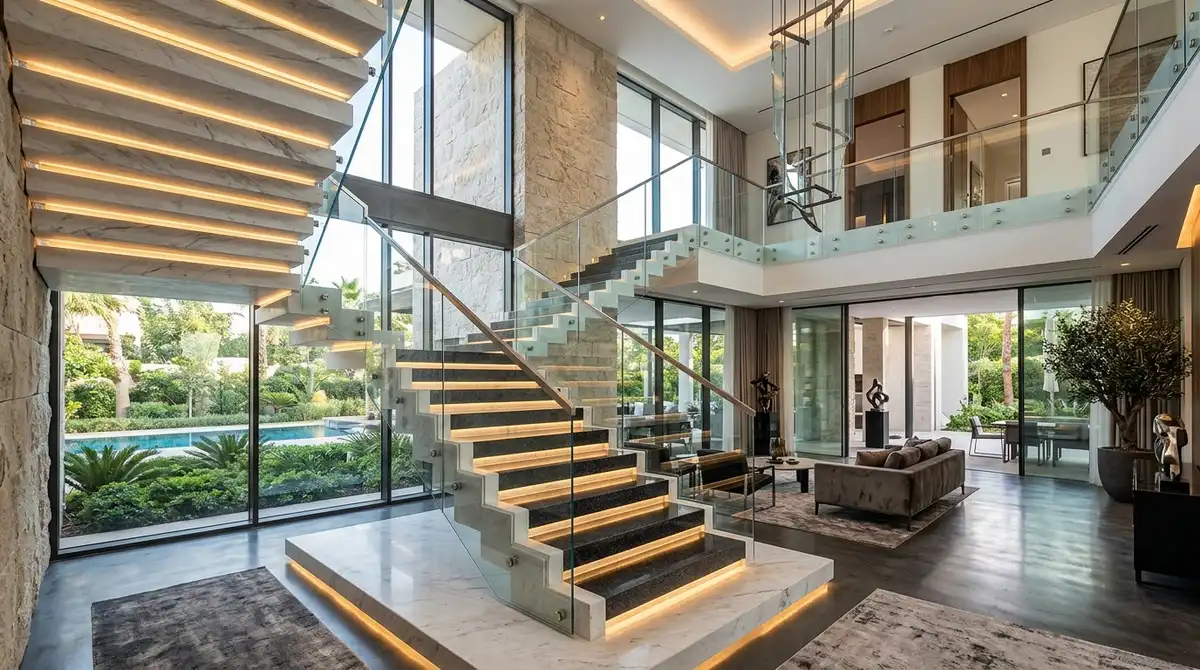
Your floor layout, wall structural support and natural daylight dictate which stair design makes sense. Here is a breakdown of the most popular configurations for modern homes:
1. Cantilever Floating Stone Staircase
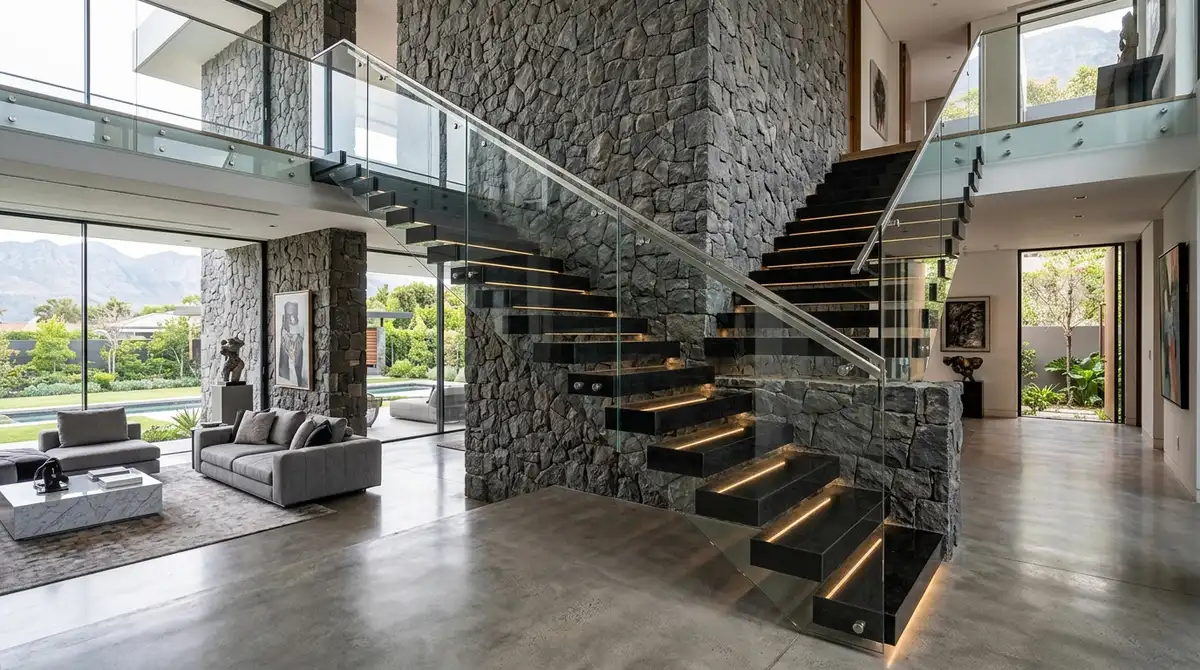
Floating steps give an open, airy feel because there are no solid risers beneath them. We build each tread as a mitred stone box that slides over a heavy-gauge steel bracket anchored directly into the RCC wall beam. If you are budgeting for a cantilever floating stone staircase design cost, keep in mind that total expenses depend on structural steel wall anchoring, precision 45-degree edge mitring and whether you want routed channels for hidden LED lighting.
2. Curved Natural Stone Staircase for Luxury Villas

A curved natural stone staircase design for luxury villas fits best in double-height entrance foyers where the stone veining takes center stage. We use full-size ply templates to cut curved treads from Banswara or Makrana white marble slabs so the natural grain flows consistently from the bottom landing all the way to the upper floor.
3. Monolithic Solid Block Steps
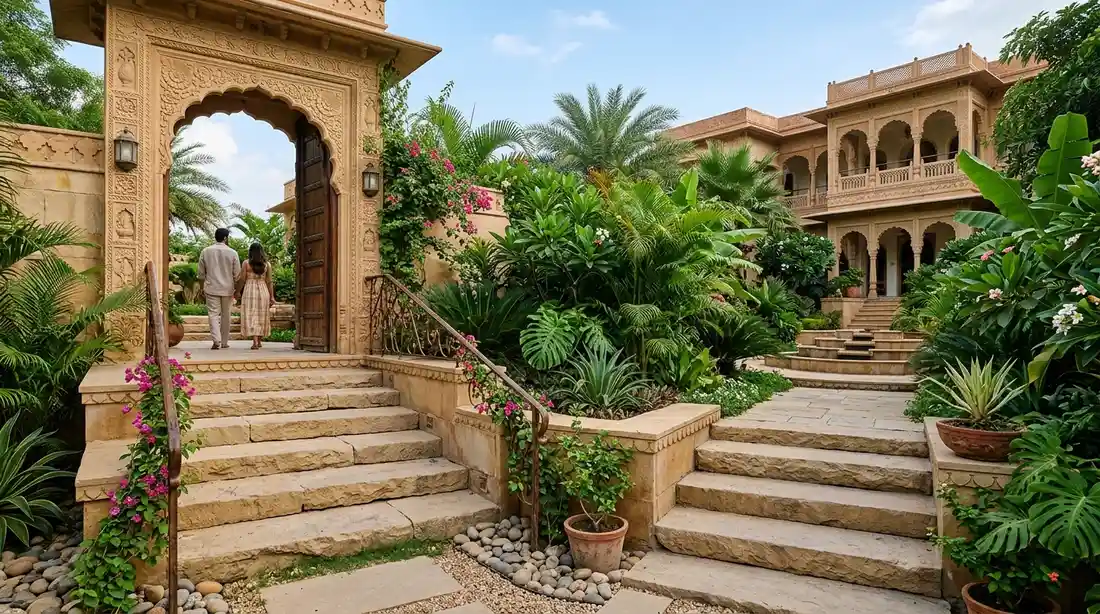
Monolithic stairs use solid 100mm to 150mm thick dressed stone blocks stacked directly on top of each other. Sawn and sandblasted Dholpur beige sandstone or flamed granite blocks work exceptionally well for garden entrances, courtyard verandahs and main gate approaches because they never feel hollow underfoot.
4. Straight-Flight Closed Riser Classic Stairs
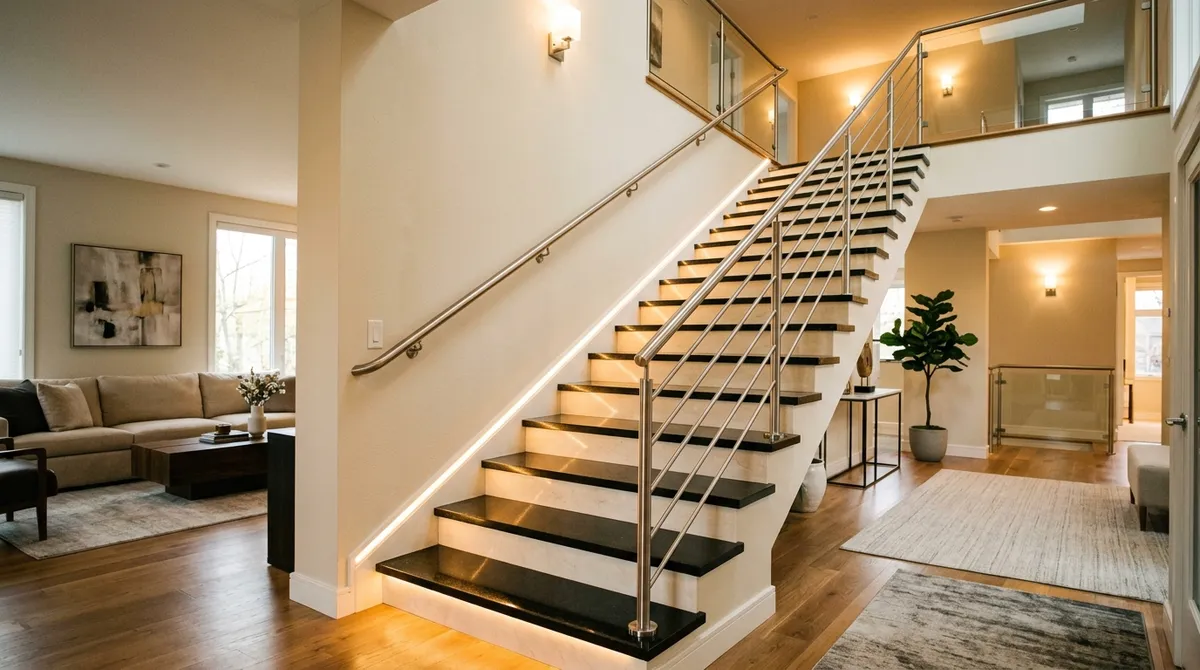
Closed-riser stairs remain the most practical setup for multi-generation homes. Solid risers stop dust, mop water and dropped items from falling to the floor below. A popular design trick is pairing Absolute Black granite treads with white Morwad marble risers, creating a sharp two-tone contrast that makes step edges easy to spot.
For design ideas on carrying matching stone textures from your steps across the hall, explore our guide on top natural stone flooring ideas.
Granite vs Marble Staircase Pros and Cons: Indoor Stone Selection
Granite offers superior scratch resistance and near-zero water absorption for busy family staircases, while Indian marble delivers classic veining and warmth that benefits from periodic sealing and neutral cleaning.
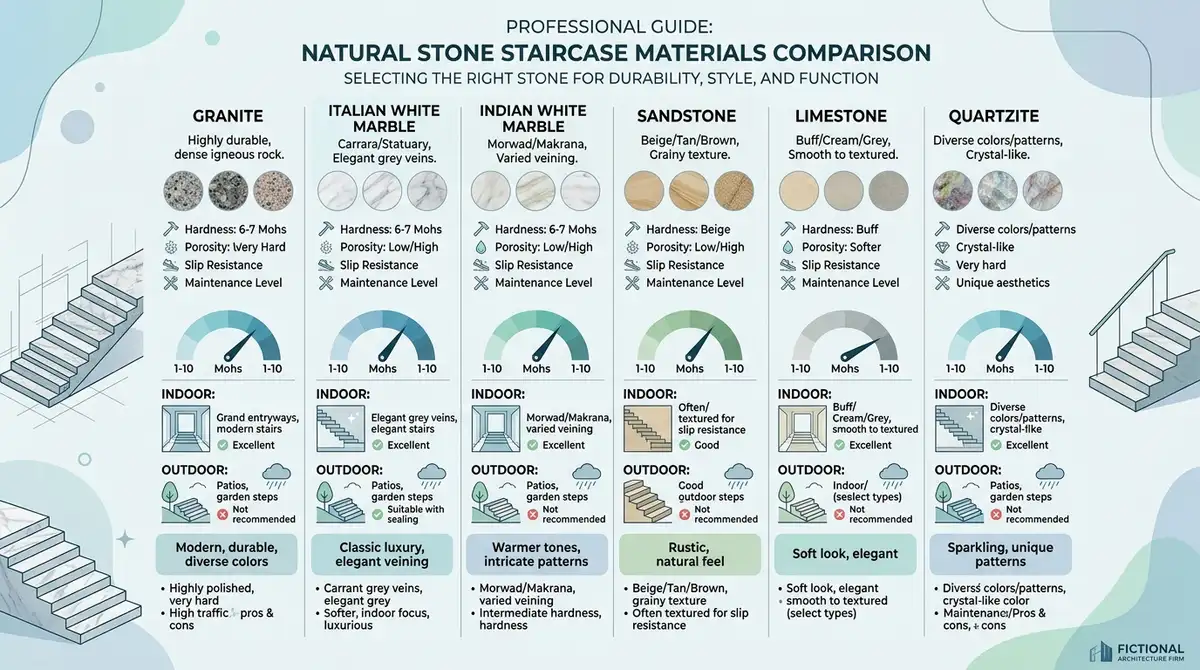
When deciding which natural stone is best for indoor stairs, most conversations center around granite vs marble staircase pros and cons. Here is how the primary indoor stones compare in everyday home use:
Granite Staircases (Tough, Scratch-Proof and Low-Maintenance)
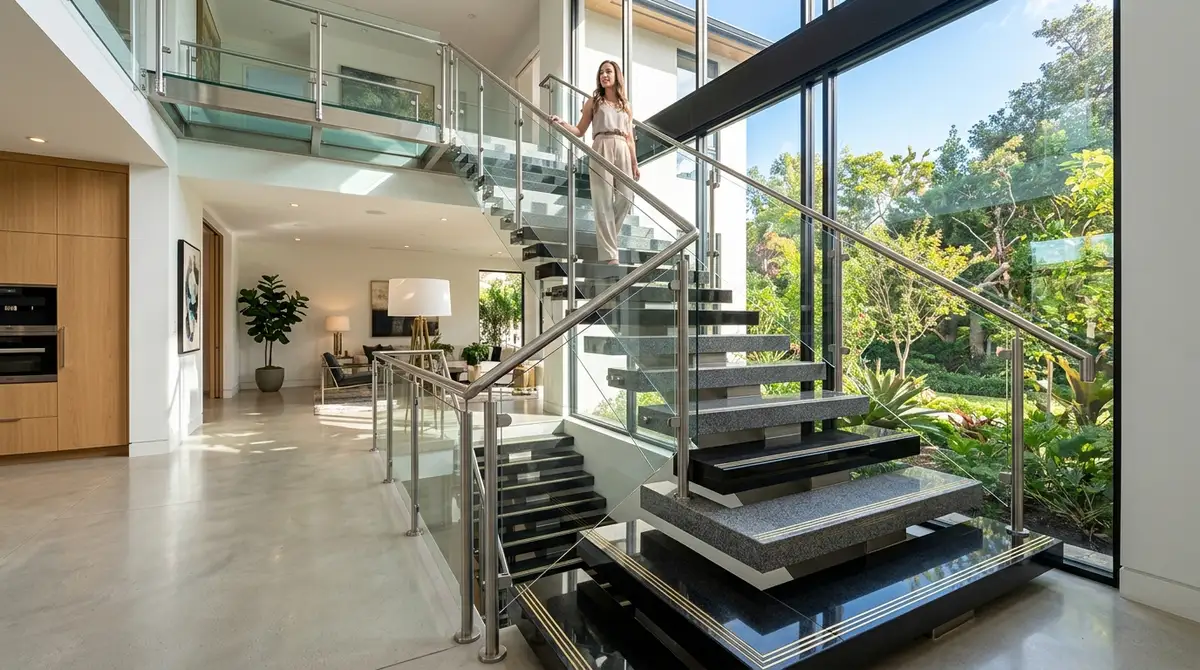
With a Mohs hardness rating of 6.5 to 7.0, granite handles everyday punishment without breaking a sweat. Stiff footwear, heavy luggage and daily mopping won't scratch or stain dense varieties like Absolute Black, Steel Grey or Black Galaxy. Because its water absorption is practically zero (< 0.1%), wet mopping won't leave water rings or damp edges around the joints.
Marble Staircases (Natural Flowing Veins and Timeless Charm)
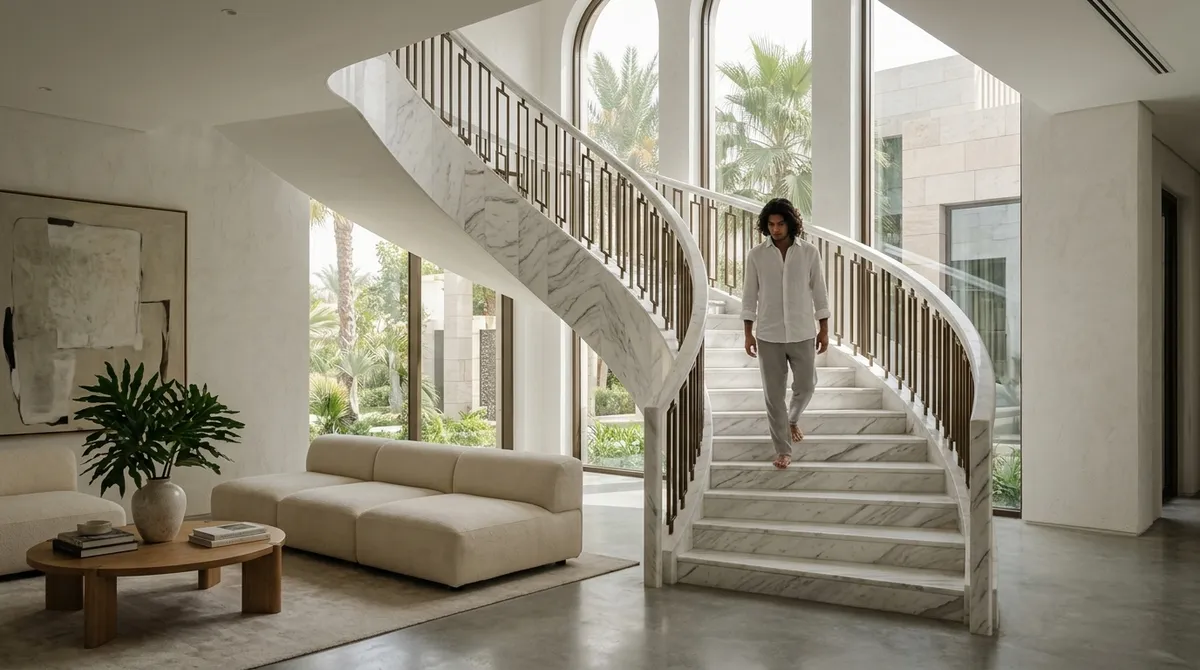
Nothing matches the natural veining and warm feel of genuine Indian marble. Native varieties like Makrana Pure White, Ambaji White, Morwad White and Banswara White brighten up stairwells and give entrance foyers an effortless grandeur. Since marble is softer (3.0 to 4.0 Mohs), high-gloss polish can show fine scuffs from outdoor footwear over time. Choosing a honed satin finish or factory-grooved brass inlays keeps treads looking clean without slipping.
Quartzite and Kota Stone (Practical Modern Alternatives)
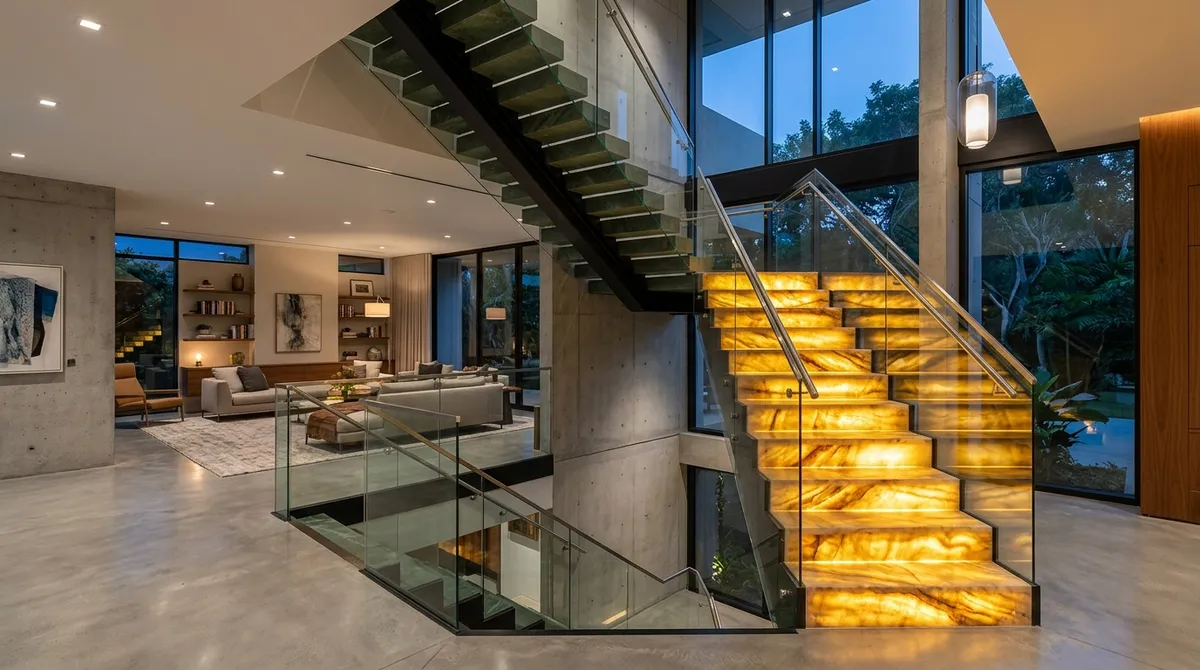
Quartzite combines the dramatic, crystal-like veining of exotic stone with the sheer scratch resistance of granite (Mohs 7.0). It is especially striking when backlit in cantilevered steps. For utility stairwells, terrace flights and rental duplexes, Kota stone remains the undefeated budget champion. A leather or brush finish makes Kota naturally slip-resistant, cool under bare feet and easy to maintain.
| Stone Material | Mohs Hardness | Water Absorption | Slip Tendency (Polished) | Best Application | Maintenance Needs |
|---|---|---|---|---|---|
| Absolute Black Granite | 6.5 - 7.0 | < 0.1% (Very Low) | High (Needs anti-slip grooves) | High-traffic main villa stairs | Minimal (Daily damp cloth wipe) |
| Indian White & Beige Marble (Makrana / Banswara) | 3.0 - 4.0 | 0.3% - 0.6% (Moderate) | Moderate to High (Honed recommended) | Grand foyer curved and formal flights | Annual impregnating sealer & pH-neutral wash |
| Crystalline Quartzite | 7.0 | < 0.2% (Low) | Moderate (Honed recommended) | Backlit luxury floating stair flights | Low (Resistant to acids and stains) |
| Natural Kota Stone (Limestone) | 3.5 - 4.5 | 0.8% - 1.2% (Moderate) | Low (Naturally matte / leathered) | Duplex internal service, utility and terrace stairs | Periodic wash or wax polish |
| Jaisalmer Yellow Marble / Sandstone | 3.0 - 3.5 | 1.0% - 1.5% (Porous) | Moderate (Honed / antique finish) | Heritage and warm traditional themes | Initial deep sealing & periodic resealing |
To view our range of durable granite slabs, explore our collection of natural granite stone slabs.
Outdoor Stone Steps: Sandstone vs Limestone Durability
Outdoor steps need weather-hardened natural stones with textured finishes to handle monsoon rainwater slips, direct sun exposure and temperature shifts without cracking.
External steps leading to your front entrance, garden deck or terrace face heavy monsoon downpours and blazing summer heat. Evaluating sandstone vs limestone outdoor staircase durability ensures your steps do not crack, chip or turn dangerously slick in wet weather.
Rajasthan Sandstone Steps (Dholpur, Kandla Grey and Teakwood)
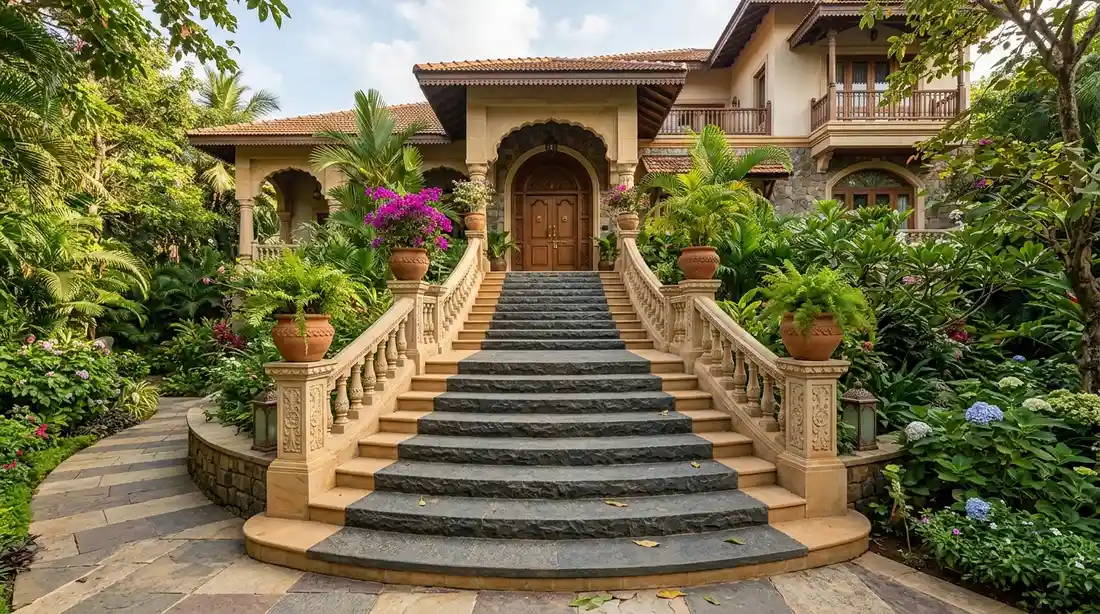
Natural sandstone sourced from Rajasthan quarries offers high strength and textured surface grain. It stays remarkably cool under bare feet even during peak summer afternoons. Flamed, shot-blasted or chiseled Dholpur Beige and Kandla Grey treads give dependable shoe grip during monsoon downpours and resist algae buildup.
Outdoor Limestone Steps (Kota and Shahabad Stone)
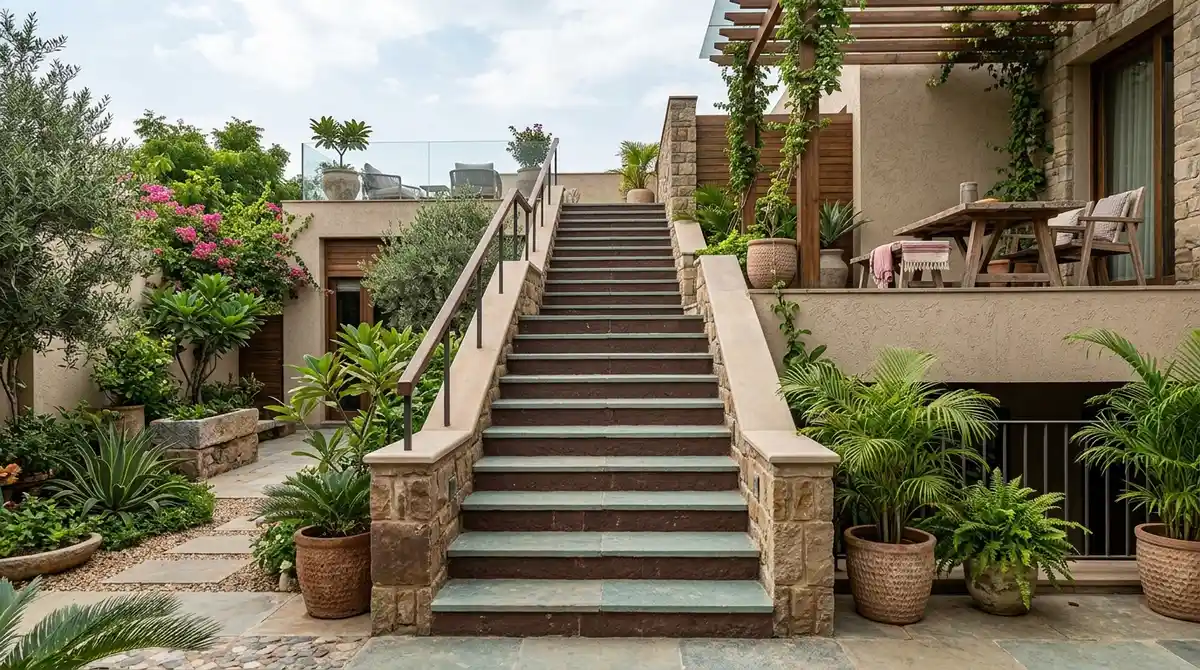
Limestone offers a clean, uniform look in greenish-blue, brown and grey shades. In a river-washed or rough-cleft finish, outdoor limestone provides reliable foot grip. The golden rule with outdoor limestone is slope management: always lay treads with a slight 1:100 forward slope (about 3mm) so rainwater drains off immediately instead of pooling.
Planning a Custom Natural Stone Staircase?
From custom bullnose granite treads and curved marble winders to floating cantilever step fabrication, consult with the stone engineering team at Stone World.
Explore Staircase GalleryHow to Make Stone Staircase Anti-Slip: Finishes and Safety Dimensions
Staircase safety comes down to comfortable riser-tread dimensions (150mm riser by 300mm tread) and the right surface grip—whether that is CNC grooving, brass inlays, rounded nosing edges or a honed matte finish.
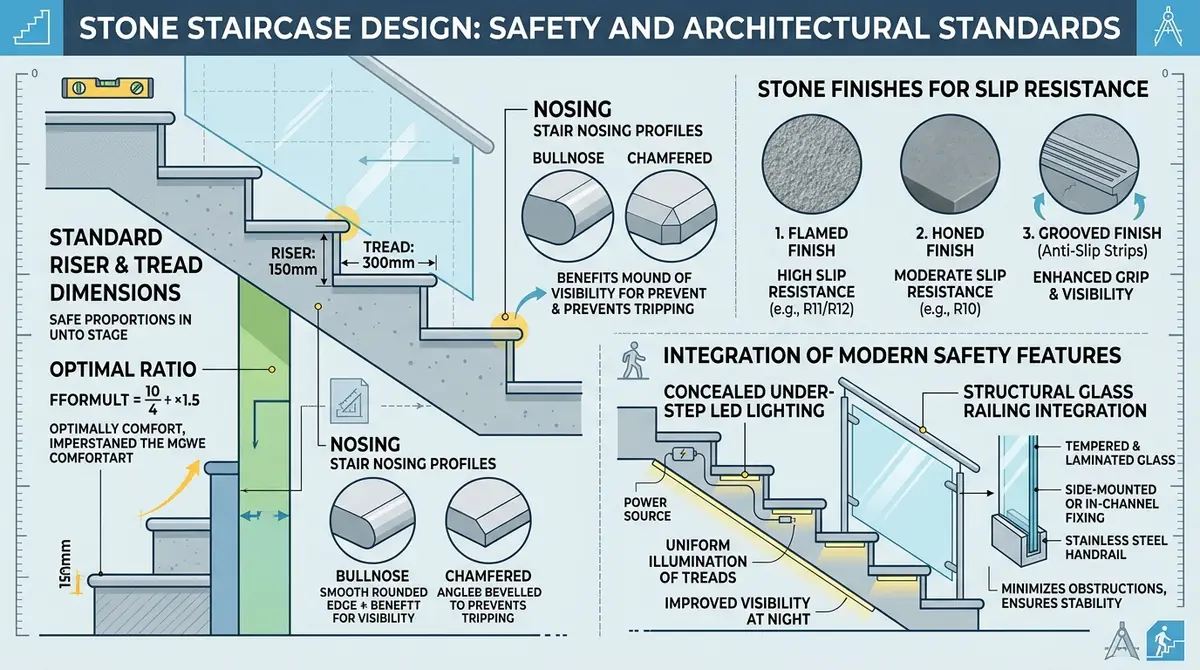
Polished stone steps can become slick when walked on with wet feet or socks. Understanding how to make stone staircase anti-slip is essential for everyday home safety:
1. Flamed vs Honed Finish for Outdoor and Indoor Steps
Comparing a flamed vs honed finish for outdoor stone steps helps you pick the right texture. Exposing granite to high-temperature thermal flames pops surface quartz crystals, leaving a rugged, non-slip grip that stands up to rain. For indoor stairs, a honed finish is ideal: it removes mirror reflection while preserving natural stone color, giving bare feet a comfortable, velvet-like grip that won't slip even in socks.
2. Anti-Slip Grooves and Metal Inlays
For indoor polished granite and marble stairs, our stone fabricators cut 2 to 3 parallel horizontal grooves (3mm wide and 2mm deep) along the front edge of each tread. These channels can be left textured or fitted with flat brass metal strips, offering firm foot grip without cluttering the staircase design.
3. Rounded Nosing Edge Profiles
Sharp square edges chip easily from shoe strikes and increase injury risk during an accidental stumble. A full-bullnose or half-bullnose rounded edge protects the stone from chipping, feels gentle against heels and creates a clear shadow line that marks where each step begins.
Standard Riser and Tread Dimensions for Stone Stairs
Following recommended standard riser and tread dimensions for stone stairs makes climbing comfortable and safe for every age group:
- Riser Height: 140 mm to 160 mm (Standard ideal: 150 mm or 6 inches). Risers higher than 175 mm cause leg fatigue quickly.
- Tread Depth: 280 mm to 320 mm (Standard ideal: 300 mm or 12 inches). This gives enough room for full foot support.
- Nosing Overhang: 15 mm to 25 mm projection beyond the vertical riser face.
- Comfort Formula: 2 x Riser + Tread = 600 mm to 650 mm (for example, 2 x 150 mm + 300 mm = 600 mm).
- Stone Slab Thickness: Minimum 28mm to 32mm for solid treads laid on concrete, or 40mm to 50mm for self-supporting floating steps.
To learn more about surface treatments, check our guide on different types of natural stone finishes explained.
Modern Stone Staircase with Glass Railing and Under-Tread LED Lighting
Combining frameless 12mm toughened glass railings with warm LED profile lights hidden under stone tread edges creates clean modern sightlines and clear night visibility.
Designing a modern stone staircase with glass railing ideas keeps the beauty of your stone steps completely open to view from living and dining areas:
Frameless Glass Railing Systems
Instead of heavy metal grills or bulky wooden posts, modern stairs use 12mm or 15mm toughened laminated glass panels. The glass is secured with side-mounted stainless steel spigots directly into the stair beam or fitted inside an aluminium base channel hidden flush below the stone floor skirting.
Hidden Under-Tread LED Strip Lighting
During edge fabrication, our stone workers cut a small 12mm groove under the front step overhang. A slim aluminium profile with a frosted diffuser fits neatly inside this groove. Lighting each step with warm light casts a soft glow downward across the risers, making steps easy to see at night without bright glare.
How to Install Natural Stone Treads Over Concrete Stairs and Maintenance
Proper stone stair installation requires clean concrete surface preparation, quality polymer-modified mortar bedding, complete back-coating to prevent hollow sounds and periodic sealing with breathable stone sealers.
Installing stone over concrete stairs requires accurate leveling. Knowing how to install natural stone treads over concrete stairs guarantees solid steps, level alignment and long-lasting strength without hollow pockets:
Step 1: Concrete Surface Cleaning and Level Check
Clean away loose concrete dust and roughen the concrete steps so the mortar sticks firmly. Check riser heights across the flight with a spirit level to ensure every finished step has the exact same height after stone laying.
Step 2: Mortar Bedding and Stone Back-Coating
Lay a 25mm to 35mm thick cement-sand mortar bed. Spread a thin layer of high-bond stone adhesive slurry on the back of the stone tread before placing the slab down and tapping it with a rubber mallet to eliminate all air gaps.
Step 3: Riser Alignment and Grouting
Fix the vertical riser stone first, followed by the horizontal tread resting above it. Keep a thin joint filled with matching stone grout. Let the staircase set undisturbed for at least 48 hours before walking on it.
How to Clean and Seal Natural Stone Stairs
Following simple care tips on how to clean and seal natural stone stairs maintains their natural shine and prevents oil, water and shoe marks:
- Daily Dust-Mopping: Sweep with a dry microfibre mop to remove sand and grit that can cause fine scratches on polished steps.
- pH-Neutral Cleaning: Mop with clean water mixed with a mild stone cleaner. Never use toilet acids, vinegar or harsh chemical cleaners on marble or limestone stairs.
- Protective Sealing: Apply a breathable impregnating stone sealer over treads and risers every 12 to 18 months. Sealing prevents water rings and tea or coffee spills from sinking into the stone.
If you are looking for trusted natural stone staircase manufacturers in indore and central India, visit our dedicated stone gallery on Ring Road, Indore. At Stone World, we supply precision-cut granite treads, custom Indian marble steps and sandstone blocks customized to your building drawings.
Experience Natural Stone Stair Treads in Person
Explore over 150+ full-slab marble, granite and sandstone varieties with live edge profiles, LED lighting channels and anti-slip finishes at the Stone World Indore Stone Experience Center.
Book Experience Center ConsultationFrequently Asked Questions
Direct answers to top homeowner and builder questions regarding stone staircase costs, non-slip solutions, indoor vs outdoor suitability and installation tips.
Which natural stone is best for indoor stairs in duplex homes?
Absolute Black granite and honed Makrana or Banswara white marble are the top choices for indoor duplex staircases. Granite offers high durability, scratch resistance and low maintenance for daily family foot traffic, while marble provides natural beauty and elegant veining for formal entrance foyers.
What factors determine cantilever floating stone staircase design cost in India?
The total investment for a cantilever floating stone staircase depends on structural steel wall anchoring supports, the stone variety selected (granite, quartzite or natural marble), 40mm to 50mm mitred box tread fabrication, LED profile groove cutting and skilled installation craft.
How do you make polished marble or granite stone stairs anti-slip?
You can make polished stone stairs anti-slip by cutting 2 to 3 parallel grooves (3mm wide) along the front edge of each tread, inserting brass metal strips, using a honed matte finish, or treating outdoor steps with heat flaming or bush-hammering.
What are the standard riser and tread dimensions for stone stairs?
The standard architectural dimensions are 140mm to 160mm (around 6 inches) for the riser height and 280mm to 320mm (around 12 inches) for the tread depth, paired with a 15mm to 20mm rounded nosing overhang for comfortable foot placement.
How often should natural stone staircase treads be sealed?
Natural marble, limestone and sandstone stairs should be sealed with a breathable impregnating sealer every 12 to 18 months. Dense granite requires sealing once every 2 to 3 years to maintain protection against spills and water marks.