


You have seen it in the homes you admire most. That rough, warm wall texture behind a fireplace or a sofa that makes the entire room feel grounded and real. Smooth paint and plain plaster just don't do that. They flatten a space. Interior brick wall cladding does the opposite. It adds depth, warmth and a permanence that no wallpaper or faux finish can copy honestly.
At Stone World, we get this question regularly: "Is brick cladding too heavy or too old-fashioned for a modern home?" The answer is no, on both counts. Brick cladding tiles today are light, easy to fix and available in finishes that work just as well in a minimalist apartment, a rustic farmhouse kitchen or a busy commercial café. The material has been around for centuries because it keeps working. Architects and homeowners both trust it.
This guide covers the types of interior brick wall cladding available, where each one works best, actual installation steps and how to maintain the surface once it's up. By the end, you'll know what suits your space and what to ask for when you visit a supplier.
Table of Contents
What Is Interior Brick Wall Cladding?
Interior brick wall cladding uses thin veneer bricks or brick wall cladding tiles for interior walls fixed directly over an existing surface. You get the look of a real exposed brick wall without the weight of full brickwork. The tiles go on with adhesive and the joints are filled with grout once that sets.
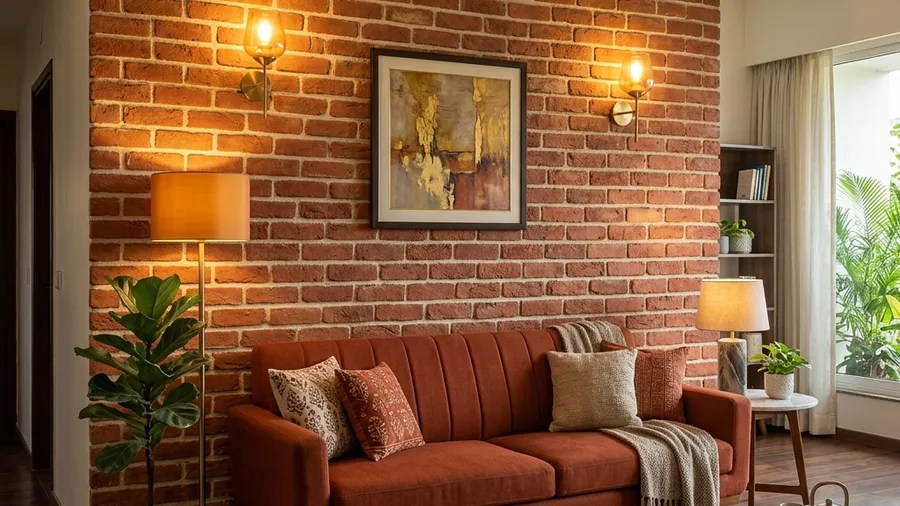
The difference between this and a traditional brick wall matters in practice. A full brick wall adds serious weight to a building's structure and needs permits in most residential buildings. Brick cladding tiles are typically 10 to 15 mm thick and go onto a plastered or drywall surface just like any other tile. That's why brick veneer wall cladding is such a popular choice for apartments and older homes where structural changes aren't possible.
It also makes a difference in how the finished wall looks. Brick cladding gives you more control over the final result. You pick the tile colour, the grout colour, the laying pattern and the surface texture separately. That kind of control is something you don't get with site-built brick walls, which look the way they look and that's that.
Popular Types of Interior Brick Cladding
The main types of interior brick wall cladding are traditional red brick, whitewashed brick, industrial loft brick and faux brick tiles. Each works for a different style and budget. Red brick suits rustic and farmhouse themes. Whitewashed brick tiles work well in modern or Scandinavian-style rooms. Industrial brick fits urban and commercial spaces. Faux brick tiles are the easiest on the pocket.
1. Traditional Red Brick Cladding for Interior Walls
Traditional red brick cladding is the classic pick. The warm ochre and terracotta tones bring the kind of character that looked good in colonial-era bungalows and holds up just as well in a home today. The surface is rough, the mortar joints are visible and the whole thing feels real in a way that painted or textured walls just don't. If you want an interior exposed brick accent wall, this is the finish most people picture first.
This style works best in living rooms, kitchens and dining areas where a warm atmosphere is what you're after. Pair it with dark wood furniture, metal hardware and exposed filament bulbs and the result leans industrial-rustic. Pair it with wicker chairs and cream-coloured textiles and it reads more farmhouse. The finish adapts well based on what goes around it.
2. Whitewashed Brick Wall Cladding for Bedrooms and Modern Homes
Whitewashed brick cladding uses the same brick profile but a diluted white or cream wash goes over the surface so the texture shows through without the strong colour. The result is softer, cooler and sits lighter in smaller rooms where full red brick would feel too much. Whitewashed brick wall cladding for bedroom headwalls is particularly popular right now for this reason.
This finish works well for bedrooms, modern apartments and bathrooms. It's also a good call for those who like brick but want to keep the room's colour palette neutral. Pair it with matte white fixtures and pale timber flooring and you get a clean, calm space that looks good in photos and feels even better to live in.
3. Industrial Brick Wall Cladding for Commercial Spaces and Lofts
Industrial loft brick cladding copies the exposed brick you find in old converted warehouses and factories. The tiles have a rougher, more uneven surface with thick mortar lines and colour shifts across individual bricks. The look is raw and unpolished on purpose. Industrial brick wall cladding for commercial spaces works especially well because it sets the tone without requiring much else in the room.
Urban apartments, studios, home offices and cafés and co-working offices all use this style well. One wall in industrial brick can shift the whole mood of a room, making it feel less plain and more like a space someone thought about. It also hides small surface irregularities better than most finishes because the texture itself does the heavy lifting.
4. Faux Brick Tiles for Interior Accent Walls
Faux brick tiles are made from gypsum, polyurethane or lightweight concrete to copy the look of real brick at less weight and lower cost. They're the easiest to install and the most budget-friendly option for homeowners or those doing it themselves. Faux brick tiles for interior accent walls are a practical starting point if you want the look before committing to natural veneer.
The trade-off is durability. Faux brick tiles don't hold up in high-traffic spots the way real or semi-natural brick veneer does. But for accent walls in living rooms, bedroom headwalls or a small café counter backdrop, they do the job well and give the space the textural push it needs without a big spend. For a look at how different stone and cladding materials compare, our guide on natural stones preferred by architects for wall cladding is worth reading next.
Key Benefits of Using Brick Wall Cladding Inside Your Home
Interior brick wall cladding adds texture, improves how a room holds temperature, needs very little upkeep and works in almost any room. Unlike paint and wallpaper, brick cladding tiles for interior walls do not peel, fade or need replacing every few years. They are tough, handle moisture well when sealed and add lasting value to a property.
There are five reasons people keep coming back to brick as a wall finish. None of them are about nostalgia.
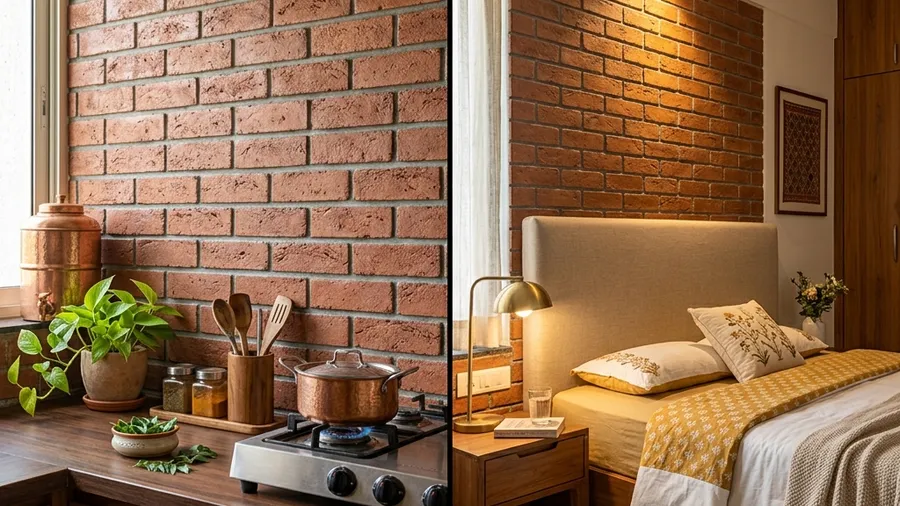
First, texture. Real texture changes how a room sounds, how it feels and how it looks under different light. An evening lamp throwing soft light across a brick surface creates shadows that a flat painted wall simply can't produce. That's atmosphere, and it's hard to get that from anything else at the same price.
Second, durability. Brick is one of the toughest wall finishes you can put up. In a kitchen where oils and steam collect, in a hallway where bags and furniture scrape the wall or in a child's bedroom where things happen that no one planned, brick holds up without fuss. Paint chips. Wallpaper tears. Brick just takes it and moves on.
Third, thermal performance. Brick and brick-style tiles hold heat in winter and slow heat gain in summer. In Indian homes that run air conditioning for six months of the year, a brick-clad wall on an exterior-facing side can take some of that heat load off the room. This is one reason interior brick wall cladding cost in India often pays for itself faster than homeowners expect when they factor in reduced cooling bills.
Fourth, low maintenance. A brick-clad wall needs dusting now and then and a wipe-down with a damp cloth when it gets dirty. No annual repainting, no grout renewal every couple of years the way ceramic tile needs and no blistering from moisture the way some paints do in humid rooms.
Fifth, flexibility. The same material looks completely different depending on the finish, colour and how it's lit. That's why a brick accent wall from ten years ago still looks like a considered choice today. A patterned wallpaper from the same period probably does not.
| Benefit | What It Means in Practice | Relevant Rooms |
|---|---|---|
| Texture and Depth | Creates shadow play under lighting; makes rooms feel richer | Living rooms, bedrooms, cafés |
| Durability | Resists impact, moisture and daily wear without chipping | Kitchens, hallways, offices |
| Thermal Insulation | Slows heat transfer through exterior-facing walls | Any room with exterior exposure |
| Low Maintenance | Dust and wipe down only; no repainting or wallpaper renewal | All rooms |
| Design Flexibility | Works rustic, modern or industrial depending on the finish | All rooms and commercial spaces |
Interior Brick Wall Cladding Ideas by Room
The best interior brick cladding design ideas treat the material as the main feature, not background filler. One interior exposed brick accent wall behind a bed, sofa or TV unit is enough. Full brick on all four walls feels heavy and closed-in for most residential rooms. One strong wall with neutral finishes on the remaining three is always the right call.
Exposed Brick Wall Cladding for Living Room Accent Walls
An exposed brick wall cladding for living room TV walls is one of the most common setups in Indian homes right now. The rough texture frames the screen well and the cable runs hide in the shadow behind the set. Traditional red brick or an industrial finish works best here. Keep the other walls in a plain matte colour — warm white or warm grey — so the brick wall draws the eye without fighting with everything else in the room.
Brick Cladding for Kitchen Splashback and Range Walls
Brick cladding for kitchen splashback walls is nothing new. Every rustic farmhouse kitchen you've seen probably had brick behind the cooker or along one wall. The reason is simple: brick handles heat well, wipes down easily and adds warmth to the most used space in the house. Get a sealed finish here. Steam and oil mist do build up, so apply a penetrating sealer before you start using the kitchen and maintenance becomes much less of a chore.
Whitewashed Brick Wall Cladding for Bedroom Headwalls
Whitewashed brick wall cladding for bedroom headwalls works really well when the finish is chosen carefully. Light-toned brick keeps the room calm and restful while still giving the wall some texture. For a bedroom that goes more bohemian or maximalist, traditional red brick paired with earthy linen and rattan furniture gives the room a warm, enclosed feel. Either direction works. Just don't go too dark on the brick tone in a room where you need to sleep. If you're looking at other wall options for living and bedroom spaces, our post on modern interior wall cladding designs covers stone and textured panel choices worth looking at.
Industrial Brick Wall Cladding for Cafés, Restaurants and Offices
Industrial brick wall cladding for commercial spaces does one job well: it tells people the place has a point of view. That's why cafés, co-working offices and independent restaurants use it so much. A half-height brick wall along one side of a café with dark grout, exposed pipes above and pendant lights hanging down makes a complete design statement on its own. The brick does most of the talking.
Brick Veneer Wall Cladding for Bathroom Feature Walls
Brick veneer wall cladding for bathrooms needs careful product selection. The tiles must handle moisture and the grout must be sealed properly. When it's done right, a brick-clad wall behind a freestanding bathtub or along one wall of a walk-in shower looks really good. It's an unexpected texture in a room that's normally all smooth surfaces and the contrast stands out. Use a waterproof sealant and go with a darker grout colour to prevent staining over time.
Brick Cladding Types at a Glance
| Type | Best Rooms | Interior Style | Sealing Required? |
|---|---|---|---|
| Traditional Red Brick | Living room, kitchen, dining | Rustic, farmhouse, eclectic | Recommended for kitchens |
| Whitewashed Brick | Bedroom, bathroom, hallway | Modern, Scandinavian, minimalist | Optional |
| Industrial Loft Brick | Studio, office, café, loft | Industrial, urban, commercial | Yes, dark grout recommended |
| Faux Brick Tiles | Accent walls, low-traffic areas | Any (budget option) | No |
How to Install Brick Cladding Tiles on Interior Walls
How to install brick cladding tiles on a wall — it takes six steps: surface preparation, layout planning, applying tile adhesive, placing the brick tiles, grouting the joints and sealing the finished wall. A confident DIYer can handle smaller accent walls, but professional installation is the better call for full rooms or commercial projects.
Here's a clear breakdown of the installation steps, whether you're doing it yourself or briefing a contractor.
- Prepare the wall surface. The wall must be clean, dry and solid. Remove any loose paint, flaking plaster or grease, especially in kitchens. Score the plaster surface lightly to improve adhesion. If you're working on a drywall panel, make sure it's properly fixed with no flex or movement.
- Plan the layout before you start. Lay the tiles out on the floor first to check the pattern and plan where cut tiles will land — ideally at inconspicuous edges, not at eye level. Also decide on the grout gap width. Standard grout gaps for brick cladding are 8 to 10 mm.
- Apply the tile adhesive. Use a notched trowel to spread tile adhesive across a workable section of wall, roughly half a square metre at a time. This stops the adhesive from drying before you set the tiles. Use an adhesive rated for the tile weight and the room's humidity.
- Place the brick cladding tiles. Press each tile firmly into the adhesive using tile spacers to keep grout gaps even. Work from the bottom row upward. Check your horizontal level every three rows with a spirit level. Small corrections made early save a lot of rework later.
- Grout the joints. After the adhesive sets — usually 24 hours — fill the joints with a grout that matches your tile colour. Dark grey or charcoal grout works well with industrial and red brick finishes. White or cream grout suits whitewashed tiles. Pack the grout firmly, wipe off the excess with a damp sponge and let it cure fully before cleaning.
- Seal the surface. For kitchens, bathrooms and any area that sees moisture, apply a clear penetrating sealer over the finished wall. This protects the surface from stains and makes day-to-day cleaning much easier. Reapply every two to three years.
If you're choosing between brick cladding and other natural stone options for your interior walls, our guide on natural stone cladding for living rooms gives you a practical look at how slate, sandstone and other materials hold up in real use.
Interior Brick Wall Cladding Maintenance Tips
Interior brick wall cladding maintenance takes very little effort. Dry dust the surface weekly in high-traffic areas. Clean stains with a damp cloth and mild soap. Don't use bleach-based cleaners on natural or semi-natural brick tile finishes. Reseal porous surfaces every two to three years to stop staining and keep the wall looking as it did on day one.
Brick cladding is one of the least demanding wall finishes you can put up. No annual repainting. No peeling, blistering or sagging. Once it's sealed, your main job is keeping dust off it. Here's the full care routine broken down by frequency.
Use a soft-bristle brush or dry microfibre cloth to wipe the surface down. The recessed mortar joints collect dust — skip this and it builds up fast in a way you can clearly see.
Wipe with a damp cloth and a few drops of mild dish soap. Wring the cloth out well — soaking an unsealed brick wall repeatedly causes efflorescence, the white powdery residue that forms when salts rise to the surface.
In wet areas, check the sealant. If water soaks straight in instead of beading on the surface, it's time to reseal. The job takes about an hour and makes a real difference to how the wall holds up over time.
- Bleach — discolours both the brick surface and the grout joints.
- Acidic cleaners — eat into natural clay brick and break down grout over time.
- Abrasive scrubbing pads — scratch the surface and accelerate wear on the finish.
Mild soap and a soft cloth are always the right call for interior brick wall cladding maintenance.
FAQ's
1. What is interior brick wall cladding and how does it work?
2. Is brick veneer wall cladding suitable for kitchens and bathrooms?
3. How thick are brick wall cladding tiles for interior walls?
4. How do I choose the right interior brick cladding design for my room?
5. Can faux brick tiles for interior accent walls replace real brick veneer?
6. How do I install brick cladding tiles on a wall myself?
7. What are the best interior brick wall cladding maintenance tips?
Ready to Add Brick Cladding to Your Space?
Interior brick wall cladding is one of those finishes that looks like someone made a real design decision and then holds that look for years. Pick the right type for your room, install it properly and seal it where moisture is a factor. That's the whole job. There's nothing complicated about it once you know what you're working with.
At Stone World, we stock brick cladding tiles in traditional, whitewashed, industrial and faux finishes. We'll help you match the tile to your space, suggest the right adhesive and grout and tell you whether sealing is needed for your application. WhatsApp us or contact Stone World for a free consultation and we'll take you from brief to finished wall.