


Plain painted walls do a job. They fill space. But if you've walked into a home where one wall is dressed in stacked stone or textured slate, you know the difference immediately. The room feels deliberate. It has character. Modern interior wall cladding designs do exactly that. They turn an ordinary wall into the defining feature of a space, without requiring a full renovation. Natural stone cladding, in particular, has seen consistent demand across Indian homes because it ages well, needs very little upkeep and looks nothing like a trend that expires in two years.
At Stone World, we work with homeowners, architects and interior designers across India who want wall finishes that perform as well as they look. This guide covers the main types of interior wall cladding available, where each one works best, how to install it properly and what maintenance actually looks like in real use.
By the end, you'll know what suits your space and what to ask for when you go looking.
Table of Contents
What Is Modern Interior Wall Cladding?
Modern interior wall cladding is the process of applying thin layers of natural stone, textured panels or other material directly onto interior walls for decorative and functional purposes. It creates depth and texture without the weight of full masonry, and works across living rooms, bedrooms, staircases, bathrooms and commercial spaces. Browse our full range of natural stone claddings to see what's available.
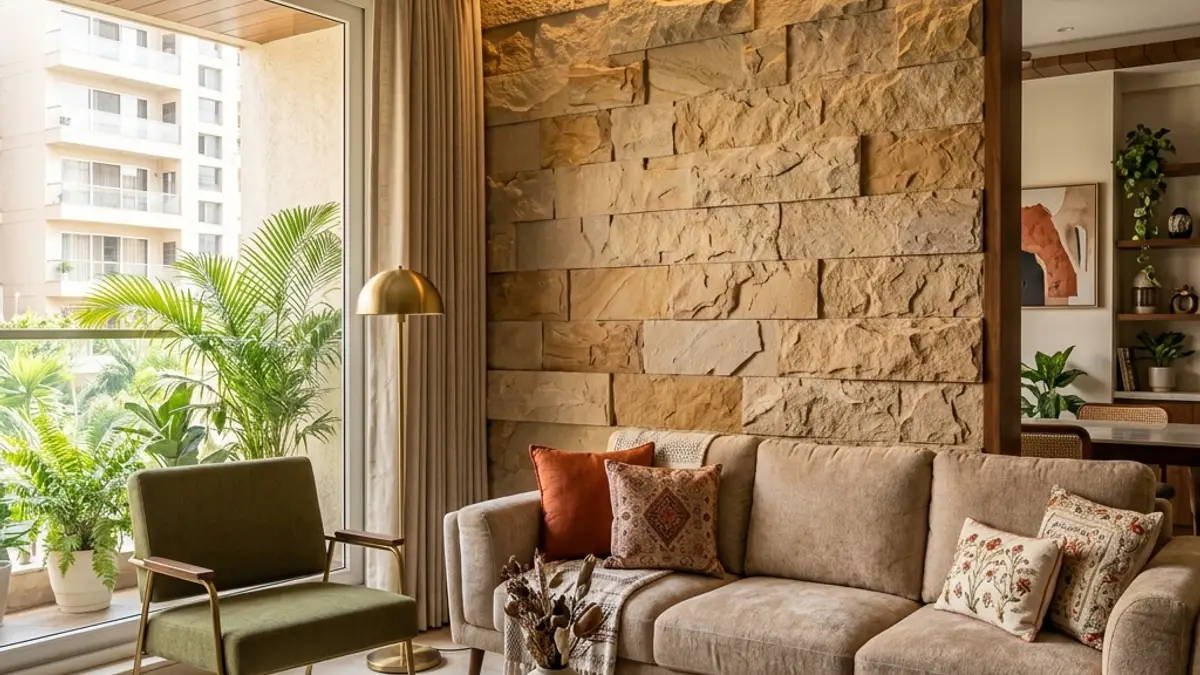
The distinction between stone wall cladding and a traditional stone wall matters practically. A full stone wall adds considerable structural load and needs permits in most residential buildings. Natural stone cladding tiles are typically 10 to 20 mm thick and fix onto a plastered or drywall surface with tile adhesive, the same method as any tile but with far less disruption. That's why interior wall cladding has become the preferred finish for apartment renovations and older homes where structural changes aren't an option.
Stone World sources its cladding from Indian quarries, which means the material is suited to Indian temperatures and moisture levels. This matters more than most buyers realise. Imported stone can expand and contract differently across seasons, leading to grout cracking and surface movement over time. Domestic sandstone, slate and quartzite don't have that problem.
Popular Types of Modern Interior Wall Cladding Designs
The main types of modern interior wall cladding designs include stacked stone, geometric stone panels, carved stone, marble effect cladding and slate or quartzite panels. Each type suits a different interior style and room type. Stacked stone works for rustic and contemporary feature walls. Geometric panels suit minimalist homes. Carved stone adds ornamental detail to fireplaces and mandirs. Marble effect cladding delivers luxury at a lower cost than solid marble.
1. Stacked Stone Wall Cladding for Feature Walls
Stacked stone cladding uses individual stone pieces arranged in horizontal or random courses to create a 3D textured surface. The natural variation in stone size and colour produces a wall that looks genuinely handmade. No two installations look the same. This style works best in living rooms, dining areas and entrance lobbies where you want a feature wall that commands attention without needing much else on it.
The most popular stones for stacked cladding in India are sandstone and quartzite. Both are available in warm earthy tones: ochre, rust, cream and grey. These colours sit very naturally alongside the colour palettes common in Indian interiors. Pair a stacked stone TV wall with dark wood furniture and warm filament lighting and the effect is immediate.
2. Geometric Stone Panels for Modern Interiors
Geometric stone panels use precisely cut stone pieces arranged in repeating patterns, usually squares, rectangles or herringbone. The edges are clean, the surface is smooth and the overall effect is far more controlled than stacked stone. If your home leans minimalist or Scandinavian, geometric panels give you the texture of natural stone without the visual weight of an irregular rustic surface.
These panels are particularly popular for bedroom headwalls and bathroom accent walls. The regularity of the pattern reads as intentional rather than decorative, which works well in spaces where restraint is the point. Light-toned limestone and grey slate are the most common choices for this style.
3. Carved Stone Cladding for Decorative Features
Carved stone cladding involves intricate relief work done on stone panels before installation. The result is a wall with sculptural detail: floral motifs, geometric lattice work, traditional Indian patterns or abstract designs. This is the option when you want a wall that functions as art. Stone World's CNC carved stone panels are produced using precision machinery, so the pattern consistency across panels is exact.
Fireplaces, mandir backdrops and architectural columns are where this style shows up most often. It's a strong design choice in living rooms and pooja spaces where the wall itself needs to say something specific about the home's character.
4. Marble Effect Stone Cladding
Marble effect cladding uses natural stones like limestone or quartzite that share marble's veining and colour range but come at a much lower cost and with better durability. Solid marble is porous, heavy and needs a lot more upkeep. Marble effect cladding panels deliver the same visual luxury with less ongoing effort. The surface takes polish well, and the veining patterns are natural, not printed.
This finish works well in formal living rooms, guest bedrooms, hotel lobbies and high-end residential bathrooms where a luxurious look is the goal. It pairs well with brass fixtures and neutral upholstery.
5. Slate and Quartzite Cladding for Textured Walls
Slate and quartzite cladding bring a raw, layered texture that no painted finish can replicate. Both stones split naturally along planes, producing a surface with genuine depth and irregular horizontal ridges. The colour palette runs from charcoal and graphite greys through blue-greens and earthy purples, depending on the quarry. This is a strong choice for bathrooms, kitchens and outdoor-facing interior walls where the look needs to hold up to practical use.
Quartzite, in particular, is exceptionally hard. It does better than marble on scratch resistance and handles moisture well when sealed. Slate is slightly softer but offers the most dramatic layered texture of any natural stone used for interior cladding.
Key Benefits of Stone Wall Cladding for Interiors
Natural stone wall cladding offers four practical advantages over paint and wallpaper: it lasts decades without repainting, handles moisture far better in humid Indian climates, adds thermal mass that slows heat transfer through exterior walls and improves how a room absorbs sound. A surface that develops character as it ages is a long-term gain that manufactured materials simply can't offer.
Here's what often gets missed in design discussions about stone: it improves with age. Paint fades and chips. Wallpaper peels at the seams. Stone, properly installed and sealed, develops a patina that actually makes it look better over time. You don't get that from many building materials.
In practical terms, stone wall cladding in Indian homes manages heat well. A stone-clad wall on an exterior-facing surface slows heat transfer significantly during summer months. Homeowners in cities like Jaipur, Ahmedabad and Hyderabad report that rooms with stone cladding on west-facing walls stay noticeably cooler in the afternoons. This is the thermal mass effect at work, and it's not a small thing when you're running air conditioning for six months of the year.
Sound absorption is a less-discussed benefit but a real one. A textured stone wall breaks up sound waves differently than a smooth painted surface. In large open-plan living rooms and dining areas where echo is a problem, a stacked stone feature wall on one side reduces that hollow, reverberant quality noticeably.
| Benefit | What It Means in Practice | Best Suited For |
|---|---|---|
| Durability | Lasts 20–50 years; no repainting or replacement cycles | All rooms, especially hallways and kitchens |
| Thermal Mass | Slows heat gain on exterior-facing walls; reduces cooling load | West and south-facing rooms |
| Sound Absorption | Textured surfaces break up echo in large open rooms | Living rooms, open-plan spaces |
| Low Maintenance | Dust and wipe; reseal every 2–3 years in wet areas only | All rooms |
| Aesthetic Ageing | Develops a natural patina that improves over time | Feature walls, heritage-style interiors |
Room-Wise Styling Ideas for Interior Wall Cladding
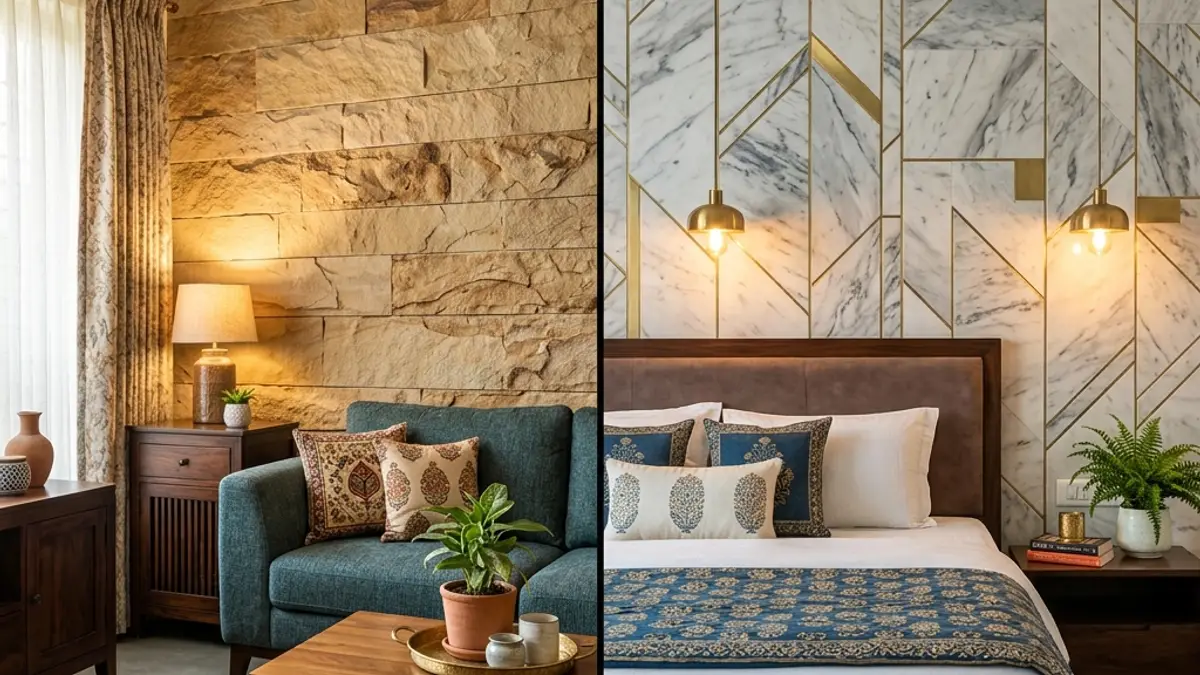
The best approach to modern interior wall cladding designs by room is one feature wall, not four. In a living room, stacked stone behind the sofa or TV unit anchors the space. In bedrooms, geometric panels or marble effect cladding on the headwall add quiet luxury. Bathrooms work well with slate or quartzite. Staircases and foyers benefit from sandstone or carved stone that creates a strong first impression.
Living Room: The Feature Wall Behind the Sofa or TV
A stacked stone or geometric panel wall behind the TV or main seating area is one of the most common and most effective applications of interior wall cladding. The rough texture frames the screen naturally and helps break up the flatness of a room full of smooth surfaces. Keep the other three walls in a complementary matte tone, warm white, greige or charcoal, and the stone wall does all the work. Don't fight it with busy wallpaper or too many decorative elements on adjacent walls.
If you want to see actual project examples and stone options before deciding, our stone feature wall collection has a full gallery of living room installations with material details. For those also considering natural stone cladding for living rooms in detail, including how to pair stone with lighting and furniture, that guide covers the full picture of design options and material choices.
Bedroom: Headwall Cladding for a Spa-Like Feel
Bedroom cladding is about subtlety. You don't want a feature wall that's too heavy or too dark in a room where you need to sleep. Light-toned geometric stone panels or a marble effect cladding on the headwall adds the texture you're looking for without overwhelming the space. The stone surface catches morning and evening light differently, which gives the room a quality that painted walls simply don't have. Avoid full-surface coverage on all walls in a bedroom. One strong wall is always the right call.
Bathroom: Slate and Quartzite for Wet Zones
Bathrooms are where stone cladding genuinely does better than most alternatives. Tiles crack. Grout stains. Paint blisters in humidity. Properly sealed slate or quartzite handles moisture without any of those problems and gives you a surface that looks like a boutique hotel rather than a standard bathroom finish. The key is sealing. Apply a penetrating waterproof sealer before the bathroom goes into use and reapply every two years. Done right, a slate-clad bathroom wall lasts 20 years without major intervention. See how other homeowners have used stone in our natural stone bathroom application gallery.
Staircases and Foyers: First Impressions in Stone
Entrance lobbies and staircase walls set the tone for a home before anyone reaches the living room. Sandstone panels, carved stone details or even a single stacked stone wall running alongside a staircase adds a sense of permanence that no other material gives you at the same cost. These are also low-moisture areas, so maintenance is minimal. Mostly just dusting and the occasional wipe-down.
Fireplace Surrounds: Where Stone Always Belongs
A stone-clad fireplace surround is probably the oldest application of interior cladding and it still works as well as it ever did. Stacked stone, carved stone or marble effect panels around a fireplace opening create a centrepiece that looks like it was always meant to be there. Stone is heat-resistant, so there's no risk of surface damage from radiant heat if the installation is done properly with the right adhesive.
Stone Cladding Types at a Glance
| Type | Best Rooms | Interior Style Match | Sealing Required? |
|---|---|---|---|
| Stacked Stone | Living room, foyer, dining | Rustic, contemporary, eclectic | Yes, especially near kitchens |
| Geometric Panels | Bedroom, bathroom, office | Minimalist, modern, Scandinavian | Optional in dry areas |
| Carved Stone | Fireplace, mandir, feature columns | Heritage, traditional, luxury | Recommended for longevity |
| Marble Effect | Living room, guest bedroom, lobby | Luxury, formal, contemporary | Yes, for stain prevention |
| Slate / Quartzite | Bathroom, kitchen, staircase | Industrial, natural, urban | Yes, essential in wet areas |
How to Install Natural Stone Wall Cladding
Installing natural stone wall cladding takes six steps: surface preparation, layout planning, adhesive application, tile placement, grouting and sealing. A professional installer is recommended for full-room projects and commercial spaces. Confident DIYers can handle a single accent wall with the right tools. The total time for a standard accent wall is typically four to six hours, excluding adhesive cure time.
Here's how the process actually works, step by step.
- Prepare the wall surface. The wall must be clean, dry and structurally sound. Remove any loose plaster, flaking paint or grease, especially in kitchen areas. Score the plaster lightly to improve adhesive grip. Drywall panels must be firmly fixed with no flex or movement before you start.
- Plan the layout before touching adhesive. Lay the cladding tiles on the floor first to check the pattern, balance the visual weight and decide where cut pieces will fall. Cut tiles belong at edges and corners, not at eye level. Mark a horizontal guide line on the wall with a spirit level before starting the first row.
- Apply tile adhesive in sections. Use a notched trowel to spread a stone-rated tile adhesive across roughly half a square metre at a time. Working in sections stops the adhesive drying before tiles are set. Use a product rated for the tile weight and the room's humidity level. Standard tile adhesive is not suitable for wet areas.
- Set the cladding tiles from the bottom up. Press each tile firmly into the adhesive and use tile spacers to keep joints even. Work from the bottom row upward, checking horizontal level every three rows. Small corrections made early prevent a lot of rework later. Natural stone tiles vary slightly in thickness, so back-butter thicker tiles to compensate.
- Grout the joints after adhesive cure. Wait 24 hours for the adhesive to set fully before grouting. Fill joints with a grout that complements the tile colour. For rough-textured natural stone, a slightly contrasting grout colour can enhance the visual effect of the surface. Wipe excess grout with a damp sponge before it hardens.
- Seal the finished surface. Apply a penetrating stone sealer over the completed wall, especially in bathrooms, kitchens and any area that sees moisture. This protects against staining and makes day-to-day cleaning much easier. Reapply every two to three years in wet areas.
If you're deciding between different stone options for your walls, our guide on natural stones preferred by architects for wall cladding covers how sandstone, slate, quartzite, limestone and granite each perform in real-use interior applications.
Maintaining Natural Stone Cladding
Keeping natural stone wall cladding in good shape is not complicated. Dust weekly with a dry cloth, clean stains with a damp cloth and mild soap, avoid acidic or bleach-based cleaners and reseal porous surfaces every two to three years. Stone cladding doesn't peel, fade or need repainting. In properly sealed installations, the main maintenance task is simply dust removal.
Stone is one of the least demanding wall finishes available. Once it's installed and sealed, your ongoing job is mostly keeping dust off it. Here's how the care routine breaks down by frequency.
Wipe the surface with a soft dry cloth or a microfibre duster. Textured stone catches fine dust in its crevices. Leave it and it builds up visibly. A minute of dusting once a week keeps it looking fresh.
Wipe with a damp cloth and a small amount of mild soap. Wring the cloth out well. Soaking unsealed stone repeatedly causes efflorescence, that white powdery residue you sometimes see on bathroom walls. Dry off after cleaning.
Check the sealer in wet areas. If water soaks straight into the stone rather than beading on the surface, it's time to reseal. The job takes about an hour and makes a real difference to how the wall holds up over the next few years.
- Bleach: strips colour from stone and discolours grout joints permanently.
- Acidic cleaners: vinegar, lemon-based products and tile cleaners with acid content etch the stone surface.
- Abrasive scrubbing pads: scratch polished and semi-polished surfaces, making them harder to reseal.
Mild soap and a soft cloth are always the right answer for interior stone cladding maintenance.
FAQ's
1. What is the best material for modern interior wall cladding?
2. Which stone cladding is best for a living room feature wall?
3. Can natural stone cladding be used in bathrooms?
4. How long does interior stone wall cladding last?
5. Is stone cladding suitable for apartments and older homes?
6. What is the cost of interior stone wall cladding in India?
7. How do I maintain natural stone wall cladding?
Ready to Upgrade Your Walls with Stone Cladding?
Modern interior wall cladding designs work because they bring something to a room that no paint or wallpaper can match. You get real material depth, durability and a surface that actually improves over time. The right stone for your space depends on your room type, your style preference and how much maintenance you're willing to do. That's not a complicated decision once you know the options.
At Stone World, we stock stacked stone panels, geometric cladding tiles, carved stone designs and slate and quartzite in a range of finishes suited to Indian interiors. Our team will match the material to your space, recommend the right adhesive and sealer and tell you what to expect through installation. WhatsApp us or contact Stone World for a free consultation and product samples.