


Your bathroom should be a relaxing space, but if you are still installing standard ceramic sinks, you might be missing out on a massive design upgrade. I see homeowners spending lakhs on premium tiles and luxury fixtures, only to settle for a basic, uninspired sink that looks exactly like the one in their neighbour's house. Even worse, the environmental footprint of manufacturing traditional ceramic is huge. This is precisely why more architects and interior designers are shifting towards a bamboo wash basin.
That is where introducing natural bamboo into your bathroom changes everything. Adding a real wood element to a space dominated by cold tiles and glass gives your bathroom a grounded, organic character that synthetic materials just can’t match.
Let me walk you through why a bamboo wash basin is becoming the main attraction in modern luxury bathrooms. We will explore the different design variations, how they perform in wet environments and why they make perfect sense for your next renovation project.
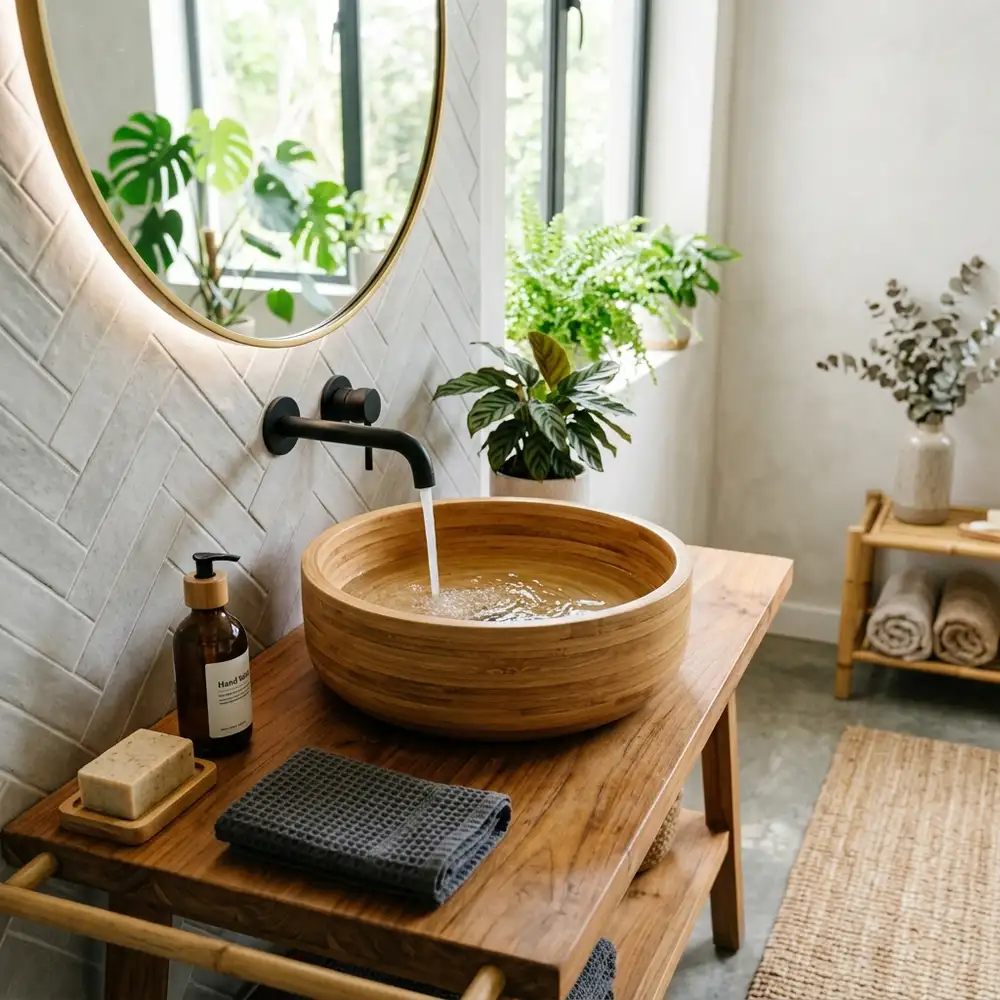
Table of Contents
What is a Bamboo Wash Basin?
A bamboo wash basin is a sustainable bathroom sink crafted entirely from compressed and treated natural bamboo. It provides high durability, natural water resistance and a distinctive warm look, making it an eco-friendly alternative to traditional ceramic or porcelain fixtures.
When people think about wooden sinks, they often picture something fragile or prone to rotting. But as a sustainable bathroom interior choice, bamboo behaves very differently from traditional timber. Because it is technically a grass, this natural wood washbasin has an incredibly dense fiber structure that makes it harder than many premium hardwoods like oak or maple.
In India, we have a long history of using natural materials for construction and decor. But introducing them into the wettest room in the house requires precision. A high-quality bamboo sink is crafted through a rigorous process of laminating strips of bamboo under extreme heat and pressure. The surface is then treated with heavy-duty marine sealants - the same type used on luxury wooden boats. This guarantees that your eco-friendly wash basin won’t warp, crack, or absorb moisture over time.
I genuinely believe that bringing nature indoors completely changes how a room feels. When you install one of these basins, you are deciding that your bathroom should feel like a spa retreat rather than a clinical hospital washroom.
Types of Bamboo Wash Basin Designs
The most popular bamboo wash basin designs include the classic round bowl for minimalist vanity setups and the sleek rectangular basin for contemporary, spacious bathrooms.
Selecting the right shape depends entirely on your available counter space and your overall design theme. Let’s look at the variations that perform well and remain popular among top interior designers. If you are also considering stone alternatives, you can check our extensive collection of stone wash basins to see how they compare.
1. Round Bamboo Wash Basin
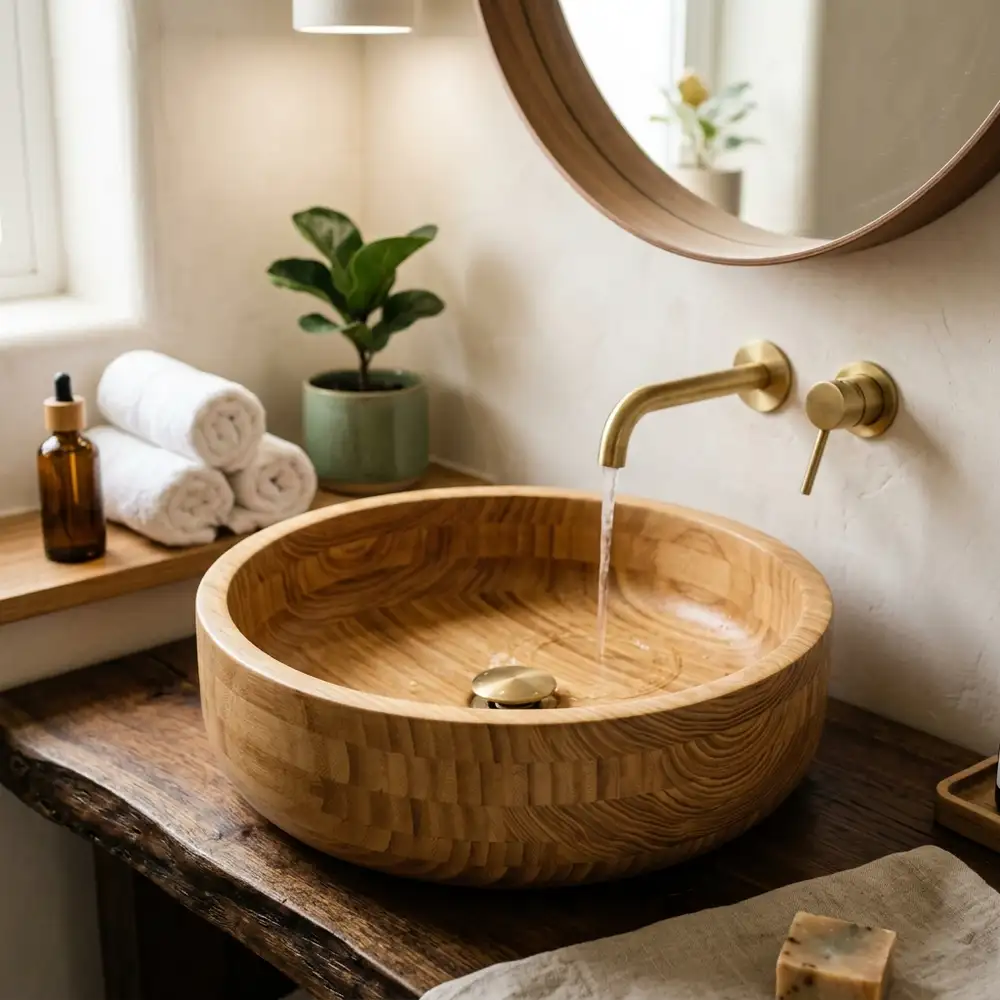
The round basin is a classic choice. The smooth, curved edges contrast beautifully against the straight, sharp lines of modern vanity cabinets and rectangular bathroom mirrors.
I really like the round bowl setup for smaller powder rooms or guest bathrooms. Because the footprint is compact, it frees up valuable counter space for your toiletries. It works exceptionally well when paired with a tall, wall-mounted faucet in a matte black or brushed brass finish. If you want your bathroom to feel organic and relaxed, this is the shape you should choose.
2. Rectangular Bamboo Wash Basin
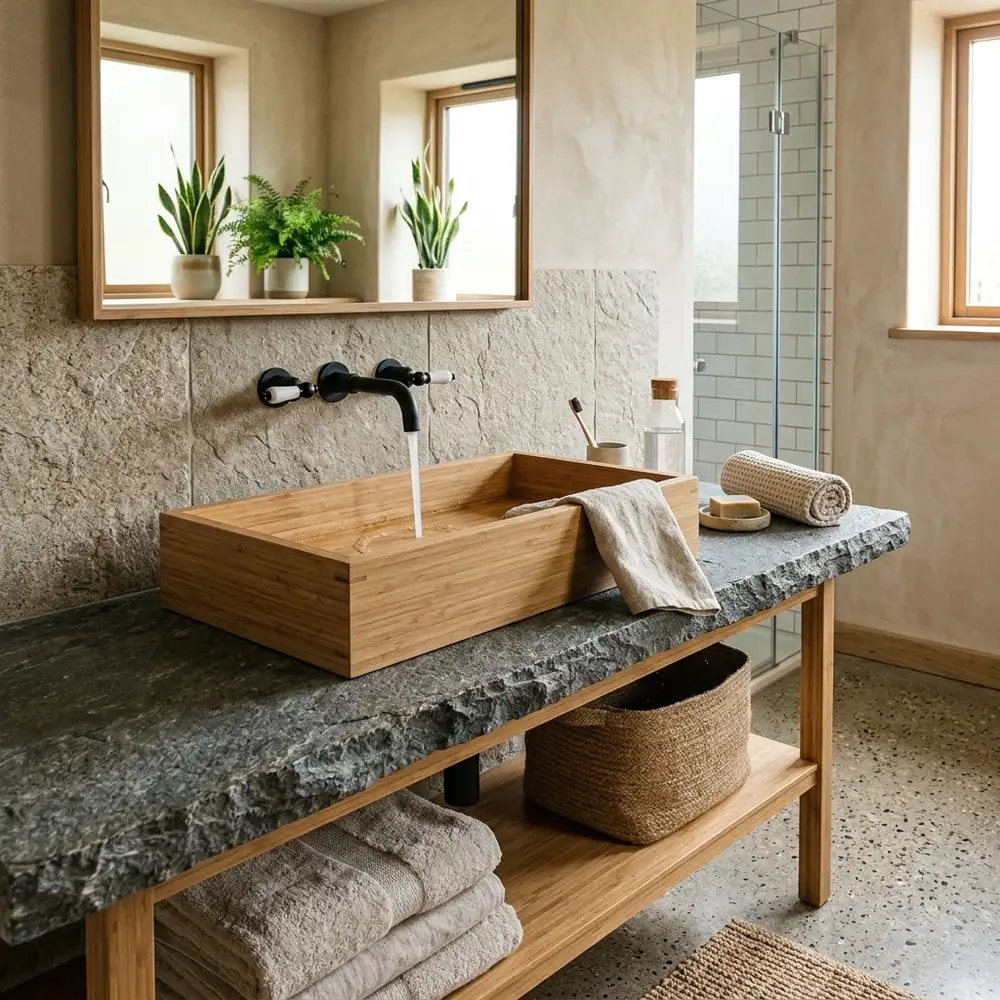
If you prefer a cleaner, more commanding look, the rectangular basin is a fantastic option. The straight lines and sharp corners give off a highly contemporary vibe.
This design is highly sought after by architects creating expansive master bathrooms. The wider surface area prevents splashing and provides a very striking visual weight to the vanity. We often see these rectangular basins used alongside natural stone wall cladding where the contrast between the cold grey stone and the warm yellow bamboo creates a stunning look.
Why Choose Bamboo Over Ceramic?
It helps to see how a real bamboo wash basin stacks up against the standard ceramic options flooding the market today. As a superior wooden sink alternative, this eco-friendly wash basin offers real advantages that many homeowners miss out on simply by sticking to ceramic out of habit.
| Feature | Bamboo Wash Basin | Ceramic Wash Basin |
|---|---|---|
| Look and Feel | Warm, organic and completely unique grain patterns. | Standardised, mass-produced and sterile. |
| Durability | Highly resilient. Won't shatter if you drop a heavy bottle on it. | Brittle. Chips or cracks easily upon impact. |
| Weight | Lightweight, making installation very simple. | Very heavy, requiring robust vanity support. |
| Environmental Impact | Extremely low. Bamboo regrows rapidly without replanting. | High carbon footprint from energy-intensive kiln firing. |
| Temperature Retention | Stays comfortably warm to the touch in winter. | Feels freezing cold during winter months. |
The sensory difference is massive. Running your hand over the smooth, sealed grain of a bamboo sink feels premium. It lacks the harsh, echoing clatter of water hitting a porcelain bowl.
Styling Your Bathroom With Bamboo
Styling a bathroom with a bamboo wash basin involves creating contrast using matte black or brass fixtures, pairing it with neutral-coloured natural stone countertops and adding indoor plants to reinforce the organic aesthetic.
You don’t need to turn your entire bathroom into a bamboo forest to make a massive impact. Strategic placement works wonders, especially if you are looking to incorporate trending interiors for this fall season into your home makeover.
Contrast with Metal Fixtures
Match the warm tones of the bamboo with striking hardware. Matte black faucets look incredibly sharp against the light wood, while brushed brass adds a layer of vintage luxury.
Pair with Natural Stone
Place your bamboo basin on a dark granite or slate countertop. The contrast between the dark, deeply textured stone (similar to popular exterior stone cladding textures) and the smooth, bright bamboo creates a classy visual setup.
Incorporate Vastu Elements
If you follow traditional design principles, natural materials like bamboo balance the water element in a bathroom. You can complement this energy flow by adding a small water fountain for home Vastu nearby.
Maintenance and Care
Maintain a bamboo wash basin by cleaning it regularly with a mild, non-abrasive soap and a soft cloth. Avoid using harsh chemical cleaners, bleach, or rough scouring pads that can damage the protective waterproof sealant.
People often worry that a wooden sink will require constant upkeep. The reality is far less stressful. Because high-end basins are treated with thick marine varnishes, the water simply beads up and rolls off the surface.
You don’t need specialised wood cleaners. A quick wipe down with ordinary mild soap and warm water is all it takes to keep the basin looking flawless. I’ve seen homeowners ruin beautiful sinks by scrubbing them with bleach or abrasive scouring pads. Please don’t do that. Treat the sealant with respect and the basin will easily last for decades without degrading.
Cost Implications
A premium bamboo wash basin typically costs more than a standard ceramic sink, placing it in the mid-to-high budget tier. However, its exceptional durability and unique look make it a high-value long-term investment for luxury bathrooms.
It’s important to understand that you are buying a handcrafted piece for your home, not a mass-produced ceramic bowl. A raw bamboo pole requires extensive mechanical processing, laminating, carving and sealing to become a waterproof sink.
Yes, the initial outlay is higher. But when you look at the total visual impact it has on your bathroom, the value is undeniable. You are paying for a permanent conversation piece that increases the premium feel of your property.
Environmental Impact and Sustainability
In an era where sustainable building practices are becoming increasingly critical, bamboo stands out as a highly eco-friendly choice. Unlike traditional timber, which takes decades to mature, bamboo reaches harvest readiness in just three to five years.
When you cut bamboo, the root system remains intact, meaning it rapidly regenerates without the need for replanting. It requires no pesticides and very little water to thrive. Furthermore, bamboo forests absorb significantly more carbon dioxide than equivalent stands of trees.
By choosing a bamboo basin, you are actively reducing the demand for energy-intensive ceramic manufacturing. You install it once, it lasts for years and when its lifecycle finally ends, it is entirely biodegradable.
Final Thoughts
Choosing a bamboo wash basin is a smart step toward sustainable, luxurious living. It completely solves the problem of boring, generic bathroom design while keeping your environmental footprint incredibly small.
Whether you want the soft, relaxing curves of a round bowl or the striking, sharp lines of a rectangular basin, bamboo delivers a warmth that synthetic materials just can’t replicate. Take your time. Look at how the wood grain complements your existing tiles. And when you are ready to make the switch, you will wonder why you didn’t do it sooner.