
Your home feels dated. You know the floors and vertical walls need a modern revival, but the sheer thought of ripping out existing tiles and natural stone sounds like a complete logistical nightmare. It means weeks of toxic silica dust settling into every room, loud structural pounding that disrupts the whole neighbourhood, and heaps of heavy rubble you have to haul away at great expense.
Most homeowners delay critical renovations precisely because traditional building materials force a complete tear-down. Heavy 18mm natural stones add dangerous dead load to apartment structures, standard ceramic tiles chip within a few years of daily wear, and prolonged contractor timelines throw family life into chaos. You want the uninterrupted luxury of large-format slabs, but you also need a fast, clean installation that protects the structural integrity of your floors and walls.
Stonelam porcelain tiles solve this challenge completely. Engineered with ultra-thin profiles starting at just 3 mm and backed with double-coated structural fibermesh (explore creative ideas in our guide on Stonelam 3mm tiles design ideas), these revolutionary porcelain slabs can be installed directly over your existing surfaces. You bypass the demolition entirely. They deliver the beauty of natural stone, the extreme hardness of high-temperature sintered porcelain, and a seamless installation workflow. Below is an exhaustive breakdown of why Stonelam tiles are the ultimate choice for contemporary residential and commercial spaces.
Table of Contents
What Are Stonelam Tiles? The Engineering Behind Porcelain Slabs
Stonelam tiles are large-format, ultra-thin porcelain slabs (typically 3mm to 6mm thick) manufactured using intense compaction pressing (up to 15,000 tonnes) and high-temperature firing exceeding 1220°C. Reinforced with double-coated fibermesh backing, they deliver extreme tensile strength, zero water absorption, complete UV stability, and seamless architectural surfaces.
To understand why Stonelam tiles are revolutionizing architectural design in India, one must look at how standard materials fail. Traditional ceramic and vitrified tiles are pressed lightly and fired at lower temperatures, leaving microscopic air pockets and capillaries throughout the core. Over time, those air pockets absorb moisture, expand with seasonal temperature swings, and cause hollow sounds, hairline cracks, or loose grout joints.
Stonelam porcelain slabs eliminate internal air pockets through a specialized compaction system. Purified minerals, feldspar, quartz, and refined clay are subjected to immense hydraulic pressure and then vitrified in high-temperature kilns. The particles fuse into a rock-solid, glass-dense crystalline matrix. Backed with high-strength fibermesh, a 3mm Stonelam slab achieves superior mechanical strength while remaining remarkably flexible and light (weighing just 7 to 8 kg/m²).
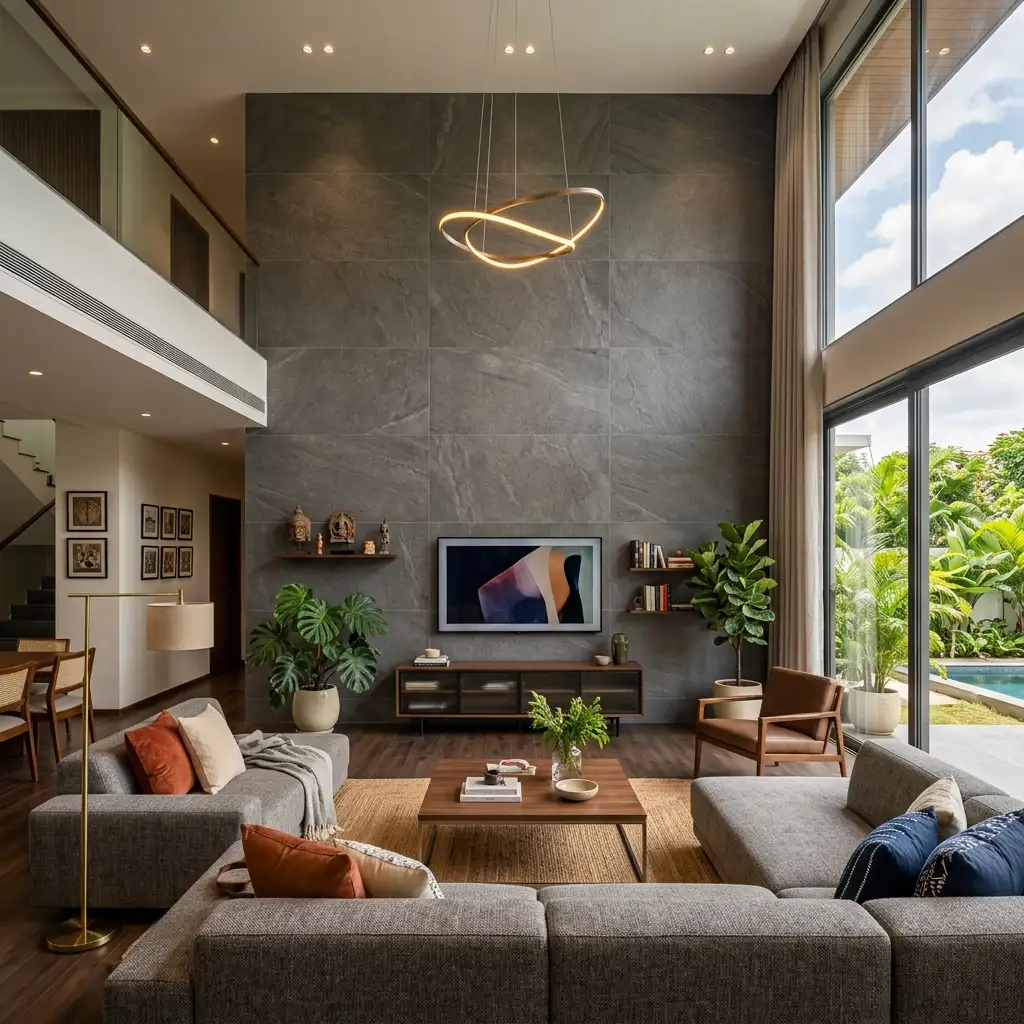
Because they are produced in monumental formats up to 3000 mm x 1000 mm (3 metres by 1 metre), Stonelam eliminates up to 90% of the grout joints found in standard tiling. This delivers sweeping, uninterrupted visual continuity across expansive floors, feature backdrops, and exterior facades. When comparing this with natural stone wall panel design ideas, the dramatic weight reduction makes porcelain slabs effortless to handle, structurally safe for multi-storey apartments, and exceptionally fast to install.
The 6 Core Reasons Why Stonelam Tiles Are the Perfect Fit for Your Home
Homeowners, architects, and interior designers choose Stonelam porcelain tiles for six core reasons: extreme durability against impact and heavy traffic, hyper-realistic natural stone veining, 100% waterproof and non-porous hygiene, diverse textures and finishes, clean overlay installation without demolition, and lifetime zero-sealing maintenance.
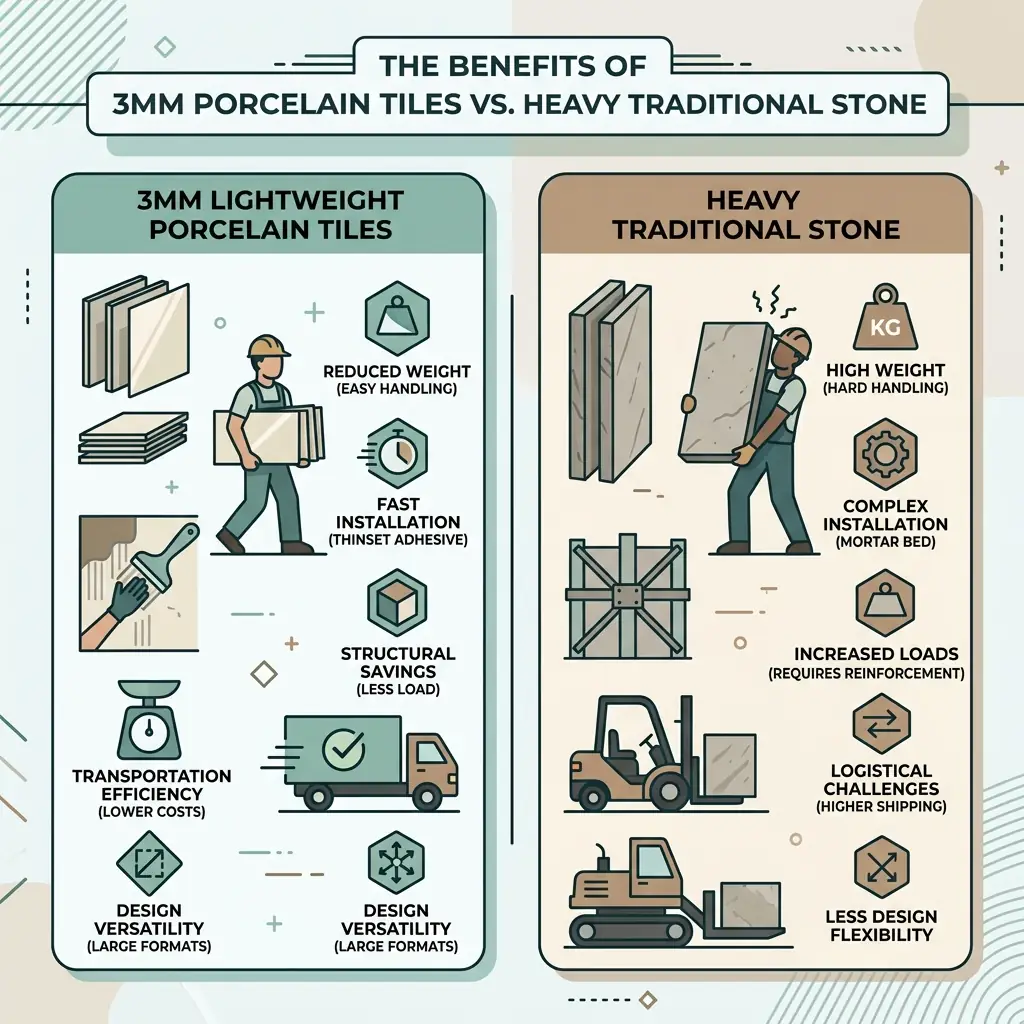
Choosing permanent surface finishes for your residence is a decision you will live with for decades. You have to consider daily wear from children and pets, hot kitchen pans, wet monsoons, and scorching 45°C summer heat. Here is the detailed breakdown of how Stonelam excels across every parameter.
1. Unrivalled Durability & Compaction Density
People often mistakenly assume that thin materials are fragile. While thin glass or standard brittle ceramics break under pressure, Stonelam’s structural density changes the physics completely. The intense pressure applied during compaction removes every internal micro-void, creating a surface that rates exceptionally high on the Mohs hardness scale.
Combined with the fibermesh backing that absorbs and disperses kinetic shock, Stonelam easily withstands high foot traffic, dragged dining furniture, high heels, and accidental impact from dropped cooking utensils. It will not scratch, chip, or abrade, ensuring your surfaces look as sharp on day 3,000 as they did on day one.
2. Authentic Luxury Aesthetics Without Real Stone Flaws
Natural stones like Statuario marble or Calacatta Gold are breathtaking, but finding flawless quarry blocks with continuous, unblemished veining across dozens of square metres is practically impossible and exorbitantly expensive. Many natural slabs arrive with hidden structural fissures, yellow iron stains, or dull patches.
Stonelam solves this by utilizing high-definition digital inkjet printing technology before firing. The deep, expressive veining, organic tonal variations, and subtle surface textures of rare Italian marbles, granites, and oxidised metals are replicated with flawless precision. Slabs can be book-matched or slip-matched continuously, creating a stunning visual flow across your living room or drawing area (learn more about marble aesthetics in our guide on which white marble is best for walls).
3. Zero Porosity & Absolute Stain and Moisture Resistance
Natural stones are naturally porous sponges. A single spill of turmeric curry, red wine, lemon juice, or mustard on an unsealed marble countertop leaves an unsightly, permanent stain that requires abrasive mechanical grinding to buff out. In bathrooms, moisture penetrates tile seams, leading to mould, black mildew, and foul damp odours.
Stonelam porcelain slabs boast a near-zero water absorption rate (below 0.1%). Liquids, oils, and chemical spills sit entirely on the top layer without penetrating the material. You can wipe off dried curry stains or oil splatters hours later using a damp microfibre cloth. For busy modular kitchens, check out our insights on stone flooring for kitchen environments where hygiene and stain resistance are paramount.
4. Infinite Design Finishes & Versatile Applications
Traditional renovation usually requires sourcing disparate materials: natural hardwood for the master bedroom, marble for the formal foyer, granite for the kitchen counters, and ceramic for the bathrooms. Coordinating multiple stone vendors, carpenters, and masonry crews leads to mismatched floor levels, clumsy brass transition profiles, and uneven wear over time.
Stonelam provides a unified architectural solution. Available in rich biophilic wood textures, raw industrial concrete, honed leather finishes, and polished marble veining, you can maintain consistent slab thickness and identical polymer fixing methods throughout your entire home. It can even be used to wrap wardrobe shutters, dining table tops, and vanity counters for a custom, bespoke designer look.
5. Demolition-Free "Tile-Over-Tile" Installation
Demolition is undeniably the most dreaded phase of any home makeover. Jackhammers damage subfloor waterproofing membranes, kick up hazardous dust that ruins HVAC units, and produce metric tonnes of debris that require municipal disposal permits.
Because 3mm Stonelam slabs add virtually no thickness (under 5mm including high-polymer adhesive bed), they can be applied directly on top of existing marble, mosaic, or ceramic flooring. You do not need to trim door undersides or re-engineer floor heights. A master bathroom or living room renovation that traditionally takes three weeks can be fully completed in just three to four days.
6. True "Fit-and-Forget" Low Maintenance
Natural stone requires an endless cycle of care: periodic hydrophobic sealing every 18 months, professional diamond crystallization polishing, and strict avoidance of standard household cleaners. Solid wood floors need sanding and varnishing to prevent rot.
Once Stonelam tiles are bonded and grouted with two-component epoxy, your maintenance obligations are finished. The vitrified porcelain is completely UV-proof, meaning sunny balconies and glass-walled living rooms will never show discoloration or fading. Standard mopping with warm water and neutral floor soap is all that is ever required.
Upgrade Your Surfaces Without Demolition Mess
Discover the full Stonelam collection at Stone World. Experience large-format porcelain slabs, live mockups, and end-to-end installation support across India.
Speak With a Stone ConsultantStonelam Slabs vs. Traditional Marble vs. Ceramic Tiles: Technical Comparison
Compared to 18mm natural marble and standard 8mm ceramic tiles, Stonelam 3mm porcelain slabs provide significantly higher flexural strength, near-zero porosity, dramatic dead-weight reduction, and full UV/heat resistance while eliminating the need for periodic sealing or messy demolition.
When selecting architectural cladding and flooring materials, comparing verified technical specifications ensures you invest in long-term reliability rather than showroom sales claims:
| Technical Parameter | Stonelam 3mm Porcelain | Natural Italian Marble | Standard Ceramic Tiles |
|---|---|---|---|
| Standard Thickness | 3.0 mm to 5.6 mm | 16.0 mm to 20.0 mm | 8.0 mm to 10.0 mm |
| Dead Weight | ~7 to 8 kg/m² (Ultra-Light) | ~45 to 55 kg/m² (Very Heavy) | ~18 to 22 kg/m² (Medium) |
| Maximum Slab Format | Up to 3000 x 1000 mm | Varies by quarry block | Usually 600 x 600 mm max |
| Water Absorption / Porosity | < 0.1% (Non-porous, stain-proof) | 0.15% - 0.60% (Porous) | 3.0% - 6.0% (Semi-porous) |
| Overlay on Existing Tiles? | Yes (Direct Polymer Bonding) | No (Requires full demolition) | No (Adds too much thickness) |
| Periodic Chemical Sealing? | Never Required | Required every 1-2 years | Grout requires sealing |
| Heat & Thermal Shock Resistance | 100% Fireproof (Fired at 1220°C) | Sensitive to direct hot pans | Moderate (Can crack on thermal shock) |
| UV Fading Resistance | 100% UV-Proof (No color change) | Can yellow over prolonged sun exposure | Glaze can dull over decades |
Where Are the Best Places to Install Stonelam Tiles in Your Home?
Stonelam tiles excel in high-impact zones: kitchen countertops and backsplashes, living room TV unit feature walls, master bathroom shower enclosures, exterior ventilated facades, and custom furniture surface wrapping.
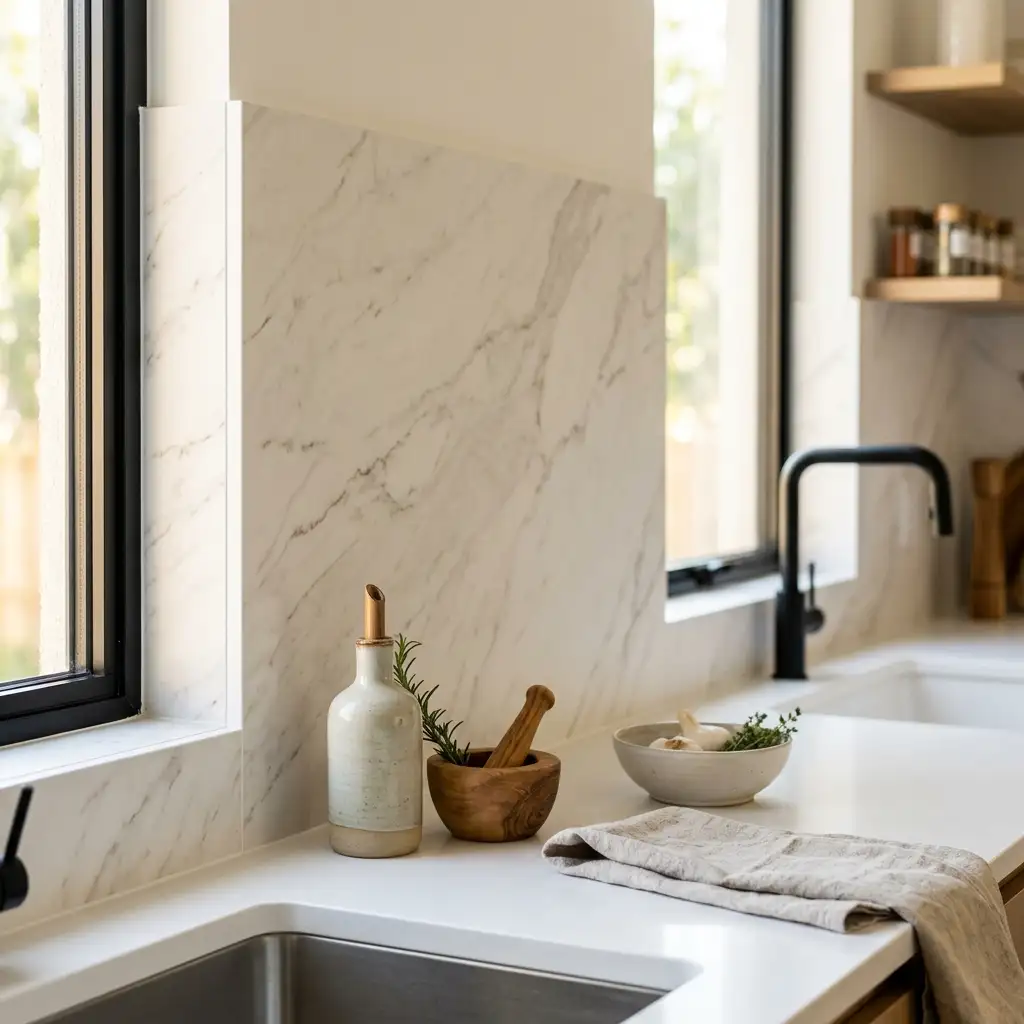
Because of its unique blend of minimal weight, zero porosity, and monumental dimensions, Stonelam can be utilized in locations where heavy natural stone or fragile laminates fail:
- Modular Kitchen Countertops & Backsplashes: Sintered porcelain is completely unaffected by boiling oil, turmeric, citrus acid, or red wine. You can place scorching hot pressure cookers directly on the slab without leaving scorch marks or clouding the finish.
- Double-Height Feature Walls & TV Consoles: Cladding an entire double-height wall with 18mm marble requires heavy mechanical anchors and structural RCC reinforcement. With 3mm Stonelam slabs, you get an opulent stone aesthetic that glues cleanly to brick or drywall without safety risks. Explore our curated luxury feature wall collection for more concepts.
- Bathroom Wet Zones & Steam Showers: Large-format slabs mean zero horizontal grout joints in the direct shower stream. Soap scum, hard water minerals, and black mould have nowhere to accumulate, making shower cleanup effortless. Discover shower ideas in our luxury bathroom stone collection.
- Exterior Building Elevations & Facades: Rain, humidity, monsoons, and extreme UV rays degrade exterior paint in less than four years. Stonelam facade cladding forms a permanent weather shield that washes clean naturally in the rain and never fades. Compare options in our guide on modern interior and exterior wall cladding designs.
- Designer Furniture Wrapping: Because the 3mm slabs can be precision-cut and mitred at 45-degree angles, carpenters can wrap dining table tops, wardrobe doors, reception desks, and modular island shutters in authentic stone textures.
Cost vs. Long-Term Value: Is Stonelam Worth the Investment?
While Stonelam carries a higher upfront material cost than builder-grade ceramics, it delivers substantial financial savings by eliminating demolition expenses, reducing installation labor timelines by up to 75%, and requiring zero periodic repolishing over a 25-year lifecycle.
When calculating the true cost of residential surfaces, looking only at the per-square-foot tile purchase price is a common mistake. You must evaluate the total installed cost and the 20-year cost of ownership:
| Cost Factor | Stonelam Overlay Approach | Traditional Demolition & Natural Stone |
|---|---|---|
| Demolition & Jackhammering | ₹0 (No demolition needed) | ₹25 - ₹45 per sq ft + Debris transport |
| Subfloor Repair & Leveling | Minimal (Uses existing flat tile base) | ₹30 - ₹50 per sq ft for new screed bed |
| Installation Timeline | 3 to 5 days (Rapid turnaround) | 3 to 5 weeks (Dust, noise & curing delays) |
| 10-Year Maintenance & Polish | ₹0 (Zero repolishing or resealing) | ₹40 - ₹80 per sq ft every 3-4 years |
| Expected Surface Lifespan | 25+ Years without degradation | 10 - 15 Years before regrouting/etching |
When you account for the saved labour expenses, zero debris disposal charges, and decades of avoided repolishing, Stonelam porcelain slabs emerge as the most cost-effective luxury surface material on the Indian market.
How to Clean and Maintain Stonelam Surfaces
Maintain Stonelam porcelain slabs by sweeping regularly to remove loose grit and mopping with lukewarm water and mild neutral detergent. Never apply wax polishes or topical stone sealers, as the non-porous vitrified surface will not absorb them, leaving only a dull, sticky film.
Because Stonelam is completely non-porous, dirt, grime, and food stains remain trapped strictly on the outer glaze. You do not need hazardous acids or abrasive scrubbers. Follow these simple best practices:
- Routine Daily Cleaning: Sweep with a soft-bristle broom or vacuum to remove fine grit. Mop using warm water and a standard floor cleaning solution.
- Handling Heavy Spills: Dried sauce, cooking grease, or coffee stains wipe away easily with a damp sponge and dish soap. For dried renovation paint or adhesive residue, you can safely use a plastic scraper or isopropyl alcohol without damaging the finish.
- Avoid Topical Waxes: Natural stones require liquid wax to fill microscopic surface pores. If you apply wax or topical polish to Stonelam, it sits on the non-absorbent surface, forming a sticky layer that attracts dust. Keep the surface clean and completely wax-free.
- Grout Line Care: Since Stonelam installations use minimal 1mm to 2mm joints filled with chemical-resistant epoxy grout, an occasional wipe with a soft sponge keeps joint lines clean and bright.
Ready to Transform Your Home With Stonelam?
From imported Italian porcelain collections to precision dry cladding and tile-over-tile renovation expertise, Stone World delivers bespoke architectural solutions tailored to your floor plans.
Request a Sample & QuoteFrequently Asked Questions (FAQs)
Direct, authoritative answers to the most common questions regarding Stonelam slab thickness, overlay installation feasibility, high-traffic durability, and kitchen countertop safety.
1. Can Stonelam tiles really be installed directly over existing flooring?
2. Are 3mm Stonelam slabs prone to cracking because they are so thin?
3. Are Stonelam tiles heatproof and safe for kitchen countertops?
4. Do Stonelam tiles require chemical sealing like Italian marble?
5. How do large-format Stonelam tiles perform on exterior building facades?
Conclusion
Choosing the right surface material is one of the few permanent decisions you make when building or renovating a home. You can switch out furniture, update curtains, and repaint accent walls in a weekend, but replacing hundreds of square feet of flooring is a major structural undertaking.
Stonelam tiles provide the ultimate harmony between high-end architectural luxury and relentless everyday durability. By combining the natural aesthetic depth of rare quarried stones with the zero-porosity, high-compaction strength of sintered porcelain and the convenience of demolition-free overlay installation, Stonelam establishes a new standard for modern Indian living. Whether you are re-cladding a bathroom shower, transforming your kitchen into a culinary sanctuary, or upgrading your living room with a seamless large-format feature wall, Stonelam represents an architectural investment that delivers beauty and peace of mind for decades to come.
